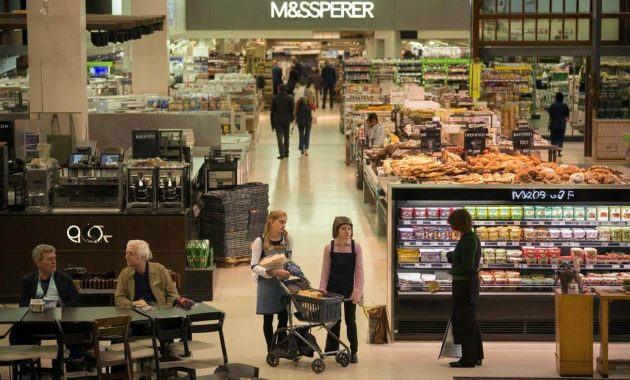
Marks & Spencer is pouring £300m into reshaping its stores across the UK, and a big part of that plan targets the in‑store cafés many shoppers treat as a second living room. Seating areas are being shrunk, some cafés will close altogether, and more of the shop floor is being turned over to food, click-and-collect counters and faster checkouts. For anyone who builds their weekly routine around a latte and a quiet table, this is more than just a new floor plan.
What the £300m revamp actually changes
M&S is rebalancing its stores towards the parts of the business that are growing fastest. That means food halls, online orders, and quick in‑and‑out shopping are getting priority over sit‑down spaces.
More floor space for food and digital services means less room for traditional cafés and long coffee breaks.
In many branches, the classic M&S Café will either:
- shrink to a smaller seating area
- turn into a compact coffee-to-go bay
- be replaced by hot food counters and grab‑and‑go fridges
The focus is on speed. Wider aisles should cut trolley jams. Extra self‑checkout machines aim to shorten queues. Hot food units and bakery sections are being pushed to the front, where café counters once stood, to tempt shoppers on tight schedules.
Behind the scenes, the business case is blunt: each square metre has to pay its way. Food generates high, consistent sales, while mid‑sized cafés can soak up large chunks of space for a smaller return. By reallocating area to food and fulfilment, M&S hopes to keep more shelves stocked late into the day and offer a broader range of ready meals, fresh produce and treats.
Will every M&S café vanish?
No. The chain is not scrapping the café concept entirely, but it is becoming far more selective about where full cafés stay.
| Store type | Likely café setup | What shoppers can expect |
|---|---|---|
| Large city or flagship stores | Full or near‑full café retained | Seating areas, hot meals, cakes and barista coffee still available |
| Busy foodhall‑only branches | Small seating corner or coffee-to-go machines | Limited places to sit, stronger focus on quick drinks and snacks |
| Mid‑size town stores | Café removed or heavily downsized | Extra space for groceries, meal deals and grab‑and‑go counters |
Local performance will play a big role. Branches where cafés are packed most of the day have a better chance of surviving in full. Sites where tables sit half‑empty between the breakfast and lunch rush are more likely to lose them.
How your next shop could feel different
A faster loop, fewer long pauses
Imagine a Saturday morning shop with kids in tow. In the old layout, you might park the trolley, order toast, and have 20 minutes to regroup before tackling the rest of the store. Under the new design, the store nudges you towards something quicker: a hot pastry from the bakery, a cappuccino from a self‑serve machine, and then straight back to the aisles.
➡️ When an oral infection gatecrashes cancer development
➡️ Trees in Panama’s tropical forests are growing longer roots in the face of drought
➡️ No more hair dye : the new trend that covers grey hair and makes you look younger
➡️ No tricks, only treats: Bats glow under ultraviolet light
➡️ Sheets shouldn’t be changed monthly or every two weeks : an expert gives the exact frequency
The new model swaps one long café break for shorter refuelling stops built into the shop itself.
That will suit shoppers who see M&S as a high‑quality supermarket and want to be in and out between school runs or commutes. For people who treat the café as a social hub, the shift will feel more emotional than practical.
The social side of the café loss
M&S cafés have quietly played a community role for years. Older shoppers meet there after banking or doctor appointments. Parents rely on them as a safe, predictable space to feed toddlers and catch their breath. Students use them as laptop spots with reliable Wi‑Fi and a cheap tea.
Some of that will survive in adjusted form. A number of stores are planning to use freed‑up café space for tasting tables, seasonal food events or recipe demonstrations. Others are adding small clusters of chairs in quieter corners near homeware or books, offering at least a minimal “sit‑down” option even where the main café disappears.
What happens to staff and prices?
For staff, the change is less abrupt than the word “axe” suggests. M&S has been signalling that many café workers will be redeployed rather than let go.
- Baristas may move into bakery or hot food preparation roles.
- Front‑of‑house café staff can shift into customer service or checkout assistance.
- Supervisors may take on broader foodhall responsibilities.
That means regular shoppers are likely to keep seeing familiar faces, just in different parts of the store.
On prices, the company has not tied the refit to any specific increase in food costs or coffee prices. The stated aim is to drive better promotions, stronger meal deals and deeper stock rather than a big ticket price shift. The real test will be whether the extra floor space translates into sharper offers on popular lines such as “Dine In” deals and family‑size ready meals.
How to make the new layout work for you
A few small tweaks to your routine can make the revamped stores feel less jarring:
- Grab your drink first: Use the coffee-to-go bay at the start of your trip so you’re not hunting for caffeine halfway round.
- Time click-and-collect: Pair clothing or online orders with a quick food shop at off‑peak times; late mornings mid‑week are usually quieter.
- Shift the treat: Instead of a sit‑down cake, pick up bakery items or dessert pots to enjoy at home, where you’re not on the clock.
- Hunt for perches: Look for small seating clusters near homeware or seasonal sections if you need a brief rest.
Think of the café less as a fixed destination and more as a flexible mix of coffee machines, bakery counters and occasional seating.
What this says about British retail right now
M&S is far from alone in rethinking in‑store cafés. Supermarkets and department stores have spent the last decade trimming low‑margin space and pushing into faster‑moving categories like food-to-go and online order collection.
This shift reflects three clear trends:
- More clothing and homeware are bought online, then picked up in store.
- Shoppers expect supermarket trips to fit into tighter schedules.
- Prepared food and chilled “tonight’s dinner” ranges are driving growth.
Traditional cafés, with long dwell times and relatively modest spending per table, struggle to compete with those high‑turnover areas unless they are consistently busy. The M&S revamp is essentially a bet that customers value reliable stock, short queues and good meal deals slightly more than a full table‑service café in most locations.
Practical examples: how different shoppers might be affected
Consider three common shopper profiles and how the changes could play out.
- The commuter: Previously, a quick sit‑down coffee before catching a train. Now, they’re more likely to grab a flat white from a machine and a hot snack while collecting dinner on the way home. The upside is speed; the downside is losing that sit‑down moment.
- The retiree: A weekly routine of bills, bus, then an hour in the café with friends may turn into a shorter coffee stop in a reduced seating area or a move to another coffee shop on the high street. Food choice improves, but the social space shrinks.
- The parent with young children: Instead of a long lunch in the café, the treat becomes a sausage roll for the buggy and a hot drink in a takeaway cup, with a short break on a bench outside.
None of these shoppers disappears; they just adapt their rituals, or in some cases, take the social part of the visit elsewhere while still using M&S for food.
Terms and ideas that help make sense of the change
Two bits of retail jargon sit quietly behind this move:
Footfall: This simply means the number of people coming through the doors. Cafés can help keep footfall steady by giving shoppers another reason to visit. Once footfall is secure, stores start asking whether that space could now earn more by being used differently.
Dwell time: The length of time people stay in the store. Cafés increase dwell time, which can boost spending, but only up to a point. If people linger for an hour over a single tea, profit per square metre drops. M&S appears to be chasing a balance: enough time to browse and pick up a few extras, not so much that tables clog up.
For shoppers, the upside of this kind of optimisation can be real: better stock late in the day, stronger meal deals, and a smoother trip with fewer bottlenecks. The downside is a quieter café culture on the high street and one less place to linger with a proper ceramic cup.