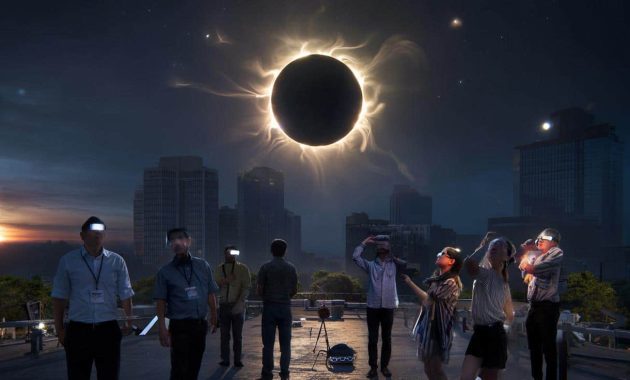
At first nobody noticed the light changing.
The office windows still framed the same grey-blue sky, the same emails were coming in, the same coffee machine was hissing in the corner. Then someone glanced at their phone, froze, and whispered, “Have you seen this? They’re saying daylight will stop… completely.”
On the screen: a NASA graphic, a black disc crossing the Sun, a strip of shadow slicing across the globe. The caption quietly dropped the kind of sentence that can flip an ordinary day into something else entirely: “The longest solar eclipse of the 21st century has a date.”
People started forwarding the link, hands hovering above keyboards, sharing the same half-nervous, half-thrilled laugh.
One line stood out amid the flood of notifications: **“For several minutes, sunlight will vanish.”**
That’s when the room felt a tiny bit darker, even though nothing had changed.
Yet.
The date the Sun goes dark: what scientists just revealed
Astronomers have finally circled the day on the calendar when the century’s longest eclipse will carve a river of darkness over Earth.
It’s not tomorrow, it’s not next year, but it now has a clear slot in our collective future: 16 July 2186, an afternoon when the Moon will slide so precisely in front of the Sun that daylight will be shut off for up to 7 minutes and 29 seconds along a narrow path.
The announcement has spread quietly through observatories, forums, and space-nerd group chats. Some people are already calling it “the blackout of the century.”
It’s a distant appointment, and yet oddly personal.
We suddenly know the exact day when the sky will pull one of its rarest tricks.
If that date feels abstract, think of a more recent moment.
On 2 July 2019, a total solar eclipse plunged parts of Chile and Argentina into an eerie twilight in the middle of the afternoon. Videos from that day show streets falling strangely silent, dogs howling, and crowds cheering and crying under a sky that looked broken.
Cars pulled over on highways as the Moon’s shadow raced in. Office workers climbed onto rooftops with cardboard glasses. For two breathless minutes, the Sun became a black hole rimmed with white fire, and the temperature dropped like a sudden draft through an open door.
The 2186 eclipse will do the same thing, only longer.
Enough time to watch your own heartbeat speed up in the dark.
Scientifically, this “sunlight cut” is just geometry playing out at planetary scale.
The Moon orbits Earth in an ellipse, not a perfect circle, and the Earth orbits the Sun in its own slightly tilted path. On 16 July 2186, those three orbits will line up almost perfectly, with the Moon unusually close to Earth and the Sun sitting just right behind it.
That combination stretches totality to an extreme rarely seen in human history.
Under the umbra—the darkest inner shadow—day will turn to night in seconds, stars will flicker into view, and the bright corona of the Sun will flare like ghostly petals.
Outside that narrow corridor, the world will remain washed in a dim, unsettling light, like a filter has been slapped over reality.
How a “sun switch-off” really feels when you’re standing there
If you’ve never lived through a total eclipse, forget the tidy diagrams.
The reality is remarkably physical. Moments before totality, the sunlight shifts from warm to metallic, as if someone changed the bulbs in the sky. Shadows sharpen into razor-thin lines, and crescents of light appear on the ground through tree leaves, turning sidewalks into strange, moving wallpapers.
➡️ “At 68, I feared losing independence”: the daily routine that reassured me
➡️ Neither swimming nor Pilates : the best activity for people with knee pain
➡️ “A world first”: South Korea develops a plasma torch that could revolutionise plastic recycling
Then comes the drop. The air cools fast, birds go silent or start behaving like it’s dusk, and a hush spreads through any crowd watching. Your body understands something is wrong with the day long before your brain catches up.
The actual moment the Sun is swallowed is so fast you almost miss it.
One heartbeat there’s light.
The next, there isn’t.
We’ve all been there, that moment when time does something weird—waiting for exam results, the few seconds before a message loads, the breath before a “yes” or “no.” A total eclipse compresses that feeling into pure sky.
In 2017, when a total eclipse crossed the United States, countless people described the same thing: they went out for the science, stayed for the emotion. Parents held kids a little tighter. Strangers passed around cheap eclipse glasses like priceless heirlooms. Some people forgot to take photos at all, stunned into stillness.
Let’s be honest: nobody really does this every single day.
Most days we barely glance up, let alone register the Sun as the fragile, fallible disc it suddenly seems to be when it disappears.
Astronomers love this “sky blackout” for far less poetic reasons.
When sunlight is cut off and the glaring disc is hidden, telescopes can stare straight at the corona—the wispy outer atmosphere of the Sun that’s usually wiped out by brightness. From that curtain of pale fire come solar winds, space weather, and some of the biggest mysteries in modern astrophysics.
During the legendary 1991 eclipse over Mexico and Hawaii, scientists recorded new data on coronal loops and magnetic storms. For 2186, researchers are already sketching hypothetical instrument setups, future satellites, even AI-driven observatories we can barely imagine yet.
*The same few minutes of darkness that make a child gasp will also help decode the star that keeps us alive.*
Preparing for an eclipse you’ll never see (and the ones you might)
There’s a quiet, almost uncomfortable truth about this record-breaking eclipse: nobody alive today will witness it.
Yet that doesn’t make the date useless. It does something different. It stretches our sense of planning beyond our own lifetimes.
Astronomers already build catalogues of future eclipses centuries ahead, so researchers, cities, and even curious travelers can plan. For the eclipses that do fall within your lifetime, the method is surprisingly simple:
check the path of totality, pick a spot with usually clear weather, and protect your eyes with certified eclipse glasses until the exact moment totality begins.
Only then is it safe to look directly, and only until the first blinding bead of sunlight reappears.
The biggest mistake people make isn’t forgetting equipment.
It’s treating the event like a casual thing you can watch from anywhere, at the last minute. A partial eclipse still looks cool, but that gut-punch moment when sunlight is completely cut? That only happens if you stand in the thin ribbon of totality tracked by scientists to the kilometer.
Another trap is trying so hard to “capture” the event that you barely live it. People juggle smartphones, DSLRs, tripods, apps… and later realize they never actually felt the darkness roll in. Give yourself at least thirty honest seconds with no gear, no framing, just you and the broken daylight.
An eclipse is one of the few times the universe basically begs you to stop multitasking.
“Every total eclipse rewires a few people,” says Dr. Lena Ortiz, a solar physicist who has chased them across three continents. “You expect a science show and you get an existential moment. When the Sun goes, even briefly, you understand in your bones how fragile ‘normal’ really is.”
- Pick one future eclipse you can realistically travel to in your lifetime.
- Block the date in your calendar now, even if it’s years away.
- Read local weather stats: clouds are the real enemy.
- Buy certified eclipse glasses well ahead of time, not the week before.
- Decide in advance: first half for photos, second half for pure experience.
What a 7-minute blackout says about us, not just the Sun
Knowing that the 16 July 2186 eclipse will cut off sunlight for longer than any other in this century does something subtle to the imagination.
It puts a pin in a year you’ll never reach, a kind of message in a bottle to people not yet born: “On this day, look up.”
It’s strange comfort, in a way, that our orbits continue so predictably while everything else feels shaky. Governments may rise and fall, tech may morph beyond recognition, but on that afternoon the Moon’s shadow will still skim across the Atlantic, over Brazil, out into the ocean again, right on schedule.
Some future version of “us” will stand in that darkness and feel what we feel now when we watch a shorter eclipse: small, very alive, suddenly aware of the Sun as a presence instead of background wallpaper.
There’s also a quiet question wrapped inside this news: what do we do with the sky moments we actually can reach?
The shorter eclipses coming in the 2030s, 2040s, 2050s—these are not for distant descendants. They’re for the same people scrolling past headlines today, half-curious, half-distracted, wondering if it’s worth booking a train or a cheap flight just for a few minutes of darkness.
Maybe the longest eclipse of the century, safely parked in a far-off year, is a reminder not to outsource all our awe to the future.
Totality doesn’t last long, and neither do we.
Knowing exactly when the Sun will go dark one extraordinary day may be less about forecasting the sky, and more about asking a grounded question: when the next shadow comes to your corner of the world, will you go outside and stand in it?
| Key point | Detail | Value for the reader |
|---|---|---|
| Record eclipse date | 16 July 2186 will bring the century’s longest total solar eclipse, with up to 7 minutes 29 seconds of darkness | Gives context for the headline claim that sunlight will be “cut off completely” and shows the scale of the event |
| Experience of totality | Rapid temperature drop, eerie silence, metallic light, visible stars and solar corona during full blackout | Helps readers imagine the physical and emotional impact, not just the technical description |
| How to live a future eclipse | Travel into the path of totality, plan early, protect eyes, and balance photos with pure observation | Turns cosmic news into practical steps for eclipses readers can actually watch in their lifetimes |
FAQ:
- Will sunlight really be “cut off completely” during this eclipse?Yes, but only along a narrow path where the eclipse is total. In that strip, the Moon will block the Sun entirely for several minutes, creating night-like darkness in the middle of the day.
- Can anyone alive today see the 2186 eclipse?No. The 16 July 2186 event is beyond current human lifespans. People living now can still experience other total eclipses in coming decades by traveling into the path of totality.
- Why is this eclipse so long compared with others?The duration comes from a rare combination: the Moon will be relatively close to Earth, the Earth will be near its farthest point from the Sun, and the alignment of orbits will be especially precise, stretching totality to a record length for this century.
- Is a total solar eclipse dangerous to watch?Looking directly at the Sun is dangerous at every stage except the brief period of totality, when it is completely covered. You need certified eclipse glasses or a proper solar filter before and after totality, and you should remove them only while the Sun is fully hidden.
- Will eclipses affect solar panels or power grids?During a total or deep partial eclipse, solar energy production drops along the affected path. Grid operators usually plan for this ahead of time by ramping up other sources, so everyday users rarely notice more than a blip, if anything at all.