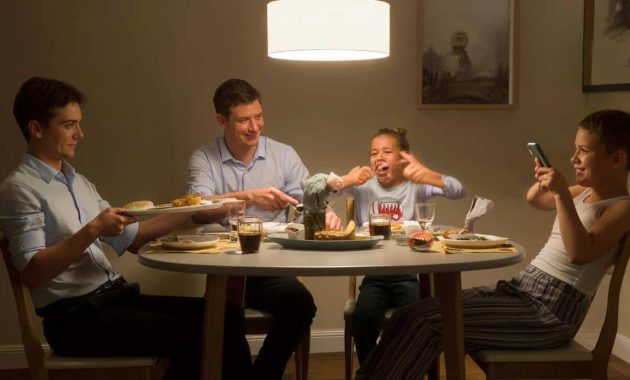
At the family dinner table, the script always seems strangely familiar. The eldest is cutting the roast, half-parent, half-sibling, keeping an eye on everyone. The middle one is cracking jokes a little too loudly, fighting for a sliver of attention. The youngest is scrolling on their phone, unbothered, somehow getting away with it. Parents sigh, roll their eyes, then say the same line: “You were all raised the same. I don’t know why you turned out so different.”
What if that line is wrong?
What if the biggest shaper of your personality wasn’t your DNA, but simply… when you arrived in the family?
Why your birth order quietly scripts your role in the family
Psychologists have been poking at this question for over a century, from Alfred Adler to today’s big-data researchers. The core idea is simple but unsettling: your place in the sibling lineup acts like a long-running social experiment. Same parents, same house, same genes mix — but a completely different role on the family stage.
The eldest is born into a world of adults and expectations. The youngest arrives in a crowd that’s already in motion. The middle child? They land in the gap, dealing with hand-me-down roles as much as hand-me-down clothes.
Look at the stereotype list and you can often spot your family in it with painful clarity. Firstborns: responsible, organized, more anxious, often drawn to leadership and “safe” careers. Middles: negotiators, social butterflies, sometimes drifting, sometimes fiercely independent. Youngest: charming, risk-taking, creative, fond of shortcuts. Only children: mini-adults, comfortable with older people, a bit perfectionist, used to being the center of the room.
One big international study, analyzing more than 20,000 people, found that firstborns scored slightly higher on self-reported responsibility and leadership, while later-borns were more open to new experiences and unconventional paths. The differences weren’t gigantic, yet they showed a persistent pattern you can almost feel at family reunions.
Why does this happen when the genes are basically copy-pasted? Part of the answer is parental behavior quietly shifting over time. Firstborns get nervous, experimental parents who google everything and clap for every drawing. By the time the youngest arrives, mom and dad are more relaxed, more selective with rules, less likely to obsess over milestones.
Another piece is the social environment you grow up in. Firstborns spend more time with adults and develop adult-style language and behavior earlier. Later-borns grow up in a peer ecosystem at home, constantly negotiating, competing, and reinventing their identity to stand out from older siblings. The DNA stays the same, but the “job description” you inherit as sibling #1, #2, or #3 can tilt your personality in a very specific direction.
How to spot birth-order patterns in yourself (and stop fighting them)
Start with a brutally honest inventory. Forget stereotypes for a second and ask yourself: what was I quietly expected to be in my family? The reliable one? The easy one? The entertainer? The genius? Write down the role you played, then the moments you felt trapped in it.
➡️ How to remove moss from your lawn naturally and effectively ?
➡️ What does it mean, according to psychology, when you help waiters clear the table at a restaurant?
➡️ Wood heating: 7 smart ways to cut your firewood use without losing comfort this winter
➡️ Why walking barefoot on cold floors can make your whole body feel colder
➡️ Place this object near your orchid : blooming starts in just a few days
Once you see the pattern, match it to common birth-order traits. Firstborns often feel guilty when they put themselves first. Middles often feel invisible unless they overperform or rebel. Youngest kids often feel underestimated, praised for charm but not for depth. That mapping isn’t destiny, but it shows you the script you were handed.
The next step is to notice how this script leaks into your adult life. Are you still the unofficial “project manager” at work, picking up slack no one else touches? Do you avoid conflict because you learned to be the “easy” child? Do you take more risks than your siblings, just to not be “the boring one”?
Here’s the plain truth: a lot of what we call “personality” is just long-practiced survival strategies from childhood. Once you see that, guilt softens. You weren’t “born bossy” or “born chaotic”. You adapted early to a role that already existed before you even arrived home from the hospital.
*“Birth order doesn’t create your character from scratch. It nudges the volume up or down on traits that were already there.”*
— Paraphrased from several family-psychology researchers
- Firstborns
Often report feeling like “third parents”. They tend to over-responsibilize themselves and struggle to relax when things feel out of control. - Middle children
Frequently say they learned diplomacy and reading the room early. They may be social pros, but sometimes lose track of what they actually want. - Youngest (and only) children
Often become masters of persuasion. They can appear carefree, yet quietly battle the belief that nobody takes them fully seriously.
What the research really says about birth order vs genetics
Twin and family studies have spent decades trying to untangle nature from nurture. Genes clearly play a big role in broad traits like introversion, emotional sensitivity, or impulsivity. But once those raw materials are there, birth order acts like a long-running conditions-of-use contract.
Large-scale studies from Germany, the United States, and Scandinavia suggest that while IQ differences by birth order are tiny or even negligible, personality trends are more visible. Firstborns lean towards conscientiousness and achievement; later-borns lean towards openness and risk. It’s not that your DNA changes — your family simply reacts differently to child number one than child number three, which shapes how those genes are expressed day after day.
Think of it like this: genetics gives you a basic instrument. Birth order decides whether you play solo, in a duo, or join a crowded band. A naturally anxious child as a firstborn might grow into the classic high-achieving perfectionist, praised for being “so mature”. The same genetic tendency in a third-born might be softened by older siblings who model rule-breaking, humor, or creative escape routes.
We’ve all been there, that moment when you visit another family and realize their “rebellious” child would be the calm one in your house. That’s birth-order culture at work, layered on top of genes.
Some researchers warn against turning birth order into a horoscope. They’re right. The effects are usually moderate, not dramatic, and context matters: big age gaps, blended families, cultural norms, illness, or loss can totally rewrite the script. An only child who grows up surrounded by cousins may feel more like a middle. A firstborn who suddenly becomes “the middle” in a remarriage can shift roles overnight.
Yet the overall pattern keeps surfacing in the data: shared genes don’t guarantee shared personalities. **Growing up first, in-between, or last subtly trains you into different emotional reflexes, relational habits, and life strategies**, often more consistently than any individual gene variant we’ve found so far.
Birth order as a mirror: what it reveals about you
Once you see your birth-order role, you can use it as a mirror instead of a cage. Ask yourself: which parts of my current personality feel like me, and which feel like a job I never quit? That distinction alone can be oddly freeing.
Maybe you’re the eldest who always organizes the group trip but secretly hates logistics. Maybe you’re the youngest who plays the clown when you’re actually exhausted. Naming the pattern doesn’t magically erase it, yet it gives you permission to renegotiate. You’re allowed to retire from unpaid roles.
You might also start reading your relationships differently. The partner who seems “controlling” might just be a lifelong firstborn who panics in chaos. The friend who bounces between projects might be a former youngest who learned to survive by improvising. This doesn’t excuse bad behavior, but it explains those deep grooves people fall back into under stress.
Let’s be honest: nobody really rewrites these grooves overnight. Yet small experiments help. The classic over-responsible eldest can practice letting something fall apart without rushing in. The peacekeeping middle can try saying a clear no. The charming youngest can volunteer to be the one who plans — and finishes — the boring stuff.
The more research piles up, the less convincing that old phrase “born that way” sounds on its own. Personality looks less like a fixed set of traits and more like a choreography between genes, timing, and family roles.
You don’t get to change the year you were born or how many siblings came before you. You do get to notice which parts of your personality are responses to that invisible script — and which parts are quietly waiting their turn on stage. The science suggests you’re not as predetermined as your family story makes you feel. The rest is up to what you decide to do with the role you were first handed.
| Key point | Detail | Value for the reader |
|---|---|---|
| Birth order shapes family roles | Firstborns, middles, youngest, and only children are nudged into different expectations and responsibilities. | Helps you understand why you act a certain way in groups, at work, or in relationships. |
| Genes set the stage, order directs the play | Genetics gives core traits, but birth order and parenting style decide which ones get amplified. | Reframes “that’s just how I am” into something more flexible and changeable. |
| Patterns can be seen and softened | Noticing your birth-order script lets you keep what serves you and drop what doesn’t. | Offers concrete self-awareness and small steps to feel less trapped by old family roles. |
FAQ:
- Does birth order really matter, or is it just a myth?
Research finds small to moderate but consistent effects, especially on traits like responsibility, openness, and risk-taking. It’s not destiny, yet it’s far from pure myth.- Can a middle child feel like a firstborn or youngest?
Yes. Big age gaps, blended families, or taking on extra responsibility can give a middle child a “functional firstborn” role, and some become the de facto youngest if older siblings move out early.- What about only children — where do they fit?
Only children often share traits with firstborns (maturity, responsibility) but also have unique patterns: comfort with adults, self-sufficiency, and sometimes a stronger perfectionist streak.- Can I change birth-order traits I don’t like?
You can’t change your place in the family, but you can change your habits. Once you see the script — over-responsibility, avoidance, people-pleasing — you can practice new behaviors in low-stakes situations.- Should parents raise each child differently based on order?
Parents already do this unconsciously. The goal isn’t rigid tailoring, but awareness: spreading responsibility more fairly, not overburdening the firstborn, and taking younger children’s competence seriously.