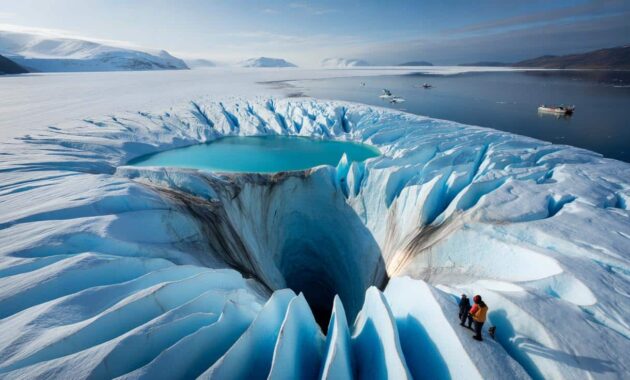
High in the Arctic, a glacier is crumbling before our eyes. Researchers are witnessing a remarkable spectacle as a massive glacier tongue flexes, cracks, and lifts, releasing a torrent of meltwater into the ocean. This dramatic event is unfolding in real-time, offering a glimpse into the rapid transformations occurring in the far North.
The glacier in question is located in Greenland, a land of towering ice sheets and rugged, otherworldly landscapes. For years, scientists have closely monitored this particular glacier, aware of the looming threats posed by climate change. Now, their vigilance has paid off, as they document the unfolding of a glacial drama with far-reaching implications.
As the planet warms, the delicate balance that has sustained these frozen giants is being disrupted, with cascading effects that reverberate across the globe. This crisis is unfolding before our very eyes, a stark reminder of the urgent need to understand and address the forces driving these changes.

A Glacier Tongue Under Pressure
The glacier in question is a floating tongue of ice, extending out into the Arctic Ocean. For decades, this glacier has remained relatively stable, maintaining its grip on the coastline and resisting the onslaught of warming temperatures. However, in recent years, the signs of strain have become increasingly apparent.
Researchers have observed the glacier flexing and cracking, as meltwater surges through its internal channels. This meltwater, once trapped within the glacier’s icy embrace, is now breaking free, creating a dynamic and unpredictable situation.
As the glacier tongue continues to lift and shift, the researchers are closely monitoring the situation, collecting crucial data that will help them better understand the processes at work. This information is vital, not just for understanding the fate of this individual glacier, but for providing insights into the broader changes unfolding across the Arctic landscape.

A Giant Lake Disappears Overnight
One of the most striking observations made by the researchers is the sudden and dramatic draining of a massive lake that had formed on the surface of the glacier. This lake, fed by meltwater from the glacier’s surface, had grown to vast proportions, covering an area larger than many urban centers.
However, in a matter of hours, the entire lake vanished, its contents spilling into the Arctic Ocean. This rapid drainage event was captured by the researchers’ instruments, providing a rare glimpse into the powerful forces at work within these glacial systems.
The disappearance of the lake highlights the delicate balance that governs these frozen landscapes. As warming temperatures melt the ice, the internal plumbing of the glacier is disrupted, leading to unpredictable and potentially catastrophic events.

When Water Lifts an Entire Glacier
The researchers have also observed the glacier tongue lifting and flexing in response to the surging meltwater. This phenomenon, known as glacial uplift, occurs when the weight of the glacier is temporarily reduced by the removal of water from its surface or interior.
As the meltwater flows out of the glacier, the ice can rise up, creating dramatic changes in the landscape. In the case of this Greenland glacier, the researchers have witnessed the tongue lifting by several meters, a dramatic display of the power of water to reshape these frozen environments.
This glacial uplift has significant implications for the overall stability of the glacier. As the ice flexes and shifts, it becomes more vulnerable to further cracking and disintegration, potentially leading to the loss of even larger portions of the glacier in the future.

Why One Lake Matters for Global Sea Level
The dramatic events unfolding on this Greenland glacier are not isolated incidents. They are part of a larger story of climate change and its impact on the cryosphere, the frozen regions of our planet. As glaciers and ice sheets melt, the resulting water is released into the world’s oceans, contributing to rising sea levels.
The disappearance of the massive lake on the glacier’s surface is a prime example of this process. The water that once filled that lake is now flowing into the Arctic Ocean, adding to the already rising sea levels that threaten coastal communities around the world.
While the loss of a single lake may seem like a small event, it is part of a larger pattern of glacier and ice sheet meltdown that is having profound consequences for the planet. Understanding these processes is crucial for predicting future sea level rise and preparing for the challenges that lie ahead.
Key Terms and What They Really Mean
As researchers grapple with the complex dynamics of glacial systems, they have developed a specialized vocabulary to describe the phenomena they observe. Here are some of the key terms and what they really mean:
| Term | Explanation |
|---|---|
| Glacier tongue | A floating extension of a glacier that extends out into the ocean. |
| Glacial uplift | The rising of a glacier’s surface due to the removal of water or ice, often creating dramatic changes in the landscape. |
| Cryosphere | The frozen regions of the planet, including glaciers, ice sheets, and sea ice. |
| Meltwater | Water that has been released from melting ice, snow, or glaciers. |
Understanding these terms is crucial for comprehending the complex processes at work in the Arctic, where rapid changes are unfolding with far-reaching consequences.
“What we’re witnessing on this glacier is a dramatic manifestation of the broader changes happening across the Arctic. As the climate warms, these frozen landscapes are being rapidly transformed, with profound implications for the entire planet.”
– Dr. Emily Fielding, glaciologist at the University of Greenland

The story of this Greenland glacier is a microcosm of the broader challenges facing the Arctic. As the region continues to warm, researchers and policymakers must work together to understand these changes and develop strategies to mitigate their impact.
“The loss of this glacier tongue and the draining of that massive lake are just the tip of the iceberg, so to speak. We’re seeing the early stages of a fundamental transformation that will reshape the Arctic landscape in ways we’re only beginning to comprehend.”
– Dr. Liam Farrell, climate policy expert at the Arctic Institute

The fate of this Greenland glacier is a harbinger of things to come, a stark reminder of the urgency with which we must address the global climate crisis. As the world watches, researchers continue to monitor this dynamic situation, determined to unravel the mysteries of these frozen frontiers and chart a course towards a more sustainable future.
What’s Next for the Crumbling Glacier?
As the Greenland glacier continues to undergo dramatic changes, the researchers are closely monitoring the situation and preparing for what may come next. While the exact trajectory of the glacier’s disintegration is difficult to predict, they are working to anticipate potential scenarios and develop strategies to mitigate the impacts.

One key focus is understanding the role of meltwater in the glacier’s destabilization. As the researchers have observed, the sudden draining of the surface lake was a significant event, and they are now studying how the ongoing flow of meltwater through the glacier’s internal channels may be contributing to its rapid deterioration.
Additionally, the researchers are closely tracking the potential for further glacial uplift and the implications for the glacier’s overall stability. As the ice flexes and shifts, it becomes more vulnerable to cracking and calving, potentially leading to the loss of even larger portions of the glacier in the coming months and years.
The Global Implications of Arctic Change
The changes unfolding on this Greenland glacier are not isolated events; they are part of a broader transformation occurring across the Arctic region. As temperatures continue to rise and the cryosphere responds, the implications for the rest of the world are becoming increasingly clear.
The melting of glaciers and ice sheets in the Arctic is a significant contributor to global sea level rise, a threat that looms over coastal communities around the world. Understanding the dynamics of these frozen systems is crucial for predicting future sea level changes and developing effective adaptation strategies.
Beyond the direct impact on sea levels, the transformation of the Arctic also has the potential to disrupt global weather patterns and ocean currents, with far-reaching consequences for ecosystems, economies, and human communities across the planet.
The Race to Understand and Respond
As the world watches the unfolding drama of the Greenland glacier, researchers and policymakers are working with a renewed sense of urgency to understand and respond to the challenges posed by climate change in the Arctic.
The data and insights gathered from this glacier and others like it are crucial for informing scientific models, guiding policy decisions, and empowering communities to prepare for the changes to come. From monitoring glacial dynamics to developing innovative solutions for mitigating and adapting to climate impacts, the stakes have never been higher.
In the end, the story of this Greenland glacier is a testament to the power of scientific inquiry and the need for collective action. As the world grapples with the realities of a changing climate, the fate of this frozen frontier serves as a stark reminder of the urgent work that lies ahead.
What is a glacier tongue?
A glacier tongue is a floating extension of a glacier that extends out into the ocean. It is a unique feature of glaciers in Arctic and Antarctic regions, where the ice meets the sea.
How does glacial uplift occur?
Glacial uplift occurs when the weight of a glacier is temporarily reduced, usually due to the removal of water or ice from its surface or interior. This allows the ice to rise up, creating dramatic changes in the landscape.
What is the cryosphere?
The cryosphere refers to the frozen regions of the planet, including glaciers, ice sheets, sea ice, and permafrost. Understanding the dynamics of the cryosphere is crucial for studying the impacts of climate change.
What is meltwater?
Meltwater is the water that has been released from the melting of ice, snow, or glaciers. This water can flow into the surrounding environment, contributing to changes in hydrology and sea levels.
How can the changes in the Arctic affect the rest of the world?
The melting of glaciers and ice sheets in the Arctic can contribute to global sea level rise, which threatens coastal communities around the world. Additionally, the transformation of the Arctic region has the potential to disrupt global weather patterns and ocean currents, with far-reaching consequences for ecosystems, economies, and human communities.
What is the role of scientific research in understanding and responding to Arctic change?
Scientific research is crucial for understanding the complex dynamics of the Arctic cryosphere and the impacts of climate change. The data and insights gathered by researchers help inform policy decisions, guide the development of innovative solutions, and empower communities to prepare for the changes to come.
What can individuals do to address the challenges of Arctic change?
Individuals can contribute to addressing the challenges of Arctic change by reducing their carbon footprint, supporting policies and initiatives that promote sustainability, and advocating for increased investment in research and adaptation strategies. Every action, no matter how small, can make a difference in the fight against climate change.
How do experts predict the future of the Greenland glacier?
Experts are closely monitoring the Greenland glacier and using the data they collect to model potential scenarios for the glacier’s future. While the exact trajectory is difficult to predict, they are focusing on understanding the role of meltwater and the potential for further glacial uplift and instability, which could lead to the loss of even larger portions of the glacier in the coming years.