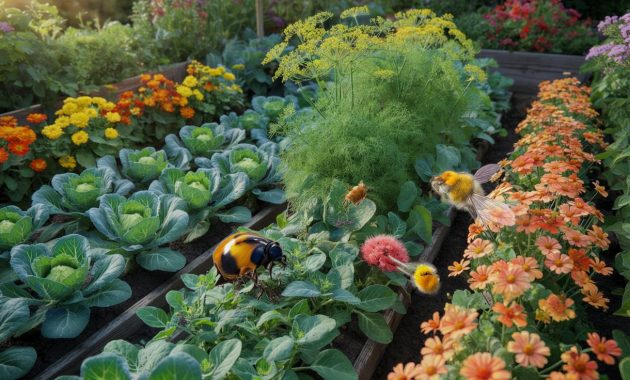
The first time you watch your perfect row of lettuces vanish almost overnight, you understand what “garden heartbreak” means. One evening everything looks lush and proud. The next morning, all you see is a lacework of leaves and a few smug slugs hiding in the mulch.
You start googling sprays, traps, even weird homemade potions. Deep down, you know that’s not really the garden you wanted.
Then one day you walk into a different kind of vegetable patch. No harsh smells, no blue pellets on the soil. Just bees humming, ladybirds tucked inside flowers, soft clouds of color between the tomato stakes. The cabbages are untouched, the beans are clean, and yet the place feels alive, not controlled.
Something invisible is doing the work for this gardener.
Marigolds: the scrappy bodyguards between your rows
You notice them first because they are loud. Orange, lemon yellow, russet red—marigolds never whisper. They shout from the edges of beds and between tomatoes, like a bright fence that forgot to be serious.
Old gardeners plant them without even thinking about it. They stab a few seedlings into any empty corner, confident those ruffled heads will take care of business. The science is catching up: marigolds release compounds from their roots and petals that confuse certain pests and even repel some soil-borne nematodes.
They’re like the neighborhood kids who hang out on the street so much that trouble chooses another block.
I once visited a small urban garden squeezed between two concrete walls. The owner, an elderly man with soil permanently under his nails, had one simple rule: “Tomatoes never go in the ground without a ring of marigolds.”
That year, his neighbor’s tomato patch, just a few meters away, was wrecked by whiteflies and aphids. Same city air, same scorching sun, same cheap compost. The only visible difference? His plants were framed with bright marigolds, buzzing with tiny parasitic wasps and hoverflies sipping nectar, then flying off to hunt pests.
He shrugged, as if it was obvious. “I feed the flowers, they feed the good bugs, the good bugs clean the plants,” he said, tying a stem with a piece of old string.
➡️ The invisible roots of dementia form in the earliest years of life
➡️ Put A Lemon Slice In Your Cold Oven : Why People Are Doing It And When It Actually Helps
➡️ What it means when someone walks ahead of you, according to psychology
➡️ Experts warn dog owners: limiting walks to brisk marching creates frustration
➡️ A young Korean mathematician finally cracks one of the century’s toughest puzzles
The logic is simple. Pests thrive on stressed monocultures: long, neat rows of the same plant, same height, same smell. To a hungry aphid or beetle, that’s an all-you-can-eat buffet with perfect signage. Marigolds break that visual and chemical signal.
Their strong scent can mask the smell of nearby vegetables, while their nectar and pollen keep beneficial insects hanging around. Ladybirds, lacewings, and hoverflies need flowers to fuel their adult lives, but their larvae are pure predators, ripping through aphids and soft-bodied pests.
You’re not just “repelling bad bugs”; you’re building a place where the right ones want to stay for dinner.
Dill and fennel: airy umbrellas that host tiny pest hunters
Once your beds are in, tuck some dill or fennel at the edges or in any gap where the soil feels bare. Their feathery foliage barely takes up visual space, and those umbrella-shaped flowers rise above everything like little golden fireworks.
These plants are insect magnets. Their flat clusters of tiny blooms are ideal landing pads for hoverflies, parasitic wasps, and predatory beetles. The insects feed on nectar and pollen, then patrol the rest of your garden in search of caterpillars, aphids, and other soft targets.
Sow a few seeds every couple of weeks in spring, then again in late summer, and you’ll have a rolling buffet for allies from early season to first frost.
We’ve all been there, that moment when you discover your kale leaves full of green caterpillars and frass, and you stand there with a sinking feeling, wondering if you should just pull the whole plant.
One gardener I met in a community plot had almost given up on brassicas. Then she started leaving a patch of fennel to flower, instead of cutting it down once she’d taken what she needed for cooking. The next season, she noticed something: less damage on the cabbages, more strange, tiny wasps hovering around the fennel blooms.
By midsummer, she found parasitized caterpillars curled and stiff, like little warning signs. She hadn’t changed the variety of cabbages. She’d simply handed free nectar to the insects that specialize in hunting the pests she hated.
There’s a quiet chain reaction at play. Fennel and dill don’t just “attract good bugs” in some vague way. Those flat yellow flowers are exactly the right architecture for tiny wasps and hoverflies with delicate legs. They can land easily, walk across dozens of nectaries in seconds, and move on without wasting energy.
More energy means more eggs laid on pest larvae, more aphids pierced and drained, more caterpillars turned into unwilling hosts. The airy foliage also hosts beneficial spiders and provides shade for ground beetles that eat slugs at night.
Let’s be honest: nobody really inspects every leaf every single day. When life gets busy, these self-recruiting pest patrols are your safety net.
Calendula and nasturtium: decoys, traps, and pollinator hotels
If marigolds are bodyguards, calendula and nasturtium are the charismatic troublemakers you secretly rely on. Start by sowing calendula (pot marigold) along the front of your beds. Its soft orange flowers stay open through cool days, feeding bees when little else blooms.
Nasturtiums, with their round leaves and trailing stems, can spill out of containers, creep between raised beds, or form a living skirt around cabbages and beans. Aphids absolutely love them, which sounds like bad news until you realize they’ll cluster there first, sparing more precious crops.
Plant them as “decoy islands”, a few steps away from what you most want to protect. Then watch who arrives.
The first year I used nasturtiums as traps, I almost panicked. Within weeks, their tender stems were packed with black aphids. At a glance, it looked like failure. But the beans next door were untouched, their leaves glossy and clean.
By the third week, the nasturtium patch had turned into a battlefield. Ladybird larvae—those little alligator-shaped creatures most people don’t recognize—were crawling over the stems, slicing through aphid colonies. Lacewing larvae, almost invisible unless you really stare, joined the feast. The nasturtiums looked rough, but that was their secret job: to take the hit, feed the predators, and keep the wave of pests away from the beans and peas.
The calendula nearby quietly hosted hoverflies and bees, keeping the whole system ticking over. Ugly in places, yes. Effective, absolutely.
“A healthy vegetable garden is not spotless,” an organic grower told me once. “It’s full of small dramas you don’t have to stage-manage.”
- Calendula – Sows easily, flowers for months, attracts pollinators and hoverflies, and even offers petals for salads.
- Nasturtium – Acts as a classic trap crop for aphids and flea beetles, while its flowers and young leaves are edible and peppery.
- Marigold – Disrupts soil pests and flying insects, brings color, and pairs beautifully with tomatoes and peppers.
- Fennel & dill – Provide nectar for parasitic wasps and hoverflies, plus fragrant leaves and seeds for the kitchen.
- Mixed planting – Interplanting these flowers around cabbage, lettuce, beans, and tomatoes creates a living defense perimeter.
You don’t need a perfectly orchestrated design. Start messy and responsive. Plant what you like to look at and what you’ll actually sow again next year.
The plain truth is that a few well-chosen flowers can do more long-term pest control than a cupboard full of quick fixes. *And they give something back to you that no spray ever will: a garden that feels alive, not anxious.*
Building your own “insect city” around the vegetable beds
Look at your vegetable patch like a small city and ask one question: why would a beneficial insect move here and stay? Food, shelter, and variety—that’s what they’re after.
Mix those four plants like districts in a town. Marigolds as busy street corners. Dill and fennel as high-rise nectar bars. Calendula as open plazas. Nasturtiums as the rougher neighborhood where the trouble gathers and gets dealt with.
Once you begin to see your garden this way, you stop chasing individual pests and start designing an ecosystem that quietly takes care of them.
You might notice your beds look less uniform, more improvised. A marigold pops up in the middle of the onions, a nasturtium sneaks under the broccoli, a stalk of fennel towers over the carrots. To some eyes, that’s chaos. To beneficial insects, it’s infrastructure.
This is where sharing stories with other gardeners becomes gold. One person swears by nasturtiums near cucumbers, another discovered that a simple border of calendula cut their aphid problems in half. Someone else, short on space, tucks dill into containers and still sees hoverflies patrolling their balcony.
Each garden writes its own little field report on what works in that specific microclimate, soil, and light. One of the quiet joys is comparing those notes.
None of this means you’ll never see a nibble or a hole again. You will. The difference is scale and stress. A cabbage with a few slug bites is still dinner. A tomato plant with a handful of aphids is not a crisis when ladybirds are already on the way.
You’re shifting from constant firefighting to a slower, more patient kind of gardening, one that leans on flowers instead of fear. If you’ve already tried sprays and felt uneasy about them, this approach lands differently in your body.
Maybe that’s the real invitation here: to see marigolds, dill, calendula, and nasturtiums not as decorative extras, but as partners. And then to notice, month after month, how much less you have to do once the right insects know your garden exists.
| Key point | Detail | Value for the reader |
|---|---|---|
| Use flowers as allies | Plant marigold, calendula, nasturtium, dill, and fennel among vegetables | Reduces reliance on pesticides and creates natural pest control |
| Attract beneficial insects | These plants offer nectar, pollen, and shelter for predators and pollinators | Brings in ladybirds, hoverflies, parasitic wasps, and bees that protect crops |
| Design for diversity | Interplant rather than keep rigid rows of single crops | Breaks pest cycles, stabilizes the garden, and makes beds more resilient |
FAQ:
- Do these plants completely eliminate pests?Not entirely. They reduce pest pressure and keep problems at a manageable level by supporting natural predators, so you see fewer outbreaks and less severe damage.
- Can I grow these flowers in pots on a balcony?Yes. Marigolds, calendula, dill, and nasturtium all do well in containers, and they’ll still attract beneficial insects even in small urban spaces.
- Where should I place them in my vegetable garden?Dot them through the beds and along edges: marigolds near tomatoes and peppers, nasturtiums around brassicas and beans, dill and fennel at the back or corners, calendula at the front for easy picking.
- Will nasturtiums steal nutrients from my crops?They’re relatively light feeders. As long as soil is reasonably fertile and plants aren’t overcrowded, they won’t significantly compete, and the pest-control benefit outweighs the small cost.
- Do I need to let these plants flower for them to work?Yes for attracting beneficial insects. Flowers provide nectar and pollen, so resist the urge to deadhead everything too strictly—leave plenty of blooms for your insect allies.