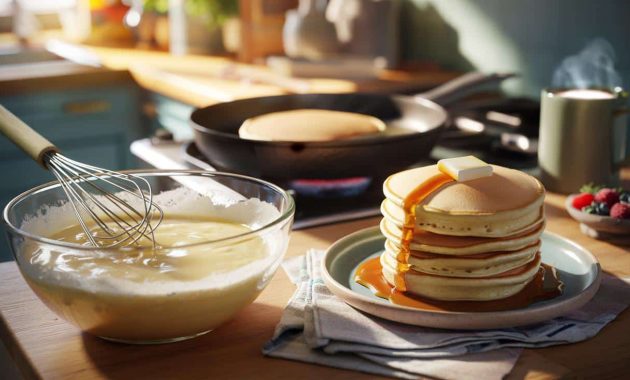
The sizzle of the pan, the promise of fluffy bliss – homemade pancakes should be a simple delight. But all too often, the end result is a dense, flat disappointment. What’s the secret to tall, airy pancakes that would make even the most seasoned brunch connoisseur nod in approval?
The answer lies in a simple yet often overlooked step: letting the batter rest. This quick trick is the difference between pancakes that rise to the occasion and those that fall flat. By allowing the batter to sit for just a few minutes, you unlock the key to light, tender perfection.
Discover the science behind this transformative technique and learn how to master the art of homemade pancake greatness.

The Science Behind Resting Pancake Batter
When you first mix the ingredients for your pancake batter, the proteins in the flour and eggs begin to form gluten strands. This gluten development is essential for creating the structure that allows the pancakes to rise. However, if you immediately pour the batter onto the hot pan, the gluten doesn’t have time to properly relax and develop.
Letting the batter rest for 10-15 minutes gives those gluten strands time to unwind and re-align, creating a more uniform and elastic structure. This relaxation process helps the batter retain more of the air bubbles that form during mixing, resulting in taller, fluffier pancakes.
The resting period also allows the starch granules in the flour to fully hydrate, further enhancing the batter’s ability to hold onto those precious air pockets. It’s a simple but transformative step that unlocks the full potential of your homemade pancake batter.

The Resting Routine for Fluffy Pancakes
To incorporate this game-changing trick, simply mix your pancake batter as usual, then let it sit for 10-15 minutes before cooking. During this time, the batter will thicken slightly as the gluten relaxes and the starch granules hydrate.
When you’re ready to cook, give the batter a gentle stir to incorporate any settled ingredients. Then scoop the batter onto your preheated, oiled or buttered griddle or skillet, using about 1/4 cup per pancake. Cook for 2-3 minutes per side, until golden brown and cooked through.
By following this simple resting routine, you’ll be rewarded with tall, airy pancakes that are light and tender, with that perfect, fluffy texture that elevates a humble breakfast into a true culinary delight.

The Difference Resting Makes
| Without Resting | With Resting |
|---|---|
| Dense, flat pancakes | Tall, fluffy pancakes |
| Tough, chewy texture | Light, tender texture |
| Uninspiring appearance | Visually appealing |
The difference is night and day. Pancakes made with rested batter rise higher, develop a more delicate crumb, and boast a light, airy texture that melts in your mouth. And the visual appeal is undeniable – those tall, golden-brown beauties are sure to impress even the most discerning brunch guests.
So why settle for dense, disappointing pancakes when you can unlock the secret to fluffy, Instagram-worthy perfection with just a brief resting period? It’s a small investment of time that yields big dividends in the form of breakfast bliss.
“Letting the batter rest is the single most important step for achieving light, fluffy pancakes at home. It’s a game-changer that transforms the texture and appearance of the final dish.”
– Sarah Johnson, Culinary Instructor and Pancake Aficionado

Troubleshooting Tips for Perfectly Rested Pancakes
While the resting process is simple, there are a few tips to ensure optimal results:
Resist the urge to overmix. Aggressive stirring can develop too much gluten, leading to tough, dense pancakes even after resting. Mix just until the dry and wet ingredients are combined.

Let the batter rest at room temperature. Chilling the batter in the fridge can slow the hydration process and make it harder for the gluten to relax properly.
Avoid adding too many mix-ins. Extra ingredients like fruit, nuts, or chocolate chips can disrupt the batter’s structure and prevent the pancakes from rising as well.
“Pancake batter is a delicate balance, and the resting period is key to unlocking its full potential. With a little patience and the right technique, you can take your homemade pancakes to new fluffy heights.”
– Alex Ramirez, Breakfast Food Scientist

Elevate Your Pancake Game with Resting
The next time you’re craving homemade pancakes, remember the transformative power of that simple resting period. By allowing the batter to sit for just 10-15 minutes, you’ll be rewarded with tall, light, and airy pancakes that are sure to impress.
So ditch the dense, flat pancakes of the past and embrace the fluffy, Instagram-worthy perfection that resting can bring. It’s a small step that makes a world of difference in your Sunday brunch spread.

Get ready to savor the light, tender texture and visually stunning results of properly rested pancake batter. Your taste buds (and your social media followers) will thank you.
FAQs: Mastering Homemade Pancake Perfection
How long should I let the pancake batter rest?
The optimal resting time is 10-15 minutes. This gives the gluten strands time to relax and the starch granules to fully hydrate, resulting in tall, fluffy pancakes.
Can I make the batter ahead of time and let it rest in the fridge?
It’s best to let the batter rest at room temperature. Chilling the batter in the fridge can slow the hydration process and make it harder for the gluten to relax properly.

Do I need to stir the batter again after resting?
Yes, give the batter a gentle stir to incorporate any settled ingredients before scooping it onto the griddle. This ensures even cooking and helps maintain the batter’s structure.
Can I add mix-ins to the rested batter?
It’s best to avoid adding too many extra ingredients like fruit, nuts, or chocolate chips. These can disrupt the batter’s structure and prevent the pancakes from rising as well.
What’s the best way to cook rested pancake batter?
Cook the pancakes on a preheated, oiled or buttered griddle or skillet, using about 1/4 cup of batter per pancake. Cook for 2-3 minutes per side, until golden brown and cooked through.
How do I know if my pancakes are done?
Look for bubbles forming on the surface of the pancakes, and gently lift the edge to check for a golden-brown color. When the edges start to look dry and the centers are set, they’re ready to flip.
Can I keep the rested batter in the fridge to use later?
Yes, you can store the rested batter in the fridge for up to 3 days. Just give it a gentle stir before scooping it onto the griddle to cook.
What else can I do to ensure fluffy pancakes?
In addition to resting the batter, be sure to use fresh, high-quality ingredients and avoid overmixing. Separating the eggs and whipping the whites can also help create an extra-light, airy texture.