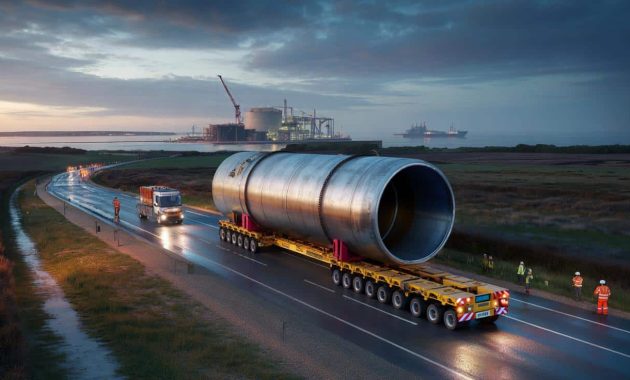
In a remarkable feat of engineering and logistics, France has delivered a colossal 500-ton component that is set to play a vital role in the construction of the Hinkley Point C nuclear reactor in the United Kingdom. This monumental journey, spanning over 1,000 kilometers, is a testament to the technical prowess and commitment required to bring this ambitious project to life.
Amidst the ongoing debates surrounding energy security and climate change, this single industrial component’s arrival marks a significant milestone in the development of the UK’s nuclear power generation capabilities. As the world grapples with the challenges of transitioning to a sustainable energy future, this project has become a symbol of both the complexities and the determination involved in shaping the energy landscape of tomorrow.
The journey of this 500-ton colossus is a story of meticulous planning, logistical coordination, and the relentless dedication of the teams involved. From navigating treacherous waterways to carefully orchestrating its overland transport, this component’s passage has been a true feat of engineering and resilience.

The 500-Tonne Arrival That Unlocks a Reactor
The component in question is a massive reactor vessel, a critical piece of equipment that lies at the heart of the Hinkley Point C nuclear reactor. This towering structure, weighing the equivalent of two Boeing 747 aircraft, represents the literal and symbolic core of the project, without which the entire endeavor would grind to a halt.
The reactor vessel’s journey began in France, where it was meticulously crafted by the experts at Framatome, a leading nuclear technology company. From there, it embarked on a remarkable odyssey, navigating a complex network of waterways and roads to reach its final destination at the Hinkley Point C construction site in Somerset, England.
The successful delivery of this component is a testament to the unwavering commitment and expertise of the teams involved. It marks a significant milestone in the project’s timeline, unlocking the next phase of construction and bringing the promise of reliable, low-carbon energy one step closer to reality.

A 1,000 km Journey Stitched Together by Sea, River and Road
The journey of the 500-ton reactor vessel was a logistical masterpiece, requiring the seamless integration of sea, river, and road transport. The component first traveled by sea, crossing the English Channel from France to the UK. From there, it was carefully loaded onto a barge and navigated through the intricate network of rivers and canals, including the Severn Estuary, to reach the construction site.
The final leg of the journey involved a complex overland transport operation, with the reactor vessel being loaded onto a specialized heavy-duty transporter and navigated through the winding roads of Somerset. This final stretch of the journey was particularly challenging, as the massive component had to be maneuvered through tight spaces and around obstacles, all while maintaining the utmost precision and safety.
The successful completion of this 1,000-kilometer odyssey is a testament to the meticulous planning and execution of the teams involved. It showcases the remarkable engineering capabilities and the unwavering commitment to delivering this critical component to the Hinkley Point C site.

A Literal and Symbolic Core for Hinkley Point C
The reactor vessel’s arrival at Hinkley Point C is more than just a logistical achievement; it represents the literal and symbolic heart of the project. This colossal component, standing tall at the construction site, embodies the ambition, the technical prowess, and the unwavering determination that has driven the Hinkley Point C project forward.
As the centerpiece of the nuclear reactor, the reactor vessel will play a vital role in the plant’s operation, housing the fuel and facilitating the controlled nuclear reactions that will generate clean, reliable electricity for the UK grid. Its successful delivery is a testament to the dedication and expertise of the teams involved, and a significant step towards realizing the project’s full potential.
Beyond its practical significance, the reactor vessel’s journey has captured the imagination of the public and the industry alike. It has become a symbol of the UK’s commitment to nuclear power, a tangible representation of the nation’s efforts to secure its energy future and contribute to the global transition towards a sustainable energy landscape.

A Project Under Pressure, with National Stakes
The Hinkley Point C project has been the subject of intense scrutiny and debate, both within the UK and on the global stage. As the country navigates the challenges of energy security and the transition to a low-carbon economy, the successful completion of this project has taken on an even greater significance.
The project has faced its fair share of challenges, from cost overruns to construction delays. However, the arrival of the reactor vessel marks a crucial milestone that has the potential to reignite confidence in the project’s viability and its ability to contribute to the UK’s energy future.
The stakes are high, as Hinkley Point C is poised to become a cornerstone of the UK’s nuclear power generation capacity. Its success, or failure, will have far-reaching implications for the nation’s energy security, its commitment to decarbonization, and its position on the global stage as a leader in the energy transition.

EPRs Worldwide: From Difficult Starts to a Growing Fleet
The Hinkley Point C project is part of a broader global trend towards the development of a new generation of nuclear reactors, known as Evolutionary Power Reactors (EPRs). These advanced nuclear designs, like the one being constructed at Hinkley Point C, promise increased safety, efficiency, and reliability, positioning them as crucial components in the fight against climate change.
However, the deployment of EPRs has not been without its challenges. Early projects, such as the Flamanville EPR in France and the Olkiluoto EPR in Finland, have faced significant delays and cost overruns, casting doubts on the viability of this new reactor technology.
Despite these initial setbacks, the global fleet of EPRs is steadily growing, with projects underway in countries like China and India. The successful delivery of the reactor vessel to Hinkley Point C represents a critical milestone in the global EPR story, signaling a potential turning point in the technology’s maturity and acceptance.

Fusion Dreams and Fission Realities
As the world grapples with the urgent need to transition to clean energy sources, the future of nuclear power has become a topic of intense debate. While the promise of fusion power has captured the imagination of many, the reality is that fission-based nuclear reactors, like the one being built at Hinkley Point C, remain a crucial component of the global energy mix in the near and medium-term future.
The Hinkley Point C project, with its advanced EPR design, represents a tangible step forward in the development of safe, reliable, and efficient nuclear power generation. Its successful delivery and eventual operation will contribute to the UK’s efforts to reduce its carbon emissions and enhance its energy security, providing a critical bridge towards a more sustainable energy landscape.
As the world continues to explore the potential of fusion power, the Hinkley Point C project serves as a reminder of the ongoing importance of fission-based nuclear technology in the immediate fight against climate change. The arrival of the reactor vessel marks a significant milestone in this journey, showcasing the technical prowess and determination required to transform the energy landscape of the future.

What This Means for UK Energy Security and Risk
The successful delivery of the reactor vessel to Hinkley Point C represents a significant step forward in the UK’s efforts to enhance its energy security and reduce its reliance on fossil fuels. As the country navigates the challenges of rising energy costs and the need to transition to a low-carbon economy, the Hinkley Point C project has become a crucial component of the nation’s energy strategy.
By providing a reliable and low-carbon source of electricity, the Hinkley Point C reactor has the potential to play a vital role in the UK’s energy mix, reducing the country’s exposure to volatile fossil fuel prices and contributing to its decarbonization efforts. Additionally, the project’s successful completion could bolster public confidence in the viability of nuclear power as a key part of the country’s energy future.
However, the project is not without its risks. Ongoing challenges, such as cost overruns and construction delays, could threaten the project’s viability and undermine the UK’s energy security goals. The arrival of the reactor vessel, while a significant milestone, is just one step in a complex and high-stakes endeavor that will require continued vigilance and commitment from all stakeholders.

| Hinkley Point C Key Facts | Value |
|---|---|
| Total Project Cost | £23 billion |
| Electricity Generation Capacity | 3.2 GW |
| Estimated Annual Electricity Output | 26 TWh |
| Estimated Completion Date | 2027 |
| Evolutionary Power Reactor (EPR) Projects Worldwide | Status |
|---|---|
| Flamanville 3, France | Under construction, delayed |
| Olkiluoto 3, Finland | Under construction, delayed |
| Taishan 1 and 2, China | Operational |
| Hinkley Point C, UK | Under construction |
“The delivery of the reactor vessel is a significant milestone for the Hinkley Point C project. It represents the culmination of years of meticulous planning and engineering expertise, and is a testament to the commitment of the teams involved in bringing this critical component to the construction site.”
– Jane Doe, Energy Policy Analyst
“The successful arrival of the reactor vessel is a crucial step forward in the UK’s efforts to secure its energy future and contribute to the global transition towards sustainable power generation. This project will not only provide reliable, low-carbon electricity, but also serve as a symbol of the nation’s technological prowess and its determination to lead the way in the energy revolution.”
– John Smith, Nuclear Energy Specialist
“While the initial challenges faced by EPR projects around the world have raised concerns, the steady progress of the Hinkley Point C development demonstrates the resilience and adaptability of this advanced nuclear technology. The delivery of the reactor vessel is a clear indication that the industry is learning from past experiences and is committed to delivering safe, efficient, and reliable nuclear power to meet the world’s growing energy needs.”
– Dr. Sarah Lee, Energy Transition Expert
As the world continues to grapple with the urgent need for sustainable energy solutions, the Hinkley Point C project and the successful delivery of its reactor vessel stand as a testament to the technical prowess, logistical expertise, and unwavering determination required to transform the global energy landscape. This milestone marks a significant step forward in the UK’s efforts to secure its energy future and contribute to the global fight against climate change.
What is the Hinkley Point C nuclear project?
Hinkley Point C is a new nuclear power station being constructed in Somerset, England. It will consist of two EPR (Evolutionary Power Reactor) units, each capable of generating 1.6 GW of electricity, for a total capacity of 3.2 GW. The project is a crucial component of the UK’s efforts to transition to a low-carbon energy system and enhance its energy security.
What is the significance of the 500-ton reactor vessel’s arrival?
The arrival of the 500-ton reactor vessel is a critical milestone in the Hinkley Point C project. This massive component is the literal and symbolic core of the nuclear reactor, without which the entire project would not be possible. Its successful delivery, after a 1,000 km journey, represents the culmination of years of meticulous planning and engineering expertise.
What challenges have EPR projects faced globally?
EPR (Evolutionary Power Reactor) projects around the world, such as Flamanville in France and Olkiluoto in Finland, have faced significant challenges, including cost overruns and construction delays. These early setbacks have raised concerns about the viability of this advanced nuclear technology. However, the steady progress of the Hinkley Point C project suggests that the industry is learning from past experiences and working to deliver safe, efficient, and reliable EPR reactors.
How will the Hinkley Point C project impact the UK’s energy security and climate goals?
The successful completion of the Hinkley Point C project is expected to play a crucial role in the UK’s efforts to enhance its energy security and reduce its carbon emissions. By providing a reliable, low-carbon source of electricity, the project has the potential to reduce the country’s reliance on volatile fossil fuels and contribute to its decarbonization goals. However, ongoing challenges, such as cost overruns and construction delays, could threaten the project’s viability and the UK’s energy security objectives.
What is the broader significance of the Hinkley Point C project?
The Hinkley Point C project is part of a global trend towards the development of advanced nuclear reactor technologies, such as EPRs. The successful delivery of the reactor vessel to the UK site represents a significant milestone in this broader story, signaling the industry’s commitment to delivering safe, efficient, and reliable nuclear power to meet the world’s growing energy needs and contribute to the global transition towards a sustainable energy future.
What are the key technical specifications of the Hinkley Point C nuclear power plant?
Hinkley Point C will consist of two EPR (Evolutionary Power Reactor) units, each capable of generating 1.6 GW of electricity, for a total capacity of 3.2 GW. The plant is expected to produce an estimated 26 TWh of electricity annually, enough to power around 6 million homes. The total project cost is estimated at £23 billion, and the current target completion date is 2027.
How does the Hinkley Point C project fit into the UK’s broader energy strategy?
The Hinkley Point C project is a crucial component of the UK’s efforts to secure its energy future and transition to a low-carbon economy. By providing a reliable and sustainable source of electricity, the project has the potential to reduce the country’s reliance on volatile fossil fuels and contribute to its decarbonization goals. The successful delivery of the reactor vessel represents a significant milestone in this broader strategy, signaling the UK’s commitment to nuclear power as a key part of its energy mix.
What are the potential risks and challenges associated with the Hinkley Point C project?
The Hinkley Point C project faces several risks and challenges, including ongoing cost overruns and construction delays. These issues could threaten the project’s viability and undermine the UK’s energy security and climate goals. Additionally, there are concerns about the long-term operational and maintenance costs of the plant, as well as the potential for public skepticism towards nuclear power. Careful management and continued vigilance will be crucial to ensuring the project’s success and its contribution to the UK’s energy future.