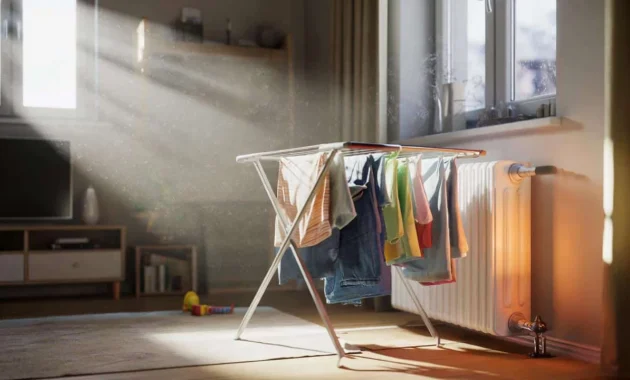
Sarah hung her son’s school uniform on the radiator rack Tuesday evening, proud of her efficiency. By Wednesday morning, the shirt was perfectly dry and ready for another day. But as sunlight streamed through the kitchen window, she noticed something unsettling — tiny particles dancing in the air like snow, settling on every surface within hours of cleaning.
She’d been drying clothes on radiators for years without thinking twice about it. The practice seemed harmless, even smart. Why waste energy on a tumble dryer when the heating was already running? Yet those floating dust particles told a different story, one that millions of households unknowingly live with every winter.
What Sarah discovered that morning reveals a hidden connection between our laundry habits and indoor air quality that most of us never consider.

The Hidden Science Behind Radiator Drying and Dust Circulation
When you place wet clothes near radiators, you’re unknowingly creating a perfect dust distribution system. The process starts innocently enough — heat from the radiator causes water to evaporate from your laundry, making everything dry faster. But that same heat creates powerful air currents that carry much more than just moisture.
“Most people don’t realize that radiators create convection currents that can lift and spread household particles throughout an entire room,” explains Dr. Michael Chen, an indoor air quality specialist. “When you add moisture from drying clothes, you’re essentially turbocharging this process.”
The warm air rises from the radiator, picks up water vapor and microscopic particles from your clothes, then spreads these throughout your living space. Wet fabric releases more than just water — it sheds tiny fibers, residual detergent particles, and even microplastics from synthetic materials.

These particles mix with existing household dust: dead skin cells, pet dander, outdoor pollutants, and debris that would normally settle. Instead of staying put, they become airborne again, creating that hazy quality you sometimes notice in bright sunlight.
What Really Happens When You Dry Clothes on Radiators
The process creates several interconnected problems that go far beyond simple dust circulation:
- Increased humidity levels: Wet clothes can release up to 2 liters of water into your indoor air
- Enhanced particle movement: Warm air currents carry dust 3-5 times farther than still air
- Fiber shedding: Heat causes fabrics to release microscopic fibers more readily
- Dust mite activity: Higher humidity creates ideal breeding conditions
- Surface contamination: Particles settle on electronics, furniture, and food preparation areas
The impact varies depending on your setup. Here’s what research shows about different drying methods:

| Drying Method | Dust Increase | Humidity Impact | Air Circulation Effect |
| Direct on radiator | 300-400% higher | High | Maximum disruption |
| Rack near radiator | 200-250% higher | Moderate-High | Significant |
| Heated towel rail | 100-150% higher | Moderate | Localized |
| Room temperature drying | 50-75% higher | Low-Moderate | Minimal |
“The worst offenders are synthetic fabrics dried directly on hot radiators,” notes environmental researcher Lisa Thompson. “They release the most particles and create the strongest air currents.”
Who Suffers Most from Indoor Dust Increases
While everyone experiences some impact from increased dust circulation, certain groups face more serious consequences. Children and elderly family members often show symptoms first — unexplained coughing, watery eyes, or increased allergy reactions during winter months.
People with asthma find their symptoms worsen mysteriously when heating season begins, not realizing that drying clothes on radiators contributes to their respiratory problems. The combination of higher humidity and airborne particles creates an ideal environment for dust mites, which are major asthma triggers.

Pet owners face double trouble. Animal dander already circulates through their homes, but radiator drying amplifies this effect. Dog and cat allergens can remain airborne for hours instead of settling quickly to floors where regular cleaning removes them.
Even healthy adults notice differences in their living environment. Electronics accumulate dust faster, requiring more frequent cleaning. Bookshelves, picture frames, and decorative items develop that persistent gray film that seems to return within days of dusting.
Smart Solutions That Actually Work
Breaking the cycle doesn’t mean abandoning indoor drying completely. Small changes make dramatic differences in air quality and dust levels.

Position drying racks at least three feet away from radiators. This distance prevents the strongest convection currents from grabbing particles directly from wet clothes. You’ll still get faster drying from ambient room heat without creating dust tornadoes.
Crack a window slightly during drying sessions, even in cold weather. Just an inch of opening allows moisture to escape instead of saturating your indoor air. The fresh air circulation also helps particles settle rather than remaining suspended.
“Strategic ventilation makes a huge difference,” confirms HVAC engineer Robert Martinez. “Even five minutes of cross-ventilation can clear airborne particles that would otherwise circulate for hours.”

Choose your drying locations carefully. Bathrooms and utility rooms handle moisture better than living areas. These spaces typically have exhaust fans and surfaces designed for higher humidity levels.
Consider fabric choices too. Natural materials like cotton and linen shed fewer synthetic microparticles than polyester blends. They also dry more predictably and release less static charge that attracts additional dust.
Time your drying sessions strategically. Start the process when you can open windows briefly or run exhaust fans. Avoid drying clothes overnight in bedrooms where you’ll breathe concentrated particles for eight hours straight.

Regular maintenance prevents particle buildup. Clean radiators monthly during heating season, removing dust that would otherwise get blown around your home. Vacuum drying areas weekly, paying attention to floor spaces under racks where particles settle.
FAQs
Is it safe to dry clothes directly on radiators?
While not immediately dangerous, this practice significantly increases indoor dust and humidity levels, potentially affecting air quality and respiratory health.
How long does it take for dust to settle after drying clothes on radiators?
Particles can remain airborne for 2-8 hours depending on room ventilation and air circulation patterns.

Do heated towel rails cause the same dust problems?
Heated towel rails create less air circulation than large radiators, but they still increase local humidity and particle movement.
What’s the best way to dry clothes indoors without increasing dust?
Use a well-ventilated room away from direct heat sources, crack windows slightly, and run exhaust fans when possible.
Can air purifiers help with dust from radiator drying?
Yes, HEPA air purifiers can capture many airborne particles, but prevention through better drying practices is more effective.
How often should I clean areas where I dry clothes on radiators?
Clean surrounding surfaces weekly and vacuum the drying area twice weekly during active use periods.