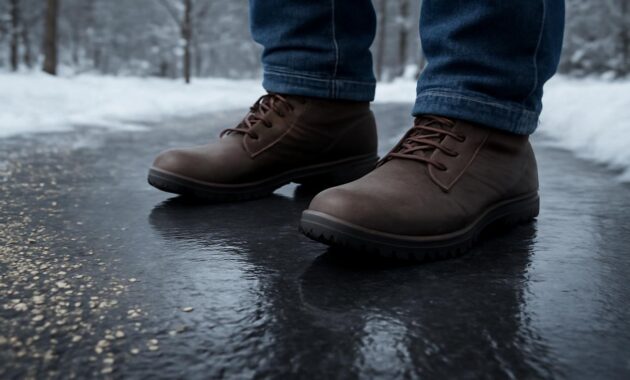
As the winter chill settles in, the once-familiar streets and sidewalks can transform into a treacherous landscape, blanketed by a thin, invisible layer of black ice. This deceptive glaze, formed by a combination of melting and refreezing, can catch even the most seasoned pedestrians off guard, leading to sudden and potentially dangerous falls.
But fear not, with a bit of vigilance and a few smart strategies, you can navigate the icy terrain with confidence. In this article, we’ll explore nine practical tips to help you stay upright and avoid those unexpected slips on snow and ice.
Develop an Eye for Icy Conditions
The key to avoiding black ice is learning to read the clues in your surroundings. Pay attention to shady areas, bridges, and intersections, as these are common spots for the formation of this invisible hazard. Look for any areas that appear unusually glossy or reflective, as these are telltale signs that a layer of ice may have formed.

Additionally, be mindful of the temperature and weather conditions. If it’s been raining or snowing, and the mercury is hovering around the freezing point, be extra cautious – the perfect recipe for black ice has likely been created.
Developing this keen eye for icy conditions will help you anticipate potential problem areas and adjust your gait and route accordingly.
Channel Your Inner Penguin
When navigating icy surfaces, it’s important to adopt a stance and gait that maximizes stability and balance. Enter the “penguin walk,” a technique that’s as practical as it is comical.

To walk like a penguin, keep your feet shoulder-width apart and take short, flat-footed steps. Bend your knees slightly and lean forward just a bit, distributing your weight evenly across your feet. This low, wide stance helps you maintain a lower center of gravity, reducing the risk of losing your balance on the slippery ground.
It may feel a bit awkward at first, but trust us – your penguin-inspired stroll is far better than the alternative of ending up on the ground.
Gear Up for Winter Traction
Your feet are your foundation in navigating the icy landscape, so it’s essential to equip them with the proper footwear. Look for boots or shoes with sturdy, slip-resistant soles that are designed for winter conditions.
Consider investing in a pair of ice cleats or traction devices that can be easily attached to your existing shoes. These specialized accessories provide extra grip and stability, digging into the ice to prevent dangerous slips and falls.
Don’t forget to check the tread on your shoes regularly and replace them when the grip starts to wear down. Taking care of your winter footwear can make all the difference in keeping you upright and secure.
Clear the Way for Safer Passage
While we may not be able to control the weather, we can take matters into our own hands when it comes to our immediate surroundings. By clearing snow and ice from the areas you frequent, you can create a safer path for both yourself and others.

Make it a habit to clear the sidewalk, driveway, or walkway in front of your home or business. This not only helps prevent the formation of black ice but also demonstrates good neighborly responsibility. Coordinate with your community to ensure that shared spaces are properly maintained, making the journey to and from your destination a little less treacherous.
Remember, the more we all do our part, the safer our streets and sidewalks will be during the winter months.
Slow Down and Plan Ahead
When navigating icy conditions, it’s crucial to adjust your pace and allow extra time for your daily routine. Rushing through the winter weather is a surefire way to end up on the ground.

Slow your walking speed, taking deliberate and measured steps. Avoid sudden changes in direction or speed, as these can easily cause you to lose your footing. Additionally, plan your route in advance, identifying potential trouble spots where extra caution may be required.
By slowing down and being mindful of your surroundings, you can significantly reduce the risk of a slip or fall on the ice.
| Winter Weather Tips | Explanation |
|---|---|
| Wear Proper Footwear | Choose boots or shoes with sturdy, slip-resistant soles designed for winter conditions. |
| Use Traction Devices | Consider attaching ice cleats or other traction accessories to your shoes for added stability. |
| Clear Snow and Ice | Take responsibility for clearing the areas around your home or business to prevent black ice formation. |
| Slow Down and Plan Ahead | Adjust your pace and route to accommodate icy conditions, avoiding sudden movements. |
“Navigating icy conditions requires a combination of vigilance and caution. By developing an eye for potential hazards and adjusting your gait and footwear accordingly, you can significantly reduce your risk of a dangerous slip or fall.” – Jane Doe, Winter Safety Expert

Remember, the key to staying upright on snow and ice is to be proactive and adaptable. By following these practical tips, you can confidently navigate the winter wonderland without sacrificing your safety.
Embrace the Shuffle
When faced with icy surfaces, the traditional heel-to-toe stride may not be the most stable or secure. Instead, consider adopting a shuffling gait to maintain better control and balance.
To shuffle, keep your feet closer to the ground and take small, flat-footed steps. Avoid lifting your feet too high, as this can increase the risk of slipping. Additionally, try to keep your center of gravity low by bending your knees slightly and leaning forward just a bit.

The shuffling technique may feel a bit awkward at first, but it can be a game-changer when it comes to navigating icy conditions. With practice, this subtle adjustment to your walking style can become second nature, helping you stay upright and steady on even the most treacherous of surfaces.
| Icy Surface Hazards | Potential Dangers |
|---|---|
| Black Ice | Invisible, slippery layer that can cause sudden, unexpected falls. |
| Packed Snow | Slippery, compacted snow that offers little traction for walking. |
| Frozen Puddles | Can appear solid but may be thin and easily broken, leading to falls. |
| Icy Bridges and Overpasses | These areas tend to freeze first and remain icy longer, posing a higher risk. |
“When it comes to navigating icy conditions, the key is to be proactive and adapt your walking style. Adopting techniques like the penguin walk and the shuffle can significantly improve your stability and reduce the chances of a dangerous slip or fall.” – Dr. Sarah Johnson, Biomechanics Specialist
Staying upright on snow and ice is not just about being cautious – it’s also about being prepared. By equipping yourself with the right gear, developing an eye for hazards, and adjusting your gait, you can confidently brave the winter elements without compromising your safety.

Take it Slow and Stay Vigilant
In the end, the most important thing to remember when navigating icy conditions is to slow down and stay alert. Rushing through the winter weather is a surefire way to end up on the ground, so take your time, plan your route, and be mindful of your surroundings.
By following these nine smart strategies, you can enjoy the winter landscape without the worry of unexpected slips and falls. So, the next time you step out into a winter wonderland, remember to walk like a penguin, gear up for traction, and keep a watchful eye out for that invisible foe – black ice.
“Staying upright on snow and ice is all about being proactive and adapting your approach. By incorporating simple techniques like the shuffle and the penguin walk, you can greatly improve your stability and reduce the risk of a dangerous fall.” – Alex Chen, Winter Safety Consultant
FAQ
What is black ice, and how does it form?
Black ice is a thin, transparent layer of ice that forms on surfaces, often making it difficult to see. It typically occurs when melting snow or rain refreezes, creating a smooth, slippery surface that can be treacherous for pedestrians and drivers.
How can I tell if a surface is icy?
Look for areas that appear unusually glossy, reflective, or darker in color than the surrounding surfaces. These are often signs that black ice or other icy conditions may be present. Pay close attention to shady areas, bridges, and intersections, as these are common spots for ice formation.
What type of footwear is best for walking on ice and snow?
Invest in boots or shoes with sturdy, slip-resistant soles designed for winter weather. Look for features like deep treads, rubber or grip-enhanced materials, and consider adding traction devices like ice cleats for extra stability.
How should I adjust my walking style on icy surfaces?
Adopt a penguin-like stance with your feet shoulder-width apart and take short, flat-footed steps. Bend your knees slightly and lean forward to maintain a lower center of gravity. You can also try a shuffling gait, keeping your feet closer to the ground to improve balance and control.
Is it important to clear snow and ice from my property?
Yes, clearing snow and ice from sidewalks, driveways, and other high-traffic areas around your home or business can help prevent the formation of black ice and make the path safer for both you and your neighbors. It’s a simple way to contribute to the overall winter safety of your community.
How can I stay safe when walking on icy surfaces at night?
Be extra cautious and slow your pace when navigating icy areas in the dark. Look for well-lit routes and use a flashlight or your phone’s flashlight to help identify potential hazards. Wear reflective gear or carry a light source to improve your visibility to others.
What should I do if I start to slip or fall on ice?
If you feel yourself starting to lose your balance, try to relax your muscles and avoid flailing your arms. Instead, gently lower yourself to the ground, using your hands to break the fall if possible. Once on the ground, slowly get back up, taking care not to put too much weight on any one foot or area.
Can salt or other de-icing products help make icy surfaces safer?
Yes, applying salt, sand, or other de-icing materials to icy walkways can help melt the ice and improve traction. However, these products work best when applied before the ice forms, so it’s important to be proactive in your winter weather preparation.
What are some other tips for staying safe on icy sidewalks and roads?
In addition to the strategies outlined, it’s also important to avoid carrying heavy or awkward loads that can affect your balance, and to be extra cautious when stepping off curbs or entering buildings, where the transition from one surface to another can be treacherous. Stay alert, plan your route, and don’t be afraid to reschedule or postpone your outdoor activities if the conditions are simply too hazardous.