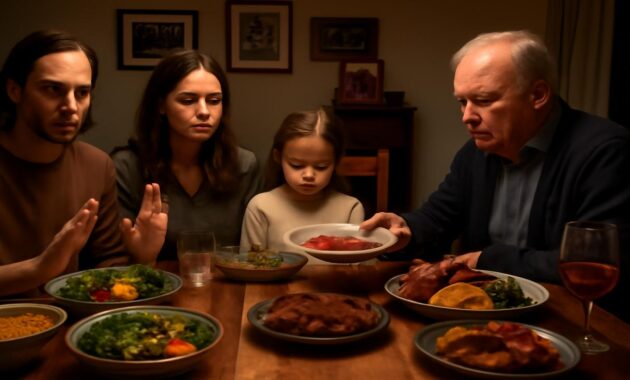
The air in the cozy kitchen was thick with the scent of roasted garlic and rosemary, a familiar Sunday aroma that usually signaled a harmonious family gathering. But this time, the tension was palpable as a young vegan couple, Sarah and Alex, stared in dismay at the gravy boat their in-laws were eagerly passing around.
Sarah and Alex had made it clear that they were raising their toddler son, Ethan, on a strictly plant-based diet, rejecting meat and other animal products. Yet, as grandparents, Sarah’s parents insisted on serving up a traditional roast chicken, complete with the dreaded gravy boat, much to the couple’s horror.
The ensuing argument quickly escalated, with both sides hurling accusations and ultimatums. “If you can’t respect our choices as parents, we won’t visit again,” Sarah declared, her voice trembling with a mix of anger and disappointment. The family feast had descended into a bitter feud, one that would echo in countless homes where differing dietary beliefs collide with family traditions.

The Promise in the Hospital Room
The roots of this conflict can be traced back to the day Ethan was born, when Sarah and Alex made a solemn promise to raise him as a vegan. “We wanted to give him the healthiest start in life,” Sarah explained, her eyes reflecting the unwavering determination that had guided their decision.
As new parents, the couple had done extensive research, convinced that a plant-based diet would not only benefit their son’s physical well-being but also align with their ethical beliefs about animal welfare and environmental sustainability. “It was a deeply personal choice, and we were prepared to stand firm,” Alex added, his voice tinged with a hint of defiance.
The decision, however, did not sit well with Sarah’s parents, who had envisioned a future filled with family barbecues and Sunday roasts. “They just couldn’t understand why we wouldn’t let Ethan enjoy the same foods they had grown up with,” Sarah said, a palpable sadness in her tone.
The First Cracks at the Dinner Table
As Ethan grew older, the tensions at the dinner table became increasingly palpable. Sarah’s parents would arrive with a platter of grilled chicken or a steaming pot roast, only to be met with polite yet firm refusals from the young couple.
“They would look at us like we were depriving Ethan of something essential,” Alex recalled, his brow furrowing with frustration. “We tried to explain our reasoning, but it felt like they were just not willing to listen.”
Mealtimes became a minefield, with the grandparents attempting to sneak bites of meat onto Ethan’s plate or coaxing him to try “just a little bit.” Sarah and Alex, determined to maintain their principles, would swiftly intervene, leading to heated exchanges that left everyone feeling hurt and misunderstood.

“You Made Us the Villains”
The rift in the family deepened as Sarah and Alex felt increasingly isolated in their decision. “They made us feel like we were the bad guys, depriving our child of something normal and essential,” Sarah said, her voice laced with a hint of bitterness.
The grandparents, on the other hand, felt that their beloved grandchild was being denied the joys of traditional family meals. “We just wanted Ethan to experience the same things we did growing up,” Sarah’s mother explained, her eyes glistening with tears. “We didn’t mean to cause so much trouble, but we couldn’t understand why they were so inflexible.”
The family feud escalated, with both sides refusing to budge and the once-close-knit clan splintering into warring factions. “I never thought it would come to this,” Alex sighed, his shoulders slumped in resignation. “We just wanted to do what we believed was best for our son.”

A Story That Echoes in Other Homes
The clash between Sarah and Alex’s vegan values and their family’s traditional eating habits is a story that reverberates across countless households. As more and more people embrace plant-based lifestyles, the friction between generational and dietary preferences has become increasingly common.
“It’s a delicate balance, trying to honor your own beliefs while also respecting the traditions and preferences of your extended family,” said Dr. Olivia Winters, a family therapist with expertise in dietary conflicts. “Both sides often feel passionately about their positions, making compromise a challenging task.”
The issue becomes even more complex when children are involved, as grandparents may feel a strong desire to share their culinary heritage with the next generation. “They see it as a way to connect with their grandchild and pass down cherished family memories,” Dr. Winters explained. “But for the parents, it can feel like a violation of their carefully cultivated values and principles.”

Finding a Path Through the Feud
Resolving such family feuds requires patience, empathy, and a willingness to find common ground. Experts suggest that open communication, setting clear boundaries, and seeking professional help, if necessary, can be crucial steps in navigating these delicate situations.
“The key is to approach the conflict with compassion and a desire to understand each other’s perspectives,” said Dr. Winters. “Grandparents may need time and education to grasp the reasons behind the vegan lifestyle, while parents must be willing to compromise and find ways to include traditional dishes in a plant-based context.”
For Sarah and Alex, the path forward remains uncertain, but they remain determined to protect their son’s well-being while also preserving their family connections. “We love our parents dearly, and we don’t want to cut them out of Ethan’s life,” Sarah said, her voice laced with a glimmer of hope. “But we also won’t compromise our values. It’s a difficult balance, and we’re still figuring it out.”

Questions & Answers About Vegan Parenting and Family Feuds
| Question | Answer |
|---|---|
| How common are disputes between vegan parents and non-vegan grandparents? | These types of conflicts are becoming increasingly common as more families embrace plant-based lifestyles. Experts estimate that up to 30% of vegan households experience tensions with extended family members over dietary differences. |
| What are some effective strategies for navigating these family feuds? | Experts suggest open communication, setting clear boundaries, seeking compromise, and involving a neutral third party, such as a family therapist, to help mediate the conflict. Finding common ground and focusing on the shared goal of the child’s well-being can also be helpful. |
| How can grandparents support vegan parents without compromising their own beliefs? | Grandparents can show support by learning about the benefits of a plant-based diet, finding vegan-friendly recipes to share, and focusing on non-food-related activities and traditions to bond with their grandchild. Maintaining an open mind and respecting the parents’ choices can go a long way in preserving family harmony. |
| What are the potential long-term consequences of these family feuds? | Unresolved conflicts can lead to lasting resentment, strained relationships, and even the estrangement of grandparents from their grandchildren. Experts emphasize the importance of finding a way to compromise and prioritize the child’s well-being over personal dietary preferences. |
“At the end of the day, we all want what’s best for the children,” said Dr. Winters. “With patience, understanding, and a willingness to find common ground, these family feuds can be navigated in a way that preserves the bond between grandparents and grandchildren, while also honoring the parents’ values and beliefs.”
| Expert Insight | Quote |
|---|---|
| Nutritionist |
|
| Family Therapist |
|
| Pediatrician |
|

“Raising a child is hard enough without the added stress of family conflicts,” said Alex, his voice tinged with a hint of weariness. “But we’re determined to find a way through this, for Ethan’s sake and for the sake of our family.”
As Sarah and Alex navigate the delicate path ahead, their story serves as a poignant reminder of the deep-seated tensions that can arise when cherished traditions collide with evolving beliefs and values. The challenge, it seems, lies in finding the courage to stand firm in one’s convictions while also cultivating the compassion to understand and accommodate the perspectives of those closest to us.

What are the potential health risks of a vegan diet for young children?
A well-planned vegan diet can provide all the necessary nutrients for a growing child, but it requires careful attention to ensure the child is getting a balanced intake of protein, vitamins, and minerals. Potential risks include deficiencies in vitamin B12, iron, calcium, and omega-3 fatty acids, which can impact growth and development if not properly addressed.
How can grandparents support a vegan grandchild without causing conflict?
Grandparents can show support by learning about the benefits of a plant-based diet, finding vegan-friendly recipes to share, and focusing on non-food-related activities and traditions to bond with their grandchild. Maintaining an open mind and respecting the parents’ choices can go a long way in preserving family harmony.
What are some tips for vegan parents to navigate family gatherings and meals?
Experts suggest communicating your values and dietary needs clearly, offering to bring vegan-friendly dishes to share, and finding compromises, such as allowing the occasional non-vegan meal in moderation. Maintaining an empathetic and solution-oriented approach can help diffuse tensions and find common ground.
How can families seek professional help to resolve dietary conflicts?
Family therapists or mediators with experience in dietary conflicts can be invaluable in helping families navigate these complex situations. They can facilitate open communication, identify areas of compromise, and provide strategies for maintaining family harmony while respecting individual beliefs and choices.
What are the potential long-term consequences of unresolved family feuds over diet?
Unresolved conflicts can lead to lasting resentment, strained relationships, and even the estrangement of grandparents from their grandchildren. Experts emphasize the importance of finding a way to compromise and prioritize the child’s well-being over personal dietary preferences.
Are there any legal considerations for vegan parents regarding their child’s diet?
In most cases, as long as the child’s overall health and development are not compromised, vegan parents have the legal right to make dietary choices for their child. However, in rare instances, authorities may intervene if there are concerns about the child’s nutritional status or overall well-being.
How can vegan parents educate their extended family about their choices?
Providing educational resources, inviting family members to learn about the benefits of a plant-based diet, and explaining the ethical and environmental reasons behind your choices can help build understanding and empathy. Emphasizing the shared goal of the child’s well-being can also foster a more collaborative approach.
Are there any cultural or religious considerations that can complicate vegan parenting?
Yes, in some cultural or religious traditions, certain foods or dietary practices hold deep significance, which can make the transition to a vegan lifestyle more challenging for families. Open dialogue, finding compromises, and respecting each other’s beliefs and customs are crucial in navigating these complex situations.