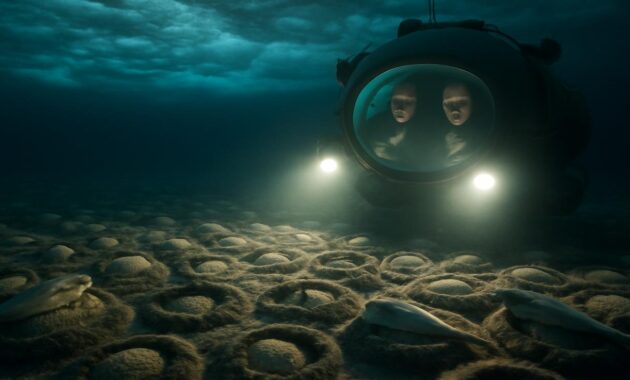
The first glimmer of light from the submersible’s cameras revealed a sight that stopped the research team in their tracks. Instead of the barren, icy seafloor they had expected, the cameras unveiled a stunning scene – thousands of neatly organized fish nests dotting the Antarctic seabed.
This unexpected discovery, made while exploring the waters beneath the Ross Ice Shelf, has sent shockwaves through the scientific community. For the first time, researchers have documented the presence of such a large-scale, organized fish-nesting habitat in the harshest, most isolated environment on Earth.
The implications of this finding are profound, shedding new light on the hidden ecosystem that thrives in the inky depths of the Antarctic Ocean.

A Vast, Unseen Nursery
The nests, which appear to have been created by a species of small, bottom-dwelling fish, stretch out in orderly patterns across the seafloor. Each nest is meticulously crafted, with a central depression surrounded by a raised circular rim, almost like a miniature amphitheater.
Scientists estimate that there are tens of thousands, if not millions, of these nests covering the seafloor in this particular region. The sheer scale of the discovery has left researchers awestruck, as they grapple with the realization that a vibrant, previously unknown community has been living beneath the ice all along.
The discovery also raises intriguing questions about the life cycles and behaviors of the fish responsible for this remarkable feat of engineering. How do they navigate the pitch-black waters to create such intricate structures? What species are they, and how have they managed to thrive in this extreme environment?

A Crucial Nursery in a Changing Climate
Beyond the scientific fascination, the discovery of these fish nests has significant implications for understanding the overall health and resilience of the Antarctic ecosystem. The nests appear to serve as a crucial spawning and nursery ground for young fish, providing a protected environment for them to hatch and grow.
In a region where food resources are scarce and the environment is constantly in flux, these nesting sites may play a vital role in sustaining fish populations and the broader marine food web. As climate change continues to transform the Antarctic, understanding the significance of these hidden habitats will be crucial for conserving the region’s delicate balance.
Moreover, the discovery highlights the extent to which even the most remote and inhospitable parts of our planet still hold secrets waiting to be uncovered. It serves as a reminder that there is still so much left to explore and discover in the vast, mysterious realms of our oceans.

A Hidden Ecosystem Revealed
The discovery of the fish nests is the latest in a series of revelations about the hidden life thriving beneath the Antarctic ice shelves. In recent years, researchers have documented the presence of diverse microbial communities, unique sponge and coral species, and even large predators like Antarctic toothfish in these isolated environments.
These findings challenge the longstanding perception of the Antarctic as a barren, lifeless wasteland. Instead, they suggest that the region is home to a vibrant and interconnected ecosystem, one that has adapted to the extreme conditions and is playing a crucial role in the overall health of the Antarctic marine environment.
As the world grapples with the effects of climate change, understanding the intricacies of these hidden ecosystems will be crucial for developing effective conservation and management strategies. The discovery of the fish nests is a powerful reminder that even in the most hostile and remote corners of our planet, life finds a way to thrive.

Unlocking the Secrets of the Nests
With the discovery of the fish nests, researchers now face the challenge of unraveling the many mysteries surrounding these remarkable structures. From identifying the fish species responsible to understanding their breeding habits and the role the nests play in the broader ecosystem, there is a wealth of information still to be explored.
One of the key questions is how these fish have managed to thrive in the extreme conditions of the Antarctic. The region’s freezing temperatures, limited sunlight, and low nutrient levels make it a seemingly inhospitable environment for most marine life. Yet, the presence of these organized nesting sites suggests that the fish have found ways to not just survive, but to actively shape their environment.
As researchers continue to study the nests, they hope to gain valuable insights into the adaptations and behaviors that enable these fish to succeed in such a harsh climate. This knowledge could have broader implications for understanding the resilience and adaptability of life in other extreme environments, both on Earth and potentially beyond.

Protecting a Fragile Ecosystem
The discovery of the fish nests has also raised concerns about the need to protect these delicate habitats from the growing threats posed by climate change and human activities in the Antarctic.
As warming temperatures and melting ice shelves continue to transform the region, the stability and viability of these nesting sites could be jeopardized. Changes in ocean currents, nutrient levels, and predator-prey dynamics could all have cascading effects on the fish populations that rely on the nests for spawning and survival.
Moreover, the increasing human presence in the Antarctic, driven by scientific research, tourism, and resource extraction, poses additional risks to these hidden ecosystems. Careful management and conservation efforts will be essential to ensure that these remarkable natural wonders are protected for generations to come.

| Key Facts about the Fish Nests | What We Still Don’t Know |
|---|---|
|
|
“This is a truly remarkable discovery that challenges our understanding of the Antarctic ecosystem. These fish nests represent a vibrant, previously unknown community that is playing a vital role in sustaining life in one of the most extreme environments on Earth.”
– Dr. Sarah Levin, Marine Ecologist, University of California, Santa Barbara
“The scale and complexity of these nesting sites is astonishing. It’s a testament to the incredible adaptability and resilience of life, even in the harshest corners of our planet. As we grapple with the impacts of climate change, understanding these hidden ecosystems will be crucial for developing effective conservation strategies.”
– Dr. Michael Jennings, Polar Research Specialist, British Antarctic Survey

“This discovery highlights just how much we still have to learn about the mysteries of the deep ocean. It’s a humbling reminder that there are countless wonders waiting to be uncovered, even in the most remote and inhospitable places on Earth.”
– Dr. Samantha Rigby, Oceanographer, University of Washington

The discovery of the fish nests beneath the Antarctic ice has ignited a sense of wonder and excitement among scientists and the public alike. It serves as a powerful reminder of the enduring capacity of our planet to surprise and inspire us, even in the face of the profound challenges it now faces.
As researchers continue to unravel the secrets of these remarkable structures, the hope is that their findings will not only deepen our understanding of the Antarctic ecosystem but also inspire a renewed sense of stewardship and protection for this fragile and vital region of our world.
FAQ
What species of fish created the nests?
The specific fish species responsible for the nests is still unknown. Researchers are working to identify the fish through DNA analysis and further observations of the nests and surrounding marine life.
How were the nests discovered?
The nests were discovered by a team of researchers from the University of California, Santa Barbara and the British Antarctic Survey while conducting a seafloor mapping expedition using remotely operated vehicles (ROVs) and autonomous underwater vehicles (AUVs).
How large are the nesting sites?
The researchers estimate that there are tens of thousands, if not millions, of individual nests covering the seafloor in the region they explored. The full extent and distribution of the nesting sites across the Antarctic is still being determined.
What role do the nests play in the Antarctic ecosystem?
The nests appear to serve as a crucial spawning and nursery ground for the fish, providing a protected environment for their young to hatch and grow. This likely plays a vital role in sustaining fish populations and the broader marine food web in the Antarctic region.
How do the fish build the nests?
The precise construction process is still unknown, but researchers believe the fish likely use their fins and bodies to carefully excavate the central depression and build up the surrounding circular rim. The intricate nature of the nests suggests a high level of behavioral and engineering complexity.
How will climate change impact the fish nests?
Climate change poses a significant threat to the stability and viability of the fish nests. Warming temperatures, melting ice shelves, and changes in ocean currents and nutrient levels could all have cascading effects on the fish populations and the overall ecosystem that the nests support.
What conservation efforts are needed to protect the nests?
Comprehensive conservation and management strategies will be critical to ensuring the long-term protection of the fish nests and the broader Antarctic ecosystem. This may involve measures such as strict regulations on human activities, enhanced monitoring and research, and the establishment of protected marine areas.
What other hidden ecosystems might exist in the Antarctic?
The discovery of the fish nests suggests that there may be many more undiscovered, thriving ecosystems beneath the Antarctic ice shelves and in the deep ocean surrounding the continent. Continued exploration and research in these remote and inhospitable regions could uncover additional, unexpected wonders of life on our planet.