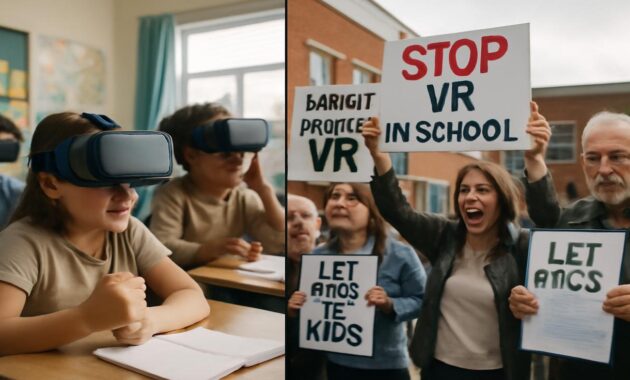
The shrill alarms pierced the air, jolting the young students in their seats. Tiny hands grasped the cardboard VR headsets, their eyes widening as the classroom dissolved around them, replaced by the deafening chaos of a war-torn battlefield. Smoke billowed, gunfire crackled, and the ground shuddered with each explosive impact. For a moment, the children were no longer safe in their elementary school, but immersed in the horrors of history.
This was the controversial new “History Empathy” program, introduced by the local school board in a bid to teach students the realities of war through virtual reality simulations. The aim was to foster empathy and understanding, but the execution has left many parents outraged and deeply concerned about the psychological impact on their children.
As the virtual battle raged on, some students cowered in their seats, tears streaming down their faces. Others stared transfixed, their expressions a mix of fascination and horror. The teachers, caught off guard by the intensity of the students’ reactions, struggled to maintain control of the classroom.

Parental Backlash Erupts Over Virtual War Simulations
In the days that followed, the school’s decision to implement the History Empathy program was met with a storm of protests from angry parents. Many condemned the use of virtual reality as an inappropriate and potentially traumatic way to teach children about war, arguing that it could lead to desensitization and emotional scarring.
“My child came home terrified and in tears,” said one mother, her voice trembling with emotion. “They shouldn’t be forced to experience the horrors of battle, even in a virtual setting. It’s too much for young minds to process.”
Another parent, a father of two elementary school students, echoed these sentiments, asserting that the program was a “gross violation of our children’s well-being.” He demanded that the school board immediately halt the simulations and reconsider their approach to teaching history.

Educators Defend Virtual Reality as a Tool for Empathy
The school district’s administration, however, has staunchly defended the History Empathy program, arguing that it is a groundbreaking educational tool designed to foster a deeper understanding and appreciation for the human cost of war.
“We recognize that these simulations can be intense and emotionally challenging for the students,” said the district’s curriculum director, Dr. Emily Vaughn. “But by immersing them in these pivotal historical moments, we believe they will develop a stronger sense of empathy and a more profound respect for the sacrifices made by those who came before them.”
According to Vaughn, the program has been carefully designed with the guidance of historians, psychologists, and trauma specialists to ensure a safe and age-appropriate experience for the students. She maintains that the virtual reality simulations are a powerful way to bring history to life and engage students in a way that traditional textbooks cannot.

Experts Weigh In on the Ethical Implications
The debate surrounding the History Empathy program has sparked a broader discussion among educators, psychologists, and child development experts about the ethical implications of using virtual reality in the classroom.
“There is a valid concern that these simulations could have unintended psychological consequences for young children,” said Dr. Samantha Harding, a child psychologist and researcher. “Exposing them to the visceral realities of war, even in a virtual setting, runs the risk of causing trauma, anxiety, and a distorted view of the world.”
Dr. Robert Sinclair, a historian and educational policy expert, argued that while the program’s intentions are laudable, the execution may be flawed. “Fostering empathy is a noble goal, but we must be mindful of the potential for desensitization and the risk of inadvertently glorifying or trivializing the horrors of war,” he said.

“There are alternative ways to teach the human impact of historical events without subjecting children to such graphic and intense simulations,” added Dr. Olivia Patel, a curriculum development specialist. “We should be exploring more age-appropriate, trauma-informed approaches that prioritize the well-being of our students.”
The Debate Rages On: Balancing Education and Ethical Concerns
As the controversy surrounding the History Empathy program continues to escalate, the school district finds itself caught in the crosshairs of parental outrage and the concerns of educational experts. The battle lines have been drawn, with both sides passionately arguing the merits and risks of using virtual reality to teach children about the realities of war.
For the parents, the decision to subject their children to such intense and potentially traumatic simulations is a bridge too far, a violation of their trust and their children’s well-being. They demand the program be immediately halted and a more thoughtful, age-appropriate approach to teaching history be implemented.
The school district, however, remains steadfast in its belief that the History Empathy program is a groundbreaking educational tool that can foster empathy and understanding in a way that traditional methods cannot. They argue that with the proper safeguards and oversight, the benefits of the program outweigh the risks.
The Future of History Education: Navigating the Ethical Minefield
As the debate rages on, the future of the History Empathy program, and the broader implications for the way history is taught in schools, hangs in the balance. The conflict has highlighted the delicate balance that educators must strike between providing engaging, immersive learning experiences and safeguarding the emotional and psychological well-being of their students.
For now, the decision remains in the hands of the school board, who must weigh the compelling arguments on both sides and make a choice that will shape the educational landscape for years to come. The outcome of this debate will not only impact the children in this particular school district, but may also serve as a blueprint for how schools nationwide approach the teaching of history in the digital age.

One thing is clear: the stakes are high, and the future of history education hangs in the balance.
Navigating the Ethical Minefield of Virtual Reality in the Classroom
| Potential Benefits | Potential Risks |
|---|---|
|
|
“As educators, we have a responsibility to explore new and innovative ways to engage our students, but we must do so in a manner that prioritizes their well-being and development,” said Dr. Harding. “The ethical implications of virtual reality in the classroom cannot be ignored, and we must tread carefully to ensure we are not causing more harm than good.”
The debate surrounding the History Empathy program is just the beginning of a larger conversation about the role of technology in shaping the future of education. As virtual reality and other immersive technologies continue to evolve, schools and policymakers will be tasked with navigating the ethical minefield, balancing the potential benefits with the very real risks to the physical and mental health of their students.

The Path Forward: Collaborative Solutions and Trauma-Informed Approaches
As the controversy surrounding the History Empathy program continues to unfold, experts and stakeholders are calling for a collaborative approach to finding solutions that address the concerns of parents and educators alike.
“This is not a battle that can be won unilaterally,” said Dr. Sinclair. “We need to bring together a diverse range of perspectives – from child psychologists and historians to curriculum developers and technology experts – to carefully examine the use of virtual reality in the classroom and develop guidelines that prioritize the well-being of students.”
Some have suggested a more gradual and trauma-informed approach, where virtual reality simulations are introduced in a controlled, age-appropriate manner, with ample support and resources for students who may struggle with the content.

“Perhaps we start with less intense, more abstract representations of historical events,” said Dr. Patel. “Build up to the more graphic simulations over time, and ensure that we have trained counselors and mental health professionals on hand to help students process their experiences in a healthy way.”
Ultimately, the path forward will require a delicate balance between educational innovation and ethical responsibility, with the needs and well-being of the students at the forefront of the decision-making process.
FAQ
What is the History Empathy program?
The History Empathy program is a virtual reality-based educational initiative introduced by a local school district to immerse students in historical events, with the goal of fostering empathy and understanding. The program has faced backlash from parents who are concerned about the psychological impact on their children.
Why are parents outraged about the History Empathy program?
Parents are outraged because the virtual reality simulations used in the program expose their children to graphic and intense depictions of war, which they believe can be traumatic and lead to desensitization. They argue that this approach is inappropriate and a violation of their children’s well-being.
What are the potential benefits of using virtual reality in the classroom?
Potential benefits of using virtual reality in the classroom include increased engagement and immersion in historical events, fostering empathy and understanding of the human impact of war, providing a unique, hands-on learning experience, and preparing students for a future with advanced technologies.
What are the potential risks of using virtual reality in the classroom?
Potential risks of using virtual reality in the classroom include psychological trauma and emotional distress in young children, desensitization to violence and a distorted view of reality, ethical concerns about exposing children to graphic content, and the potential for misuse or abuse of the technology.
How are experts responding to the use of virtual reality in the classroom?
Experts have expressed concerns about the ethical implications of using virtual reality in the classroom, particularly when it comes to the psychological well-being of young children. They have called for a collaborative approach to developing guidelines and trauma-informed approaches that prioritize student safety and well-being.
What are some suggested solutions to address the concerns about the History Empathy program?
Suggested solutions include a more gradual and trauma-informed approach, where virtual reality simulations are introduced in a controlled, age-appropriate manner, with ample support and resources for students who may struggle with the content. Experts also recommend bringing together a diverse range of stakeholders to develop guidelines that prioritize the well-being of students.
What is the future of using virtual reality in history education?
The future of using virtual reality in history education will depend on the outcome of the ongoing debate and the ability of educators, policymakers, and experts to find a balance between the potential benefits and the ethical concerns. Careful consideration, collaboration, and a focus on student well-being will be crucial in shaping the path forward.
How can parents and educators work together to address the concerns?
Parents and educators can work together by engaging in open and constructive dialogue, sharing their concerns and perspectives, and collaborating on the development of policies and guidelines that ensure the safe and appropriate use of virtual reality in the classroom. This may involve finding compromises, exploring alternative approaches, and prioritizing the well-being of students.