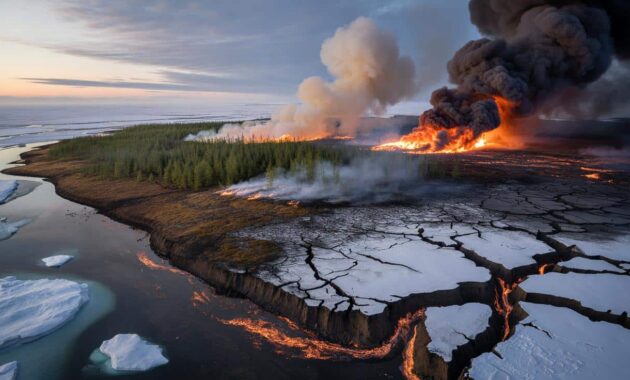
As the Arctic warms at an unprecedented rate, scientists are sounding the alarm on a looming crisis: the potential for the region to burn from within. The rapid thawing of permafrost, the frozen ground that has long been a defining characteristic of the Arctic, is exposing a hidden danger that could have far-reaching consequences.
The melting of permafrost is not just a visual representation of climate change; it’s a ticking time bomb that could unleash a surge of stored carbon and methane, fueling a vicious cycle of fires that could transform the Arctic landscape forever. This alarming scenario is no longer just a theoretical possibility; it’s a very real threat that researchers are scrambling to understand and mitigate.
The Permafrost Paradox: From Frozen to Flammable
Permafrost, the layer of frozen soil and organic matter that has blanketed the Arctic for millennia, is the foundation upon which the region’s delicate ecosystem rests. However, as global temperatures continue to rise, this once-reliable substrate is undergoing a dramatic transformation.

As the permafrost thaws, it releases a vast store of carbon and methane that have been trapped within it for centuries, if not millennia. This sudden influx of greenhouse gases can further accelerate the warming process, creating a positive feedback loop that threatens to destabilize the entire Arctic region.
Alarmingly, the release of these volatile compounds can also provide the fuel for a new and potentially devastating threat: Arctic wildfires. Once ignited, these fires can burn deep into the thawing permafrost, consuming the very ground that has long been seen as a bulwark against the ravages of climate change.
Tipping Point: The Arctic’s Flammable Future
The Arctic’s transformation from a frozen, barren landscape to a potential tinderbox is a stark reminder of the profound changes underway in this critical region. Researchers fear that the Arctic may be nearing a tipping point, where the occurrence of wildfires becomes more than just a rare anomaly.
As the Arctic warms faster than any other part of the world, the conditions for these fires to ignite and spread are becoming increasingly favorable. Dry, warm summers, coupled with the abundance of fuel from thawing permafrost, have created a dangerous perfect storm that could transform the Arctic’s character forever.
The consequences of such a shift could be catastrophic, not just for the Arctic itself, but for the entire planet. As the Arctic’s role as a global carbon sink is disrupted, the release of massive amounts of greenhouse gases could further exacerbate the climate crisis, leading to even more extreme weather events, sea-level rise, and disruptions to global weather patterns.
Unlocking the Arctic’s Carbon Vault
The permafrost that covers much of the Arctic is a vast, frozen repository of carbon, having accumulated over thousands of years as organic matter from plants and animals has become trapped in the frozen ground. Estimates suggest that this frozen carbon store may contain as much as twice the amount of carbon currently present in the Earth’s atmosphere.

As the permafrost thaws, this carbon is being released into the atmosphere, adding to the already overwhelming burden of greenhouse gases that are driving global warming. The release of methane, a potent greenhouse gas, is particularly concerning, as it can further accelerate the warming process.
Researchers warn that the thawing of permafrost may be a tipping point for the Arctic, where the region’s role as a carbon sink is transformed into a source of carbon emissions, with potentially catastrophic consequences for the global climate.
Abrupt Change: The Threat of Rapid Permafrost Melt
While the gradual warming of the Arctic is well documented, the real threat may come from abrupt changes in the region’s permafrost. Researchers have observed that under certain conditions, the permafrost can undergo rapid, large-scale thawing, leading to the sudden release of vast amounts of stored carbon and methane.

This abrupt permafrost melt is particularly concerning because it can trigger a cascade of feedback loops that can further accelerate the warming process. As the ground destabilizes and collapses, it can release more greenhouse gases, leading to even more warming and further permafrost degradation.
The implications of this abrupt change are dire, as it could overwhelm efforts to mitigate climate change and lead to irreversible damage to the Arctic ecosystem. Researchers are urgently working to understand the triggers and dynamics of this phenomenon, in the hopes of developing strategies to prevent or at least slow down this potentially catastrophic tipping point.
Global Consequences: The Far-Reaching Impact of an Arctic Inferno
The prospect of the Arctic burning from within is not just a regional concern; it has global implications that could reverberate throughout the world. As the Arctic’s role as a critical carbon sink is disrupted, the release of stored greenhouse gases could further exacerbate the climate crisis, leading to more extreme weather events, sea-level rise, and disruptions to global weather patterns.

The impact on local communities and indigenous peoples who have long called the Arctic home could be devastating, as their traditional ways of life and livelihoods are threatened by the changing landscape. The loss of biodiversity and the disruption of delicate Arctic ecosystems could also have cascading effects on the global environment.
Researchers warn that the consequences of an Arctic that burns could be far-reaching, with the potential to destabilize the entire global climate system. Mitigating this threat will require a concerted, global effort to reduce greenhouse gas emissions and develop strategies to protect the Arctic’s fragile ecosystems.
Understanding the Arctic Wildfire Threat
| Key Factors | Implications |
|---|---|
| Permafrost Thaw | Release of stored carbon and methane, creating a feedback loop of warming and further thawing. |
| Dry, Warm Summers | Increased risk of ignition and rapid spread of wildfires, fueled by the abundant dry vegetation and flammable peat. |
| Positive Feedback Loops | Fires burning into the permafrost can release even more greenhouse gases, further accelerating the warming process. |
| Abrupt Permafrost Melt | Sudden, large-scale thawing events can trigger cascading changes that overwhelm efforts to mitigate the crisis. |
“We’re seeing a worrying trend of more frequent and severe wildfires in the Arctic, and this is directly linked to the thawing of permafrost,” says Dr. Emily Guerin, a permafrost expert at the University of Alaska Fairbanks. “As the ground becomes drier and more flammable, the risk of these fires burning deep into the permafrost and releasing even more greenhouse gases is very real.”

“The Arctic is undergoing a fundamental transformation, and the potential for widespread, destructive wildfires is a major concern. We need to act quickly to mitigate the risks and protect this critical region before it’s too late.”
– Dr. Sarah Thompson, climate policy expert at the Intergovernmental Panel on Climate Change (IPCC)
“The Arctic is the canary in the coal mine when it comes to climate change. What we’re seeing happen there is a stark warning of the profound changes that are in store for the rest of the world if we don’t take decisive action to reduce greenhouse gas emissions and protect vulnerable ecosystems.”

Preparing for an Uncertain Future
As the Arctic’s transformation accelerates, the need for a comprehensive, global response to this emerging threat has never been more urgent. Researchers and policymakers are working to develop strategies to mitigate the risks, including improving early warning systems, enhancing firefighting capabilities, and implementing measures to protect vulnerable communities and ecosystems.
However, the scale and complexity of the challenge are daunting, and the potential for abrupt, cascading changes in the Arctic means that the window for action may be closing rapidly. Ultimately, the fate of the Arctic, and the global climate, may hinge on our ability to confront this crisis head-on and make the necessary changes to protect this vital region.
“The time to act is now,” warns Dr. Guerin. “We can’t afford to wait and see what happens. The Arctic is the frontline of climate change, and if we don’t take bold, immediate action to address this threat, the consequences could be catastrophic for the entire planet.”
FAQs
What is the primary concern with the thawing of Arctic permafrost?
The primary concern is that the thawing of permafrost will release vast amounts of stored carbon and methane, further accelerating global warming and potentially triggering a feedback loop of more permafrost melt and increased greenhouse gas emissions.
How do Arctic wildfires contribute to the problem?
Arctic wildfires, which are becoming more frequent and severe due to the drying and warming of the region, can burn deep into the permafrost and release even more stored carbon and methane, creating a dangerous feedback loop.
What are the potential global consequences of an “Arctic inferno”?
The disruption of the Arctic’s role as a critical carbon sink could have far-reaching impacts on the global climate, leading to more extreme weather events, sea-level rise, and disruptions to global weather patterns. The loss of biodiversity and the impact on indigenous communities could also be devastating.
What are some strategies being explored to mitigate the risks?
Strategies include improving early warning systems, enhancing firefighting capabilities, protecting vulnerable communities and ecosystems, and implementing measures to reduce greenhouse gas emissions globally to slow the rate of Arctic warming and permafrost thaw.
How urgent is the need for action to address this threat?
Experts warn that the window for action is closing rapidly, as the Arctic may be nearing a tipping point where the risks of abrupt, cascading changes become increasingly likely. Immediate, coordinated global action is necessary to mitigate the threats and protect this critical region.
What are the key factors driving the increased risk of Arctic wildfires?
The key factors include the thawing of permafrost, which releases flammable materials, as well as drier and warmer summers due to climate change, which create ideal conditions for wildfires to ignite and spread rapidly.
How can the public help address this issue?
The public can help by supporting policies and initiatives that reduce greenhouse gas emissions, advocating for increased funding and research into Arctic climate monitoring and firefighting capabilities, and raising awareness about the importance of protecting the Arctic ecosystem.
What are the long-term implications of an Arctic that burns from within?
The long-term implications of an Arctic that burns from within could be catastrophic, as the region’s role as a critical carbon sink is disrupted and the release of stored greenhouse gases further exacerbates the global climate crisis, with potentially irreversible consequences for the planet.