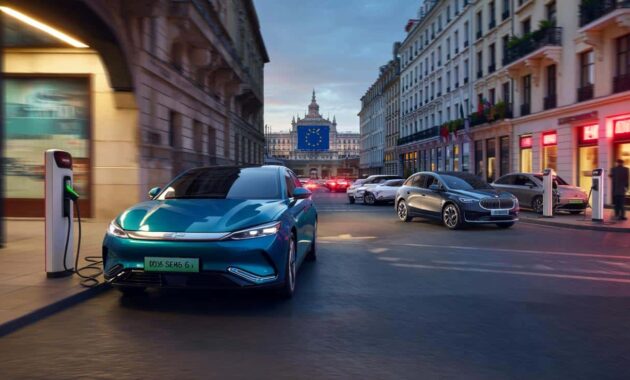
The European automotive landscape is about to be transformed by a new wave of long-range plug-in hybrid electric vehicles (PHEVs) from Chinese brands. These advanced hybrids, boasting ranges of up to 1,000 km, are poised to undercut their European counterparts on price, potentially disrupting the market just as Brussels doubles down on its push for a fully electric future.
As the EU’s ambitious climate targets intensify the pressure for automakers to rapidly transition to zero-emission vehicles, this influx of high-performance Chinese PHEVs could present policymakers with a complex challenge. While Brussels is adamant about accelerating the transition to pure electric cars, many consumers may be drawn to the flexibility and extended range offered by these new Chinese hybrids.
The stage is set for a collision course between the European Union’s electrification agenda and the desires of drivers seeking a middle ground between combustion engines and all-electric vehicles. The outcome of this clash could have far-reaching implications for the future of personal mobility in Europe.

Chinese Automakers Bring Long-Range Hybrids to Europe
Chinese automakers, known for their rapid technological advancements, have set their sights on the lucrative European market. Several prominent brands, including BYD, Xpeng, and Great Wall Motor, are now introducing a new generation of plug-in hybrid models that can travel up to 1,000 km on a single charge – a figure that far exceeds the range of many existing European PHEV offerings.
These long-range hybrids are being priced aggressively, often undercutting their European rivals by thousands of euros. This aggressive pricing strategy is poised to shake up the market and challenge the dominance of established European automakers, who have traditionally held a strong grip on the region’s car sales.
The arrival of these Chinese hybrids coincides with a time of flux in the European automotive industry. As governments across the continent push for more stringent emissions regulations and incentives for electric vehicles, consumers are faced with a growing array of powertrain options, each with its own set of advantages and tradeoffs.

Brussels’ Dilemma: Hybrids vs. Pure EVs
The European Union’s ambitious climate goals, enshrined in policies like the Green Deal and the Fit for 55 package, have put tremendous pressure on automakers to accelerate their transition to fully electric vehicles. Brussels has made it clear that it views pure EVs as the long-term solution to reducing transportation emissions and achieving carbon neutrality.
However, the arrival of these long-range Chinese hybrids presents policymakers with a dilemma. While these advanced PHEVs may offer significant reductions in emissions compared to traditional internal combustion engines, they still rely on a combination of electric and fossil fuel-powered propulsion, which may not align with the EU’s vision of a fully electric future.
The challenge for Brussels lies in striking a balance between promoting the adoption of pure EVs and acknowledging the practical needs and preferences of consumers, many of whom may be drawn to the extended range and flexibility offered by these new Chinese hybrids.

The Allure of Long-Range Hybrid Flexibility
For many European drivers, the idea of a 1,000 km range on a single tank or charge is a tantalizing prospect. The ability to undertake long-distance journeys without the range anxiety associated with pure electric vehicles can be a powerful selling point, especially for families or those who frequently embark on road trips.
Moreover, the hybrid nature of these Chinese models provides a level of flexibility that some consumers may find appealing. The option to switch between electric and gasoline-powered modes, depending on driving conditions and personal preferences, can offer a sense of freedom and control that pure EVs may not.
As the European market continues to evolve, this demand for flexibility could put pressure on policymakers to reevaluate their stance on hybrids and find a way to accommodate the needs of a diverse consumer base while still working towards their ambitious environmental goals.
The Retreat of French Automakers
The arrival of these long-range Chinese hybrids comes at a time when some of Europe’s homegrown automakers are scaling back their own PHEV offerings. French brands, in particular, have been scaling back their investments in plug-in hybrid technology, focusing instead on accelerating their transition to full-electric models.
Companies like Renault and Peugeot have made strategic decisions to prioritize the development and production of pure EVs, leaving a gap in the market that the Chinese automakers are now poised to fill. This shift in the European landscape could further intensify the competition and put pressure on domestic manufacturers to reevaluate their electrification strategies.
As Chinese brands continue to expand their presence in Europe, the battle for market share in the PHEV segment may become increasingly fierce, with consumers potentially benefiting from the increased choice and competitive pricing that this new wave of long-range hybrids brings.

Targeting Families with Practicality and Tech
The Chinese automakers entering the European market with their long-range hybrid models are not simply offering raw performance and range. They are also targeting the needs and preferences of families, with a focus on practicality, interior space, and advanced technology features.
Many of these new hybrid models boast spacious cabins, ample cargo capacity, and a range of connectivity and infotainment options that cater to the demands of modern households. This holistic approach to vehicle design and features could resonate with European consumers who are seeking a practical, tech-savvy, and environmentally conscious alternative to traditional combustion-engine vehicles.
As families grapple with the trade-offs between pure EVs and more flexible hybrid options, these Chinese automakers may be able to carve out a significant niche by offering a compelling combination of long-range capability, family-friendly design, and advanced in-car technology.

| Model | Battery Range (km) | Total Range (km) | Price (€) |
|---|---|---|---|
| BYD Han EV PHEV | 82 | 1,000 | 45,000 |
| Xpeng G9 PHEV | 120 | 900 | 48,000 |
| Great Wall Motor WEY Coffee 01 PHEV | 150 | 1,100 | 42,000 |
“These long-range Chinese hybrids represent a significant threat to European automakers. They offer impressive performance and range at a very competitive price point, which will undoubtedly appeal to many consumers.” – Automotive industry analyst, Sarah Wilkinson
The arrival of these Chinese-made hybrids in Europe is set to disrupt the status quo, challenging the dominance of established European brands and pushing policymakers to reevaluate their stance on electrification. As the battle for market share intensifies, the outcome could have far-reaching implications for the future of personal mobility in the region.
“Brussels is facing a dilemma – they want to accelerate the transition to pure electric vehicles, but these long-range hybrids offer a compelling alternative for many consumers. Striking the right balance will be crucial to achieving their environmental goals without alienating drivers.” – Transportation policy expert, Dr. Luca Martinelli

Scenarios: Who Benefits from a 1,000 km Hybrid?
The introduction of these long-range hybrid models from Chinese automakers raises several questions about who stands to benefit the most. While they may offer a tempting alternative for some consumers, the implications for the broader European automotive landscape and climate goals remain uncertain.
For families or frequent road trippers, the extended range and flexibility of these hybrids could be a game-changer, allowing them to undertake longer journeys without the range anxiety associated with pure electric vehicles. However, for urban dwellers with shorter commutes, the benefits of a 1,000 km range may be less pronounced.
From a policy perspective, the dilemma facing Brussels is whether to embrace these hybrids as a transitional technology that can help accelerate the adoption of electrified vehicles, or to double down on their push for a fully electric future. The balance between consumer preferences, environmental goals, and industry realities will be a delicate one to navigate.

“These long-range hybrids from China could appeal to a significant portion of the European market, especially for families and those who require more flexibility in their driving. But policymakers will need to carefully consider the implications for their electrification targets.” – Automotive industry consultant, David Eriksson
What is the range of a typical European PHEV?
The range of most European-made plug-in hybrid electric vehicles (PHEVs) typically falls between 40-60 km on electric power alone. The new long-range hybrids from Chinese automakers, with ranges of up to 1,000 km, significantly outperform these existing European PHEV models.
How do the prices of Chinese PHEV models compare to European rivals?
The Chinese PHEV models entering the European market are priced significantly lower than comparable offerings from established European brands. For example, the BYD Han EV PHEV is priced around €45,000, while a similarly sized European PHEV model may cost €55,000 or more.
What are the main advantages of long-range hybrid vehicles?
The key advantages of long-range hybrid vehicles include extended driving range, flexibility to switch between electric and gasoline power, and the ability to undertake longer journeys without range anxiety. This can be particularly appealing for families and those who frequently take road trips.
How are European automakers responding to the Chinese PHEV challenge?
Some European automakers, such as French brands Renault and Peugeot, are scaling back their investments in plug-in hybrid technology and focusing more on the development of pure electric vehicles. This leaves an opening for Chinese brands to gain a stronger foothold in the European PHEV market.
What are the potential implications for Europe’s climate goals?
The influx of long-range hybrid vehicles from China could present a challenge for policymakers in Brussels as they strive to accelerate the transition to fully electric vehicles. Striking a balance between consumer preferences and environmental objectives will be crucial to ensuring progress towards Europe’s climate targets.
How do these Chinese PHEV models compare in terms of technology and features?
Many of the Chinese PHEV models entering the European market are designed with a focus on practicality, interior space, and advanced in-car technology, targeting the needs of modern families. This holistic approach to vehicle design could help these models resonate with a broad range of European consumers.
Will the arrival of Chinese PHEVs disrupt the European automotive market?
The introduction of these long-range hybrid models from Chinese automakers is likely to disrupt the European automotive market, challenging the dominance of established European brands and potentially forcing them to reevaluate their electrification strategies. The outcome of this competitive dynamic could have far-reaching implications for the future of personal mobility in the region.
How are policymakers in Brussels responding to the PHEV vs. EV debate?
Brussels is facing a dilemma as it tries to balance the push for a fully electric future with the practical needs and preferences of European consumers. The arrival of these long-range Chinese hybrids adds another layer of complexity to this challenge, and policymakers will need to carefully consider how to accommodate both environmental goals and consumer demands.