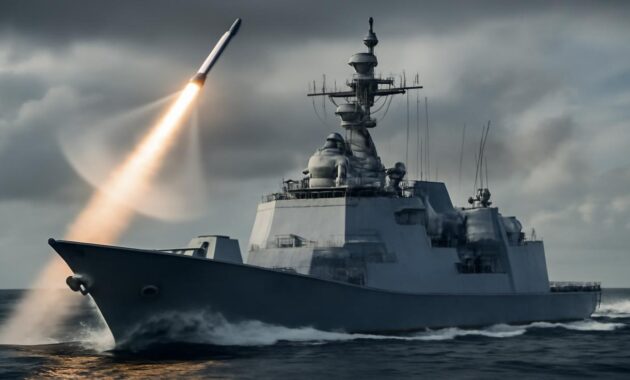
The wind whips across the deck of the South Korean destroyer, carrying the scent of sea and steel. The crew, tense and focused, stands at the ready, their eyes trained on the horizon. This is no routine patrol — today, the world’s attention is fixed on this ship, for it carries a weapon that could reshape the balance of power on the world’s oceans.
South Korea is on the cusp of joining an exclusive club of naval powers — those who possess hypersonic missiles capable of traveling at speeds exceeding Mach 5. This new weapon, a potent combination of cutting-edge technology and strategic ambition, represents the country’s determination to assert its presence on the global stage and deter potential adversaries.
The stakes are high, and the race is on. As other nations push the boundaries of naval warfare, South Korea’s journey to develop this hypersonic marvel has been a testament to its engineering prowess, its geopolitical aspirations, and its willingness to challenge the status quo.

The New Arms Race Above the Waves
Hypersonic missiles, once the stuff of science fiction, have become the latest frontier in modern naval warfare. These weapons, capable of traveling at more than five times the speed of sound, possess the ability to evade even the most sophisticated air defense systems, making them a formidable deterrent against potential aggression.
As tensions continue to simmer in the Asia-Pacific region, the development of these high-speed missiles has become a top priority for many nations, including the United States, Russia, and China. South Korea, a relatively small player on the global military stage, has recognized the strategic importance of this new technology and is determined to carve out its own place in the elite club of hypersonic missile powers.
The stakes are high, and the competition is fierce. Each nation is pouring resources into the research and development of these cutting-edge weapons, driven by a desire to maintain a tactical advantage and project their influence across the seas.

Inside the Mach 5+ Dream
The heart of South Korea’s hypersonic missile program lies within the halls of the Agency for Defense Development (ADD), a government research institute dedicated to pushing the boundaries of military technology. Here, teams of engineers, scientists, and military strategists have been working tirelessly to design and build a weapon that can match the capabilities of their global counterparts.
The challenges are manifold, from developing the sophisticated propulsion systems that can propel a missile at speeds exceeding Mach 5, to ensuring the structural integrity of the weapon can withstand the immense pressures and temperatures it will encounter. Each step in the process is a delicate balancing act, where the slightest misstep could derail the entire project.
Yet, the team at ADD remains undaunted, driven by a sense of national pride and a determination to secure South Korea’s place in the global pecking order. They know that the successful development of this hypersonic missile will not only enhance the country’s defensive capabilities but also bolster its standing on the world stage.

A Small Country in a Big League
South Korea’s journey to develop a hypersonic missile is all the more remarkable given the country’s relatively small size and limited military resources. Compared to the global superpowers, South Korea’s defense budget and military might pale in comparison, making its ambitions to join the hypersonic missile club all the more ambitious.
Yet, the country’s leaders have recognized the strategic importance of this new technology, and they are willing to invest heavily in its development. By prioritizing the hypersonic missile program, South Korea is sending a clear message to its neighbors and the world: it is a force to be reckoned with, a small country with big aspirations.
The path to success, however, is fraught with challenges. South Korea must navigate a complex web of geopolitical tensions, technological barriers, and budgetary constraints, all while racing against the clock to keep pace with its more powerful rivals. It is a high-stakes game, where the rewards of success are immense, but the risks of failure are equally daunting.

Engineering the Monster
The development of South Korea’s hypersonic missile is a marvel of engineering, a testament to the country’s technological prowess and its ability to push the boundaries of what is possible. From the intricate design of the missile’s airframe to the sophisticated propulsion systems that power it, every aspect of this weapon has been meticulously crafted to ensure its success.
At the heart of the missile’s design is a cutting-edge scramjet engine, a revolutionary propulsion system that can propel the weapon at hypersonic speeds. This technology, combined with advanced materials and aerodynamic simulations, has allowed the South Korean team to create a missile that can outmaneuver and outpace even the most sophisticated air defense systems.
But the journey to this point has been far from easy. The engineers at ADD have faced a myriad of technical challenges, from managing the extreme temperatures and pressures generated by the scramjet engine to ensuring the missile’s guidance and control systems can function flawlessly at such high speeds. Each obstacle has been met with dogged determination and innovative thinking, as the team relentlessly pushes the boundaries of what is possible.

Deterrence, Diplomacy, and the Edge of Control
The development of South Korea’s hypersonic missile is not just a technical feat; it is also a strategic move with far-reaching geopolitical implications. By acquiring this capability, the country is seeking to bolster its deterrence against potential adversaries, sending a clear message that it is willing and able to defend its interests with the most advanced military technology available.
At the same time, the introduction of this new weapon into the regional power dynamics has raised concerns among South Korea’s neighbors and global partners. There are fears that the proliferation of hypersonic missiles could destabilize the delicate balance of power in the Asia-Pacific, potentially leading to an escalation of tensions and an increased risk of conflict.
South Korea’s leaders, however, remain steadfast in their conviction that the development of this missile is a necessary step to ensure the country’s security and protect its vital interests. They argue that the hypersonic weapon will serve as a deterrent, preventing potential aggressors from considering military action and creating a more stable, peaceful environment in the region.

| Key Capabilities | Comparison to Existing Missiles |
|---|---|
|
|
“This hypersonic missile represents a significant leap in our defensive capabilities,” said General Park Sung-hwan, a leading military strategist at the Korea Institute for Defense Analyses. “It will allow us to deter potential aggressors and protect our national interests with greater precision and speed than ever before.”
“South Korea’s development of a hypersonic missile is a game-changer in the regional power dynamics. It demonstrates the country’s technological prowess and its determination to play a larger role in maintaining stability and security in the Asia-Pacific.”
Dr. Lim Eul-chul, professor of international relations at Kyungnam University

Yet, the introduction of this new weapon also raises questions about the potential for escalation and the challenges of maintaining control in an increasingly complex security environment. As the world watches South Korea’s progress with a mixture of fascination and trepidation, the country must navigate a delicate balance between deterrence, diplomacy, and the ever-shifting sands of global power politics.
Frequently Asked Questions
What is a hypersonic missile?
A hypersonic missile is a type of missile that can travel at speeds exceeding Mach 5, or more than five times the speed of sound. These missiles are capable of maneuvering and evading traditional air defense systems, making them a potent deterrent in modern warfare.
Why is South Korea developing a hypersonic missile?
South Korea’s development of a hypersonic missile is driven by its desire to enhance its defensive capabilities and assert its presence on the global stage. By acquiring this cutting-edge technology, the country aims to deter potential aggressors and maintain stability in the Asia-Pacific region.

How does South Korea’s hypersonic missile compare to others?
South Korea’s hypersonic missile is designed to travel at speeds exceeding Mach 5 and has a range of over 2,000 km. This puts it on par with the most advanced hypersonic weapons developed by global superpowers like the United States, Russia, and China.
What are the potential risks of South Korea’s hypersonic missile program?
The introduction of a hypersonic missile into the regional power dynamics raises concerns about the potential for escalation and the challenges of maintaining control in an increasingly complex security environment. There are fears that the proliferation of such weapons could destabilize the balance of power in the Asia-Pacific.
How will South Korea’s hypersonic missile program impact the country’s geopolitical standing?
By developing a cutting-edge hypersonic missile, South Korea is asserting its technological prowess and its determination to play a larger role in maintaining regional stability and security. This move is expected to bolster the country’s geopolitical standing and influence in the Asia-Pacific.
What are the technical challenges in developing a hypersonic missile?
The development of a hypersonic missile requires overcoming significant technical challenges, including the design of sophisticated propulsion systems, the management of extreme temperatures and pressures, and the integration of advanced guidance and control systems to ensure the weapon’s accuracy and maneuverability at such high speeds.
How does South Korea’s hypersonic missile program fit into the global arms race?
South Korea’s hypersonic missile program is part of a broader global arms race, as nations around the world compete to develop the most advanced and capable military technologies. By joining the elite club of hypersonic missile powers, South Korea is seeking to enhance its strategic deterrence and maintain a competitive edge in the shifting geopolitical landscape.
What are the potential diplomatic implications of South Korea’s hypersonic missile program?
The development of South Korea’s hypersonic missile has raised concerns among its neighbors and global partners, as the proliferation of such weapons could potentially destabilize the balance of power in the Asia-Pacific region. South Korea must navigate this delicate diplomatic environment while ensuring its national security interests are protected.