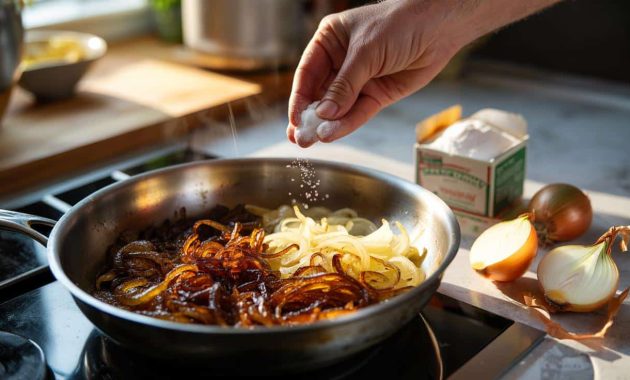
Caramelized onions are a game-changer in the kitchen, adding depth, sweetness, and complexity to a wide range of dishes. But for home cooks, the process of caramelizing onions can feel like a test of patience and endurance. Stuck-on bits, uneven browning, and onions that refuse to soften – it’s enough to make anyone throw in the towel.
That is, until you discover the secret ingredient that can transform your caramelized onions in a matter of minutes: baking soda. This simple, inexpensive pantry staple holds the key to unlocking the natural sugars in onions, accelerating the caramelization process and delivering perfectly browned, silky-smooth results with a fraction of the effort.
Unlocking the Magic of Baking Soda
The secret lies in the chemical properties of baking soda, also known as sodium bicarbonate. When added to the cooking process, baking soda raises the pH level of the onions, making them more alkaline. This change in pH encourages the Maillard reaction, the complex series of chemical processes that transform the sugars and amino acids in the onions into hundreds of different flavor compounds.

By raising the pH, baking soda essentially “jumpstarts” the caramelization process, allowing the onions to develop their signature rich, sweet, and nutty flavors in a fraction of the time it would normally take. The result is a dramatic reduction in cooking time, from the typical 40-plus minutes down to just 15-20 minutes.
But the benefits of this baking soda trick go beyond speed. The alkaline environment also helps prevent the onions from sticking to the pan, ensuring even browning and a smooth, silky texture throughout.
The Exact Baking Soda Ratio
The key to success with this technique is using the right amount of baking soda. Too little, and you won’t see a significant difference in cooking time. Too much, and you run the risk of an unpleasant, soapy flavor.
The optimal ratio is a pinch – about 1/4 teaspoon – of baking soda per pound of onions. This small addition packs a big punch, transforming even the most stubborn onions into caramelized perfection.
To use the baking soda trick, simply add the pinch of baking soda to your onions at the beginning of the cooking process, along with a bit of oil or butter. The baking soda will do the rest, accelerating the caramelization and ensuring your onions cook evenly and quickly.
Elevating Everyday Dishes
Caramelized onions are a versatile ingredient that can elevate a wide range of dishes, from soups and stews to burgers, pizzas, and more. But the lengthy cooking time has often been a barrier for home cooks. With the baking soda trick, you can now enjoy the rich, complex flavors of caramelized onions in a fraction of the time.

Whether you’re whipping up a batch of French onion soup, topping a gourmet burger, or adding depth to a vegetable stir-fry, this simple baking soda hack will transform your caramelized onions and make them a more accessible and practical component in your cooking repertoire.
So the next time you’re craving the sweet, savory goodness of caramelized onions, remember the magic of baking soda. A pinch of this humble pantry staple can revolutionize your cooking and deliver restaurant-quality results in no time at all.
The Science Behind the Baking Soda Trick
| Caramelization | The Maillard reaction, a complex series of chemical processes that transform the sugars and amino acids in onions into hundreds of different flavor compounds, resulting in the signature rich, sweet, and nutty flavors of caramelized onions. |
|---|---|
| pH and Baking Soda | Baking soda (sodium bicarbonate) raises the pH level of the onions, making them more alkaline. This change in pH encourages the Maillard reaction, accelerating the caramelization process. |
| Cooking Time and Texture | The alkaline environment created by the baking soda also helps prevent the onions from sticking to the pan, ensuring even browning and a smooth, silky texture. |
“The baking soda trick is a game-changer for home cooks who want to enjoy the complex flavors of caramelized onions without the time-consuming process. By raising the pH, it accelerates the Maillard reaction and delivers perfectly browned, silky-smooth onions in a fraction of the time.”
– Dr. Jessica Gavin, food scientist and author

“Caramelizing onions is all about patience and technique, but the baking soda trick really streamlines the process. It’s a simple addition that can make a huge difference in the final result.”
“Baking soda is the secret ingredient that can transform your caramelized onions. By raising the pH, it kickstarts the Maillard reaction and gives you rich, complex flavors in a fraction of the time.”
– Chef Michael Symon, Iron Chef and restaurateur

“As a busy home cook, I’m always looking for ways to save time in the kitchen without sacrificing flavor. The baking soda trick for caramelized onions is a game-changer – it’s a simple addition that delivers professional-quality results in a fraction of the time.”
Mastering the Baking Soda Trick
While the baking soda trick is a powerful tool for transforming caramelized onions, there are a few key tips to keep in mind for best results:

| Tip | Description |
|---|---|
| Precise Measurement | Use the recommended 1/4 teaspoon of baking soda per pound of onions. Too much can result in an unpleasant, soapy flavor. |
| Slice Onions Evenly | Cutting the onions into thin, even slices helps ensure they caramelize at the same rate. |
| Use a Large Skillet | A large, wide skillet allows for better heat distribution and prevents the onions from steaming. |
| Patience and Stirring | Even with the baking soda, caramelizing onions still requires some patience and regular stirring for best results. |
“The baking soda trick is a game-changer, but it’s not a magic bullet. You still need to approach caramelizing onions with care and attention to detail for the best results.”
“Caramelized onions are all about patience and technique, but the baking soda hack can really streamline the process. Just remember to use the right amount and keep a close eye on them as they cook.”
– Chef Ludo Lefebvre, Michelin-starred restaurateur

FAQs
How much baking soda should I use?
The optimal ratio is 1/4 teaspoon of baking soda per pound of onions. Any more and you risk an unpleasant, soapy flavor.
Do I need to adjust the cooking time?
Yes, the baking soda trick can significantly reduce the total cooking time for caramelized onions, from around 40 minutes down to 15-20 minutes.
Can I use this trick for other types of onions?
The baking soda trick works well with a variety of onion types, including yellow, white, and red onions. The key is to use the same 1/4 teaspoon per pound ratio.

Will the baking soda affect the flavor?
If used in the right amount, the baking soda should not impart any noticeable flavor to the caramelized onions. It simply helps unlock their natural sweetness and complexity.
Can I use this trick for other vegetables?
While the baking soda trick is primarily used for onions, it can also work well with other vegetables that benefit from caramelization, such as mushrooms, Brussels sprouts, or carrots.
How do I store leftover caramelized onions?
Caramelized onions can be stored in an airtight container in the refrigerator for up to 1 week, or in the freezer for up to 3 months.
Can I use this trick for larger batches of onions?
Yes, the baking soda trick can be scaled up for larger quantities of onions. Just be sure to maintain the 1/4 teaspoon per pound ratio.
How can I use caramelized onions in my cooking?
Caramelized onions are incredibly versatile and can be used in a wide range of dishes, from soups and stews to burgers, pizzas, and more. They add depth, sweetness, and complexity to any savory recipe.