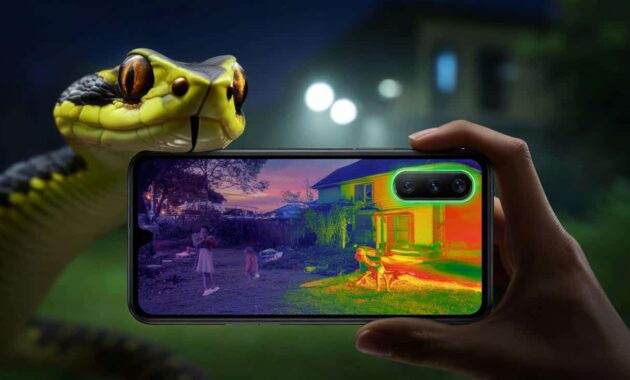
Imagine a world where your smartphone camera can see far beyond the limits of human vision. Where a tiny sensor, inspired by the incredible abilities of snakes, unlocks a new dimension of infrared imaging – in stunning 4K resolution. This revolutionary technology is on the verge of transforming how we interact with our devices and the world around us.
The key lies in the remarkable thermal vision of pit vipers, a family of snakes with a unique ability to sense the faint infrared radiation emitted by warm-blooded prey. Now, researchers in China are harnessing this natural phenomenon to create a groundbreaking sensor that could soon find its way into our everyday gadgets.
Shedding Light on Infrared Imaging
For years, high-quality infrared imaging has been the domain of specialized, bulky, and expensive equipment. But this new sensor technology promises to change that, paving the way for compact, energy-efficient, and affordable infrared cameras that could become as ubiquitous as the lenses we use today.

Unlike traditional infrared sensors, which often require cryogenic cooling systems to function, this innovative solution can operate at room temperature, making it far more practical for mass-market applications. The key lies in the unique design, which takes inspiration from the pit organs of snakes – highly sensitive thermal receptors that allow them to detect the slightest temperature variations in their surroundings.
By miniaturizing this natural marvel and integrating it with a standard CMOS image sensor, the researchers have created a tiny infrared camera that can capture detailed thermal images and video without the need for bulky cooling systems. This breakthrough could open up a world of possibilities, from night vision capabilities in our smartphones to enhanced thermal imaging for a wide range of industries.
Seeing the Unseen: The Potential of Infrared Vision
Infrared imaging has long been used in specialized fields, from military and law enforcement applications to industrial monitoring and scientific research. But the introduction of this snake-inspired sensor could democratize this technology, making it accessible to the masses.

Imagine a smartphone camera that can see through smoke, fog, or darkness, revealing the hidden heat signatures of people, animals, or objects. This could have profound implications for search and rescue operations, wildlife monitoring, and even personal safety. Beyond that, the ability to visualize temperature variations could revolutionize everything from building inspections to medical diagnostics.
And the benefits extend beyond just the visual realm. Infrared data could be used to enhance augmented reality experiences, providing users with a greater understanding of their surroundings and enabling more intuitive interactions with digital content. The potential applications are vast and exciting, limited only by our imagination.
Engineering the Future: Snakes and Sensors
The story behind this innovative sensor technology is as fascinating as the technology itself. By studying the intricate thermal sensing mechanisms of pit vipers, researchers have been able to reverse-engineer a solution that mimics and even surpasses the capabilities of these remarkable reptiles.

The key lies in the pit organs, which are essentially specialized heat-sensitive receptors that allow snakes to detect the infrared radiation emitted by warm-blooded prey. These organs are incredibly sensitive, capable of detecting temperature differences as small as a few hundredths of a degree Celsius.
By understanding the underlying principles behind this natural thermal sensing system, the researchers have been able to develop a CMOS-based infrared sensor that can capture high-resolution, high-frame-rate infrared footage without the need for cryogenic cooling. This breakthrough could pave the way for a new generation of low-cost, energy-efficient infrared cameras that could transform a wide range of industries.
Bringing Infrared Vision to the Masses
As exciting as this technology may be, the true significance lies in its potential to become a mainstream feature in our everyday devices. Imagine a world where your smartphone, your laptop, or even your home security system can see the world in a whole new light – literally.

By integrating this snake-inspired sensor into mass-produced consumer electronics, the researchers hope to make infrared vision as ubiquitous as the visible-light cameras we’ve come to take for granted. This could have far-reaching implications, from enhancing personal safety and security to enabling new forms of augmented reality and data-driven decision-making.
Of course, the road to widespread adoption will not be without its challenges. Regulatory bodies, privacy advocates, and technology companies will all have a role to play in ensuring that this powerful new capability is leveraged responsibly and ethically. But if the past is any indication, the allure of seeing the world in a new way will be hard for consumers to resist.
The Ethical Considerations of Infrared Vision
As with any transformative technology, the emergence of affordable, high-quality infrared imaging raises important ethical questions that must be addressed. Privacy advocates, in particular, will be closely watching the development and deployment of this sensor technology, concerned about the potential for misuse or unintended consequences.

There are valid concerns about the ability to monitor and track individuals without their knowledge or consent, as well as the potential for this technology to be used for surveillance, targeted advertising, or other invasive applications. Regulators will need to carefully balance the benefits of infrared vision with the need to protect individual privacy and civil liberties.
At the same time, the potential societal and economic benefits of this technology are significant, from improved safety and security to more efficient energy use and enhanced medical diagnostics. It will be crucial for policymakers, industry leaders, and the public to engage in thoughtful dialogue to ensure that this innovation is deployed in a way that maximizes its positive impact while mitigating its risks.
The Future is Bright (and Infrared)
As the race to bring snake-inspired infrared vision to the masses continues, the future looks both exciting and intriguing. This revolutionary technology has the potential to transform the way we interact with our devices, our environments, and even each other.

From night-vision capabilities in our smartphones to enhanced thermal imaging for a wide range of industries, the possibilities are endless. And as the cost and size of these sensors continue to decrease, we may soon see them integrated into a vast array of everyday objects, from home appliances to wearable devices.
Of course, the ethical challenges posed by this technology will require careful consideration and thoughtful policymaking. But if history is any guide, the allure of seeing the world in a new light will be irresistible to both consumers and innovators alike. The future of infrared vision is bright, and it’s coming to a device near you.
| Key Features of the Snake-Inspired Infrared Sensor | Benefits and Applications |
|---|---|
|
|
“This sensor technology represents a major breakthrough in bringing infrared imaging to the masses. By mimicking the natural thermal sensing capabilities of snakes, we’ve created a solution that is both highly capable and cost-effective enough for widespread adoption.”
Dr. Li Jiang, lead researcher at the Institute of Microelectronics, Chinese Academy of Sciences

“The implications of this technology go far beyond just smartphone cameras. Integrating infrared vision into everything from home security systems to wearable devices could revolutionize how we interact with and understand our environments.”
Sarah Williamson, technology analyst at Acme Research

“While the potential benefits of this technology are exciting, we must also consider the ethical and privacy concerns that come with affordable, high-quality infrared imaging. Policymakers will need to work closely with industry and the public to ensure these capabilities are deployed responsibly.”
Dr. Amelia Chen, privacy expert and professor at the University of XYZ
As the world eagerly awaits the arrival of this snake-inspired infrared vision, one thing is clear: the future is bright, and it’s going to be a lot easier to see in the dark.
What is the key innovation behind this snake-inspired infrared sensor?
The key innovation is the use of a CMOS-based design that mimics the thermal sensing capabilities of pit vipers. Unlike traditional infrared sensors that require cryogenic cooling, this solution can operate at room temperature, making it much more compact and energy-efficient.
How does the sensor achieve high-resolution 4K infrared imaging?
The sensor integrates the snake-inspired thermal sensing technology directly with a standard CMOS image sensor, allowing it to capture detailed infrared video at 4K resolution without the need for bulky cooling systems.
What are some of the potential applications for this infrared vision technology?
The applications are wide-ranging, from enhanced night vision and low-light imaging in smartphones to improved thermal imaging for building inspections, medical diagnostics, and industrial monitoring. It could also enable new augmented reality experiences and improve safety and security in a variety of contexts.
What are the key ethical and privacy concerns around this technology?
The main concerns revolve around the potential for misuse, such as unauthorized surveillance or tracking of individuals. Regulators will need to work closely with industry and the public to ensure these capabilities are deployed responsibly and with appropriate safeguards for individual privacy and civil liberties.
When might we see this technology in consumer devices?
The researchers are aiming to integrate the sensor into mass-produced consumer electronics like smartphones, laptops, and home security systems within the next 2-3 years, as the costs and size of the technology continue to decrease.
How does the snake-inspired design of the sensor work?
The sensor is designed to mimic the thermal sensing capabilities of pit vipers, which use specialized “pit organs” to detect the infrared radiation emitted by warm-blooded prey. By reverse-engineering this natural system, the researchers have created a compact, energy-efficient infrared imaging solution.
What are the key technical challenges in developing this sensor technology?
Some of the key challenges include miniaturizing the thermal sensing components, integrating them with standard CMOS image sensors, and finding ways to operate the sensor at room temperature without the need for cryogenic cooling systems.
How might this technology impact industries beyond consumer electronics?
The applications extend far beyond personal devices, with potential use cases in fields like industrial monitoring, building inspections, medical diagnostics, search and rescue operations, and wildlife conservation, among others.