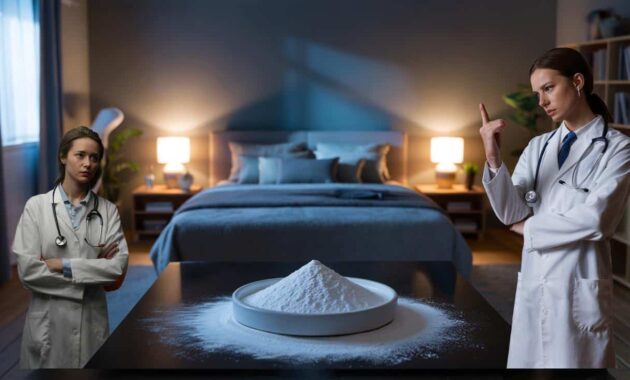
The humble baking soda, once relegated to the baking aisle, has taken on a new role as the unexpected star of the bedroom. Across social media and wellness blogs, people are raving about the purported benefits of placing a shallow bowl of baking soda under their beds – from improved sleep to cleaner air. But as this trend gains momentum, the medical community is divided, with some doctors hailing it as a simple, natural solution, while others dismiss it as nothing more than a placebo effect.
The baking soda phenomenon has sparked a lively debate, with proponents claiming it absorbs odors, improves air quality, and even enhances sleep quality. However, skeptical doctors warn that the science behind these claims is limited, and they caution against falling for the allure of this “magical thinking” approach to better health.
As the controversy surrounding this new bedroom trend intensifies, it raises deeper questions about our collective desire for simple, natural solutions to complex problems. Are we so eager to believe in the power of a humble household item that we’re willing to overlook the lack of rigorous scientific evidence? Or is there something more profound at play, a reflection of our search for control and a yearning for a sense of empowerment in the face of modern health challenges?

The Rise of the Baking Soda Bedroom Trend
The baking soda bedroom trend has been steadily gaining momentum, with social media platforms and wellness blogs serving as the primary drivers of its popularity. Proponents of the practice claim that placing a shallow bowl of baking soda under the bed can help absorb odors, improve air quality, and even enhance sleep quality.
The rationale behind this trend is that baking soda, with its natural pH-balancing properties, can neutralize acidic compounds in the air, effectively “purifying” the bedroom environment. Some enthusiasts go so far as to suggest that the baking soda can even help alleviate respiratory issues or allergies.
However, the sudden surge in this practice has not gone unnoticed by the medical community, where a growing divide has emerged between those who see potential benefits and those who dismiss it as a harmless but ineffective fad.

The Doctors’ Divide: Placebo or Practical Solution?
On one side of the debate, a group of doctors and health professionals have embraced the baking soda bedroom trend, citing its simplicity and potential benefits. They argue that the intervention is low-risk, low-cost, and may offer tangible improvements in air quality and sleep quality for some individuals.
“There’s no harm in trying it, and if it helps someone sleep better or feel more comfortable in their bedroom, then it’s worth exploring,” says Dr. Samantha Wilkinson, a sleep specialist. “While the scientific evidence may be limited, the anecdotal reports from people who’ve tried it are quite compelling.”
However, on the other side of the divide, a growing number of doctors are more skeptical, warning that the baking soda trend is nothing more than a placebo effect, driven by the power of suggestion and a desire for a simple solution to complex problems.

The Placebo Effect and the Allure of Magical Thinking
Dr. Ethan Bates, a respiratory specialist, is one of the more outspoken critics of the baking soda bedroom trend. He argues that the claims about its purported benefits are not supported by robust scientific evidence and cautions against falling into the trap of “magical thinking.”
“While baking soda is a harmless substance, the idea that it can somehow purify the air or improve sleep quality is simply not grounded in science,” Dr. Bates says. “We have to be careful not to confuse anecdotal reports with actual medical evidence. The placebo effect is a powerful thing, and it’s easy for people to convince themselves that a simple intervention is working, even when it’s not.”
Dr. Bates also points to the broader implications of this trend, warning that it reflects a growing societal tendency to seek out simplistic, “natural” solutions to complex health issues, often at the expense of seeking professional medical advice.

Beyond the Bedroom: The Broader Implications
The baking soda bedroom trend is not just about the effectiveness of a household item in improving sleep and air quality. It’s a microcosm of a broader societal phenomenon, where people are increasingly turning to alternative, often unproven, remedies in an effort to take control of their health and well-being.
This trend towards “magical thinking” and a preference for “natural” solutions over conventional medical advice is not limited to the baking soda craze. It can be seen in the rise of alternative medicine, the popularity of dietary supplements, and the growing skepticism towards mainstream healthcare institutions.
As Dr. Bates explains, “This trend speaks to a deeper issue of trust and empowerment. People are seeking out solutions that make them feel more in control of their health, even if those solutions aren’t backed by solid scientific evidence. It’s a reflection of the complex challenges and uncertainties we face in the modern world.”

The Way Forward: Balancing Skepticism and Open-Mindedness
The debate surrounding the baking soda bedroom trend highlights the need for a balanced approach, one that acknowledges the potential benefits of simple, natural interventions while also maintaining a healthy dose of scientific skepticism.
Experts on both sides of the divide agree that the key is to approach these trends with an open mind, but also with a critical eye. “We should be willing to consider new ideas and approaches, but we also need to ensure that they are backed by solid research and evidence,” says Dr. Wilkinson.
Ultimately, the baking soda bedroom trend may not be the panacea that some enthusiasts claim, but it may offer a small, harmless improvement for some individuals. The real challenge lies in navigating the complex landscape of health and wellness, where simple solutions often compete with the nuanced realities of modern medicine.

Baking Soda and Beyond: The Search for Empowerment
The baking soda bedroom trend is not just about a household item and its potential benefits. It’s a reflection of a deeper societal desire for empowerment and control over our health and well-being.
In a world where modern medicine can feel impersonal and complex, the allure of a simple, “natural” solution like baking soda can be irresistible. It taps into our innate desire for agency and the belief that we can take matters into our own hands, rather than relying solely on the expertise of medical professionals.
This search for empowerment is not limited to the baking soda trend; it can be seen in the growing popularity of alternative therapies, the rise of wellness movements, and the increasing skepticism towards conventional healthcare institutions. As a society, we seem to be grappling with a sense of disempowerment and a longing for a more personalized, holistic approach to health.

Conclusion: Embracing the Complexity of Health and Wellness
The baking soda bedroom trend is a complex and multifaceted phenomenon, one that reflects deeper societal trends and a growing desire for simple, natural solutions to complex health challenges. While the medical community may be divided on the merits of this practice, the underlying message is clear: people are seeking a greater sense of control and empowerment over their well-being.
As we navigate this landscape, it’s crucial to strike a balance between skepticism and open-mindedness, embracing the potential benefits of natural interventions while also maintaining a critical eye and a commitment to evidence-based practices. Only by navigating this delicate balance can we truly address the complex realities of health and wellness in the modern world.
| Potential Benefits of Baking Soda | Potential Drawbacks of Baking Soda |
|---|---|
|
|
| Expert Opinions on the Baking Soda Bedroom Trend |
|---|
|
|
|

As the debate over the baking soda bedroom trend continues, it’s clear that this phenomenon is about more than just a simple household item. It’s a reflection of our collective desire for control, empowerment, and a sense of agency in the face of the complex challenges of modern health and wellness.
Does baking soda actually purify the air in my bedroom?
There is limited scientific evidence to support the claim that baking soda can effectively purify the air in a bedroom. While baking soda may absorb some odors, it does not actively remove airborne pollutants or improve overall air quality in a significant way.
Can baking soda under the bed improve my sleep quality?
The connection between baking soda under the bed and improved sleep quality is not well-established. While some people report subjective improvements, the scientific evidence is lacking. Factors like mattress quality, room temperature, and stress levels are likely more important for sleep quality.
Is it safe to have baking soda under my bed?
Placing a shallow bowl of baking soda under the bed is generally considered safe, as baking soda is a non-toxic substance. However, it’s important to ensure the bowl is secure and not easily knocked over, as spilled baking soda could create a slipping hazard.
How often should I replace the baking soda under my bed?
Most experts recommend replacing the baking soda every 30 days or so, as it will gradually lose its odor-absorbing capacity over time. Some people choose to refresh the baking soda more frequently, such as every two weeks, to maintain its effectiveness.
Can baking soda be used to clean and deodorize other areas of my home?
Yes, baking soda is a versatile household cleaning and deodorizing agent that can be used in various parts of the home, such as the refrigerator, carpets, and laundry. However, its effectiveness may vary depending on the specific cleaning task and the severity of the odor or stain.
Is there any scientific evidence to support the use of baking soda for improved sleep and air quality?
The scientific evidence supporting the use of baking soda for improved sleep and air quality is limited. While some studies have shown that baking soda can absorb certain odors, the impact on overall air quality and sleep quality is not well-established. More research is needed to confirm the potential benefits of this practice.
Should I consult a doctor before trying the baking soda bedroom trend?
While the baking soda bedroom trend is generally considered low-risk, it’s always a good idea to consult with a healthcare professional, especially if you have any underlying medical conditions or concerns. They can provide guidance on whether this intervention may be appropriate for your specific needs and health status.
What are some alternative, evidence-based ways to improve sleep and indoor air quality?
Some alternative, evidence-based ways to improve sleep and indoor air quality include using air purifiers, ensuring proper ventilation, maintaining a comfortable bedroom temperature, practicing relaxation techniques, and seeking professional medical advice for any persistent sleep or respiratory issues.