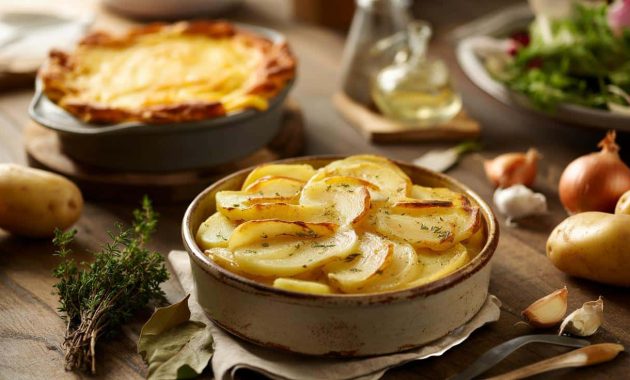
Instead of reaching for cream-heavy gratins, Laurent Mariotte is turning to an old-fashioned potato dish that feels comforting, yet far lighter on the stomach – and the budget.
A lighter autumn swap for gratin lovers
In France, cooler weather usually signals the return of gratin dauphinois, that rich bake of potatoes, cream and sometimes cheese. It’s delicious, but also hefty, especially if you eat it more than once a week.
Laurent Mariotte, host of the long-running French TV segment “Petits Plats en Équilibre”, suggests a different route: pommes boulangères, or “baker’s potatoes”. The dish uses the same comforting base of sliced potatoes, but replaces cream with stock and relies on slow-cooked onions for flavour.
Think of it as gratin dauphinois’ lighter, thriftier cousin – same comfort, far less weight and fuss.
The method is simple enough for a rushed weeknight, yet impressive enough to place beside a roast for Sunday lunch.
What are pommes boulangères?
Pommes boulangères is a traditional French preparation that dates back to the time when rural homes rarely had their own ovens.
Families would assemble a dish of sliced potatoes, onions and a bit of fat, then take it to the local baker. Once the bread was baked and the oven cooling, the dish went in to cook slowly in the residual heat.
Today, the spirit remains the same: cheap ingredients, long gentle cooking, and a result that tastes richer than it looks.
Just potatoes, onions, a little butter and hot stock – that’s the backbone of Mariotte’s lighter recipe.
➡️ Starlink unveils mobile satellite internet: no setup, no new phone needed
➡️ Drinking a glass of milk a day may cut bowel cancer risk, study suggests
➡️ Driver’s license : good news for motorists, including elderly people
➡️ 6 habits of grandparents deeply loved by their grandchildren, according to psychology
➡️ Chef’s essential air fryer recipes for easy meals and snacks
➡️ Bad news : Starting March 15, a prohibits mowing lawns between noon and 4 p.m.
Laurent Mariotte’s version: ingredients and method
The shopping list
Mariotte’s recipe sticks to a handful of easy-to-find ingredients:
- About 1.1 kg potatoes (waxy or all-purpose work best)
- 300 g onions
- 2 cloves of garlic
- A knob of butter
- 1 bouquet garni (a small bundle of herbs such as thyme, bay leaf and parsley)
- 60 cl white stock or chicken stock
- Salt
- Black pepper
Compared with a classic gratin dauphinois, you’ll notice what’s missing: cream, milk and cheese. The flavour comes instead from the onions, garlic, herbs and well-seasoned stock.
Step-by-step: how Mariotte builds flavour
First, Mariotte preheats the oven to 180°C. While the oven warms, he peels the potatoes, onions and garlic. The potatoes are cut into thin, even slices, then seasoned with salt and pepper.
The onions are sliced into thin strips and gently sweated in a pan with butter. This step is crucial. The aim is to soften them slowly until they are tender and lightly golden, not burnt. That mild caramelisation adds depth without needing cream.
Next comes the gratin dish. Mariotte rubs the inside with a halved clove of garlic, then lightly butters it. This small ritual layers flavour from the very base of the dish and helps prevent sticking.
He then builds alternating layers of potatoes and softened onions in the dish. The bouquet garni is slipped between the layers. Finally, he pours over hot white stock or chicken stock until the potatoes are just covered.
The dish goes into the oven for 1 to 1¼ hours, until the potatoes are tender through and the top is nicely golden. Before serving, the bouquet garni is removed and the dish is served piping hot.
The long, gentle bake allows the stock to soak into the potatoes, giving a creamy feel without a drop of cream.
Gratin dauphinois vs pommes boulangères
For anyone hesitating between the classic gratin and this lighter option, the differences are straightforward.
| Aspect | Gratin dauphinois | Pommes boulangères |
|---|---|---|
| Main liquid | Cream, sometimes milk | White stock or chicken stock |
| Texture | Very rich, often quite dense | Moist, lighter, with defined slices |
| Key flavours | Cream, garlic, sometimes cheese | Onions, herbs, savoury stock |
| Typical use | Festive meals, special occasions | Weeknight dinners, side to roast meat or fish |
| Calorie profile | Higher, due to cream and fat | Lower, mostly from potatoes and stock |
For people looking to cut back on cream without losing warmth and flavour, pommes boulangères offers a realistic compromise. The dish still feels indulgent when paired with a salad or a simple roast chicken.
How to adapt the recipe at home
Mariotte’s version sticks to French terroir, but the method is flexible. Home cooks can adjust it to suit their cupboards or dietary needs.
Easy variations to try
- Vegetarian twist: Use a robust vegetable stock and add a few slices of leek for sweetness.
- Extra crisp top: Scatter a light layer of breadcrumbs over the surface for the final 15 minutes.
- Low-salt version: Choose a low-sodium stock and season gradually, tasting the liquid before baking.
- Herb variations: Swap the bouquet garni for rosemary and sage for a more Mediterranean note.
- Leftover boost: Stir in a few shreds of leftover roast meat between the layers for a complete one-dish meal.
The key is to keep the potatoes sliced thinly and to maintain enough liquid to keep them moist while they cook.
Why this kind of recipe fits the moment
Rising food prices have pushed many households toward cheaper staples. Potatoes remain one of the most economical ways to feed several people, especially when paired with onions and a basic stock cube.
With just a few pantry ingredients, Mariotte’s dish turns a simple baking dish into a filling centrepiece.
From a nutritional angle, swapping cream for stock reduces saturated fat and overall calories. The dish still delivers slow-release carbohydrates from the potatoes and a modest amount of fibre, especially if you leave some of the skin on when slicing.
Practical tips and scenarios for everyday cooking
For busy evenings, one option is to assemble the dish in the morning and keep it in the fridge, tightly covered. When you get home, it can go straight into a hot oven, though you may need to add around 10 minutes to the cooking time as it warms from cold.
The dish reheats well too. A pan of leftover pommes boulangères can be turned into a speedy hash the next day: cut into chunks, fry in a little oil until crisp on the edges, and top with a fried egg.
This kind of recipe also works well for people trying to manage portion sizes. Because the potatoes absorb so much flavour from the stock and onions, a smaller serving still feels satisfying, especially alongside greens or a simple salad with a sharp vinaigrette.
For those unfamiliar with French terms, a quick clarification helps: “fond blanc” refers to a light, pale stock made from poultry or veal bones and vegetables, while “bouquet garni” simply means a small bundle of herbs tied together, used to perfume a dish during cooking and removed before serving.
Used in this way, both techniques show how professional chefs like Laurent Mariotte lean on basics rather than luxury ingredients. The result suits the current mood perfectly: comforting, careful with budgets, and a little lighter than the dishes we might once have reserved for winter feasts.