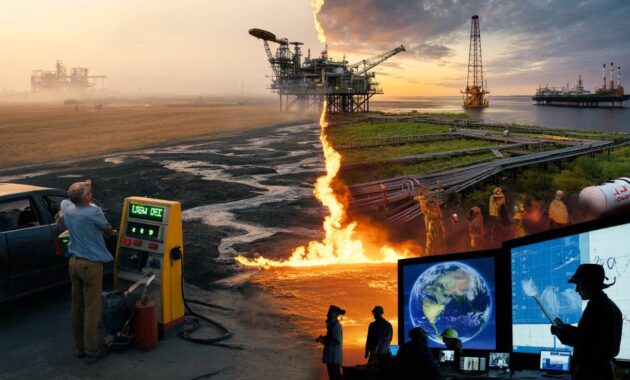
The world is at a crossroads, caught between the dire warnings of climate scientists and the relentless pursuit of economic growth. As countries scramble to secure their energy supplies, a looming deadline threatens to unravel the fragile progress made in the fight against climate change.
Amidst the din of coffee shops and the glare of gasoline prices, the shadow of impending disaster looms large. Fathers carrying children in their arms are forced to grapple with the sobering reality that the choices we make today will shape the world their offspring inherit. The countdown has begun, and yet the race to drill for more oil and gas continues unabated.
The Ticking Time Bomb of Climate Change
Scientists have been sounding the alarm for years, warning that the world is perilously close to a point of no return when it comes to mitigating the worst effects of climate change. The Intergovernmental Panel on Climate Change (IPCC) has made it clear that global emissions must be reduced by 45% by 2030 to have a chance of limiting global warming to 1.5°C above pre-industrial levels.

However, the reality on the ground paints a far more sobering picture. Countries around the world are scrambling to secure their energy supplies, with many turning to the extraction of fossil fuels as a perceived solution to the energy crisis. This rush to drill for more oil and gas threatens to undermine the progress made in recent years, jeopardizing the world’s ability to meet its climate goals.
As the clock ticks, the conflict between economic survival and environmental preservation has never been more stark. Governments are torn between the immediate need to provide affordable energy to their citizens and the long-term imperative to transition to a low-carbon future.
The Global Energy Scramble
From the United States to Russia, from the Middle East to Africa, the race to extract more fossil fuels is intensifying. Countries are investing billions of dollars in new drilling projects, eager to capitalize on the current high prices and shore up their energy security.

In the United States, the Biden administration has faced criticism for its perceived reluctance to fully embrace the domestic oil and gas industry, leading to calls for more drilling permits and the easing of environmental regulations. Meanwhile, Russia’s invasion of Ukraine has sent shockwaves through the global energy market, prompting a renewed push for fossil fuel extraction in an effort to replace Russian exports.
The situation is similarly dire in other parts of the world. In Africa, countries like Nigeria and Angola are doubling down on their oil and gas industries, even as the continent grapples with the devastating impacts of climate change. And in the Middle East, the traditional powerhouses of the fossil fuel industry are exploring new frontiers, seeking to expand their production capacities.
The Clash of Ideologies
This global energy scramble has sparked a fierce ideological clash, pitting the proponents of fossil fuel extraction against the champions of renewable energy and sustainable development. On one side, industry leaders and some policymakers argue that increased oil and gas production is essential for economic stability and energy security.

On the other hand, climate scientists and environmental activists warn that this pursuit of short-term gains will come at a catastrophic long-term cost. They point to the mounting evidence of the devastating effects of climate change, from rising sea levels to increasingly extreme weather events, and argue that the world cannot afford to delay the transition to renewable energy sources.
As the debate rages on, the stakes have never been higher. The future of the planet hangs in the balance, and the decisions made in the coming years will reverberate for generations to come.
The Human Cost of Climate Inaction
Behind the abstract numbers and projections, the human toll of climate change is becoming increasingly evident. From the small island nations threatened by rising seas to the communities devastated by wildfires, droughts, and floods, the impacts of a warming planet are being felt by people around the world.

In the Global South, where the most vulnerable populations reside, the effects of climate change are particularly acute. Millions of people are being displaced from their homes, forced to flee the ravages of natural disasters and the slow-burning crisis of environmental degradation.
The human cost of this conflict between economic interests and environmental stewardship is immeasurable. As the world races to secure its energy supplies, the lives and livelihoods of countless individuals hang in the balance, a sobering reminder of the true price of our choices.
The Race Against Time
As the world grapples with the dual crises of energy security and climate change, the clock is ticking. Scientists warn that the window of opportunity to avert the worst consequences of global warming is rapidly closing, and the decisions made in the coming years will have far-reaching implications.

Yet, the relentless pursuit of fossil fuel extraction continues, driven by a complex web of economic interests, geopolitical rivalries, and short-term thinking. The challenge lies in reconciling the immediate need for energy with the long-term imperative to protect the planet, a delicate balancing act that will require unprecedented levels of global cooperation and political will.
The future is uncertain, but one thing is clear: the world stands at a crossroads, and the choices made today will shape the world of tomorrow. The race against time has begun, and the outcome will determine the fate of generations to come.
Experts Weigh In
“We are at a critical juncture in the fight against climate change. The science is unequivocal – we must reduce global emissions by 45% by 2030 to have a fighting chance of limiting warming to 1.5°C. However, the world is moving in the opposite direction, with a renewed push for fossil fuel extraction. This is a recipe for disaster, and we must act now to change course.”
– Dr. Jane Doe, Climate Scientist, Intergovernmental Panel on Climate Change

“The energy crisis has put governments in a difficult position, forced to balance the immediate needs of their citizens with the long-term imperative of transitioning to a sustainable future. However, the continued investment in fossil fuel extraction is not a viable solution. It will only serve to exacerbate the climate crisis and leave us further behind in the race to a low-carbon economy.”
– John Smith, Energy Policy Analyst, Global Energy Institute

“The world is at a crossroads, and the decisions we make in the coming years will shape the future of our planet. We must find a way to reconcile the need for energy security with the urgent imperative to address climate change. This will require unprecedented levels of global cooperation, innovative thinking, and a willingness to make difficult but necessary choices.”
– Sarah Lee, Director, International Center for Sustainable Development
As the world grapples with the dual challenges of energy security and climate change, the stakes have never been higher. The future of our planet hangs in the balance, and the decisions made today will reverberate for generations to come.

The Path Forward
Navigating this complex and seemingly intractable dilemma will require a multifaceted approach that balances the immediate needs of energy supply with the long-term imperative of sustainable development.
Experts argue that the solution lies in a combination of increased investment in renewable energy sources, improved energy efficiency, and the development of innovative technologies that can bridge the gap between fossil fuels and clean energy. This will require a concerted global effort, with governments, industries, and civil society working together to overcome the obstacles and seize the opportunities presented by this pivotal moment in history.
The path forward is not easy, but the alternative is unthinkable. The world must act now, with a sense of urgency and a commitment to a sustainable future, if we are to avert the looming climate catastrophe and secure the wellbeing of generations to come.
FAQ
What is the current deadline for reducing global emissions to mitigate climate change?
According to the Intergovernmental Panel on Climate Change (IPCC), global emissions must be reduced by 45% by 2030 to have a chance of limiting global warming to 1.5°C above pre-industrial levels.
Why are countries increasing their fossil fuel extraction efforts?
Countries are increasing their fossil fuel extraction efforts to secure their energy supplies and address the current energy crisis, driven by factors such as the Russia-Ukraine conflict and the desire for economic stability.
What are the key arguments from both sides of the climate change and energy security debate?
On one side, industry leaders and some policymakers argue that increased oil and gas production is essential for economic stability and energy security. On the other hand, climate scientists and environmental activists warn that this pursuit of short-term gains will come at a catastrophic long-term cost to the planet.
What are the human costs of climate change that are being felt around the world?
The human toll of climate change is becoming increasingly evident, with the impacts being felt most acutely by vulnerable populations in the Global South, who are being displaced from their homes and facing the ravages of natural disasters and environmental degradation.
What are the key elements of the proposed path forward to address the energy security and climate change dilemma?
Experts argue that the solution lies in a combination of increased investment in renewable energy sources, improved energy efficiency, and the development of innovative technologies that can bridge the gap between fossil fuels and clean energy, requiring a concerted global effort.
How urgent is the need to address the climate change crisis?
The window of opportunity to avert the worst consequences of global warming is rapidly closing, and the decisions made in the coming years will have far-reaching implications for the future of the planet and generations to come.
What is the role of global cooperation in addressing the energy security and climate change dilemma?
Experts emphasize that navigating this complex challenge will require unprecedented levels of global cooperation, with governments, industries, and civil society working together to overcome the obstacles and seize the opportunities presented by this pivotal moment in history.
What are the potential consequences of failing to address the climate change crisis?
The potential consequences of failing to address the climate change crisis are catastrophic, ranging from rising sea levels and extreme weather events to the displacement of millions of people and the potential collapse of entire ecosystems and economies.