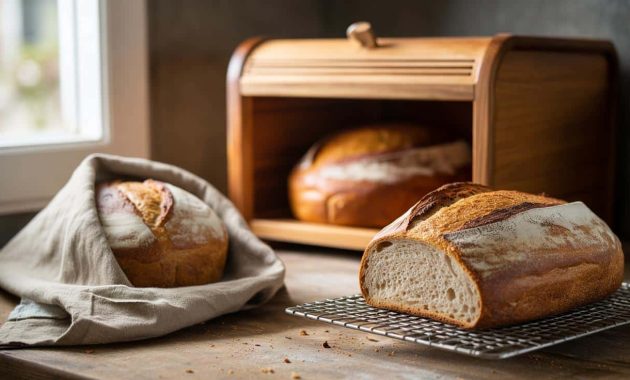
That ritual has nothing to do with fancy containers or high-tech gadgets. It starts with cooling, a simple wrap, and the right spot on your counter. And it can stretch a loaf’s life by days while keeping the crust crisp and the crumb moist.
Why bread goes stale faster than you think
Bread does not “dry out” first. It goes stale as cooked starches reorganize and push out water, a process called retrogradation. The fridge speeds that process dramatically. Plastic bags trap steam and soften the crust. Air circulating too freely dries the crumb. Real freshness lives in the balance between airflow and moisture.
Never refrigerate bread. Cold temperatures push starches to firm up, which makes bread taste older long before it actually dries.
Humidity in your kitchen matters too. In a damp room, mold arrives before staling. In a dry room, staling outruns mold. Your storage method should hedge against both by allowing a little air while guarding the crumb from excessive evaporation.
The bakers’ routine that keeps loaves lively
Professional bakers keep it simple: let the loaf rest, wrap it lightly, and give it a breathable home. This approach preserves that crackly crust many of us love, while protecting the interior from turning chalky.
Cooling is not optional
Let a fresh loaf cool completely on a rack before storage. Heat trapped inside still moves moisture from crumb to crust. If you wrap a warm loaf, steam condenses, the crust collapses, and the loaf ages faster. Forty-five to ninety minutes usually does the job, depending on size.
Cloth wrap beats plastic
Once cool, wrap the bread in a clean, dry cotton or linen cloth. The cloth holds just enough humidity to keep the crumb supple, while the weave lets the crust breathe and stay crisp. Plastic locks in water and invites a limp exterior. Paper is better than plastic, but cloth outperforms paper over several days.
A wooden bread box with a vent
Store the wrapped loaf in a wooden bread box with a small vent or a lid that doesn’t seal airtight. Wood absorbs excess moisture and releases it slowly, acting like a natural humidity buffer. A tiny vent prevents trapped condensation and discourages mold. Clean the box weekly and let it dry fully before restocking.
Cool completely. Wrap in a dry cloth. Rest in a ventilated wooden box. This trio keeps crust lively and crumb tender.
➡️ Forget wavy hair, “Brontë waves” will enhance your mane this winter (they’re easy to create)
➡️ How to clean shower curtains so they don’t smell damp
➡️ SpaceX secretly tested a reusable nuclear propulsion module and it changes space travel forever
➡️ How to remove limescale from glass shower doors without harsh chemical sprays
➡️ Goodbye traditional kitchen cabinets: this cheaper new trend won’t warp, swell, or grow mould
➡️ Five crucial things gardeners must urgently do to save hydrangeas before the first deadly frost hits
➡️ Meteorologists warn early February atmospheric signals point to a dangerous Arctic anomaly
What actually works: methods compared
| Method | What it does | Best for | Watch-outs |
|---|---|---|---|
| Cloth wrap + wooden box | Balances airflow and humidity | Country loaves, baguettes, sourdough | Clean box to prevent mold |
| Paper bag on counter | Moderate airflow, minimal moisture hold | Short-term storage, 24–36 hours | Crumb dries faster after day two |
| Plastic bag (sealed) | Locks in moisture | Soft sandwich loaves | Soggy crust; faster staling in the fridge |
| Freezer (wrapped) | Pauses staling almost completely | Long-term storage, weeks to months | Ice crystals if poorly wrapped |
Freezing done right
Freezing halts staling and preserves flavor. The trick is to prep before you get busy on a weekday. Slice the loaf, double-wrap it, and reheat only what you need.
- Slice before freezing so you can pull portions on demand.
- Wrap tightly in foil, then place in a freezer bag to limit frost.
- Thaw at room temperature in the wrapping to keep moisture in.
- Refresh in a hot oven for 5–8 minutes to revive the crust.
A quick oven refresher also helps day-old bread. Warm a loaf at 180–200°C for a few minutes. Heat softens the starch network and returns some bounce to the crumb. Eat it soon after; once it cools, the starches set again.
When bread goes stale, give it a second act
Stale bread still carries value. Home cooks and bakers turn it into building blocks for other dishes. Dry it until crisp and blitz into breadcrumbs. Cube it with oil and garlic for stovetop croutons. Tear it into a tomato salad for panzanella. Soak thick slices in milk and eggs for French toast. In soups and sauces, a handful of crumbs adds body without flour.
Stale does not mean useless. Breadcrumbs, croutons, bread puddings, and panzanella turn yesterday’s loaf into today’s meal.
Why this matters for wallets and waste
Throwing out bread wastes money and energy. Flour, water, and time go into every loaf. Smarter storage cuts grocery costs and reduces food waste at home. One household loaf saved each week adds up over a year, especially for families who buy multiple loaves.
Extra tips bakers use at the source
Some breads naturally keep longer. Sourdough loaves resist staling thanks to organic acids that slow mold and help moisture retention. Higher hydration breads stay tender longer than very lean, dry styles. Whole grains can keep moisture well, though they mold faster in humid rooms. Salt strengthens gluten and influences water binding, which affects shelf life.
Daily routine you can copy
- Day 0 evening: Cool on a rack until room temperature.
- Wrap in a dry cloth and place in a ventilated wooden box.
- Day 2: Refresh crust in the oven for a few minutes if needed.
- Day 3–4: Freeze remaining slices; keep a few at room temperature for same-day use.
Storage risks and how to avoid them
Watch for condensation spots inside boxes or bags; they invite mold. If you see moisture, air the loaf out on a rack for ten minutes. Keep bread away from warm appliances that create uneven heating and condensation. Do not store bread near fruits that release ethylene, as aromas and moisture can shift faster than you expect. Clean your bread box with mild soap, rinse, and dry completely to keep spores in check.
A small tool that helps
A simple humidity card or cheap analog hygrometer near your bread station tells you if your kitchen skews very dry or humid. In dry months, use a slightly thicker cloth. In humid spells, choose a looser weave and open the box vent a touch more.
Bread’s best days do not have to end after breakfast. With a cool-down, a cloth wrap, and a wooden box, you keep the crust singing and the crumb soft. If life gets busy, the freezer stands ready. And if a loaf wanders past its peak, your pantry benefits from new staples made out of yesterday’s slices.