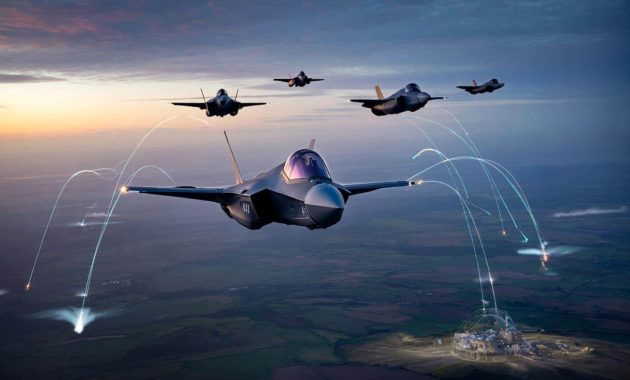
Instead, they signed up to a vast, data-driven ecosystem.
Across the continent, the American-made F‑35 is quietly becoming the default combat aircraft. Behind the glossy stealth marketing lies a dense web of software, logistics and political leverage that could shape how Europe fights, trains and even thinks about its own strategic freedom.
The jet that is really a system
By 2035, at least thirteen European air forces are expected to fly the F‑35. Fourteen NATO members will field it. This is no niche purchase. It is a de facto standardisation of front-line air power around a single US-led programme.
At first glance, the aircraft is sold as a “fifth-generation” multirole fighter: stealthy, versatile, networked. But framing it as just a fast, agile combat plane misses the core of the story.
The F‑35 is less a machine in a hangar and more a constantly updated node in a global, US-controlled digital network.
The jet’s value rests on invisible flows: threat libraries, mission data files, software patches, logistics planning tools, training systems, weapons integration roadmaps. It is designed as a flying sensor and data hub, fully effective only when permanently connected to a wider architecture managed by the US prime contractor, Lockheed Martin, and the Pentagon.
This is where sovereignty starts to blur. The key levers of performance and readiness move from the air base to the software pipeline, the cyber infrastructure and the supply chain.
New levers of pressure: updates, data, logistics
Public debate has sometimes fixated on the idea of a mythical “kill switch” that would allow Washington to shut down allied F‑35 fleets at will. That image is largely misleading. The more realistic issue is subtler and arguably more powerful.
In a hyper-digital system like the F‑35, no one needs a big red button. Control can sit in the everyday governance of the programme: the timing of updates, the priority given to certain users, the speed of integrating local weapons or new threat data.
One of the most sensitive elements is the so‑called Mission Data Files. These are vast digital libraries of potential enemy radars, missiles and aircraft signatures, feeding the jet’s sensors and threat recognition systems. To stay credible, they must be refreshed at high pace, on cycles that can be measured in hours rather than weeks.
➡️ China turns a desert into a giant fish and shrimp farm
➡️ Pentagon needs more time to finalize defense firms on naughty list
➡️ If you feel tired without being exhausted, this habit might be draining you
➡️ For every dessert, its apple! The ultimate guide to finding the right apple to use
Slow the data, and you slow the jet. Delay the software, and you narrow the window in which an air force can act at full strength.
Add to this the logistics tail: spare parts, maintenance procedures, cyber-security fixes, and access to diagnostic tools. Historically, the F‑35 has relied on ALIS, the Automatic Logistics Information System, which has been so troubled that it is being replaced by a new network, ODIN. Both sit squarely under US management.
In small European fleets, where each aircraft counts, a modest delay in updates or parts can translate into fewer combat-ready jets at any given time. That gap can quickly turn into a strategic constraint during a crisis.
The cost trap behind “best value” claims
While the sticker price of the F‑35 has fallen over the years, the real battle sits in what militaries call “cost of ownership”: the money spent to keep the jets flying, trained and equipped over decades.
Independent estimates have painted a demanding picture. The US Government Accountability Office has assessed the F‑35 cost per flight hour at around $33,600 in 2012 dollars, which corresponds to roughly $48,000 adjusted to 2025 values.
| Aircraft type | Approx. cost per flight hour (2025 value) |
|---|---|
| F‑35 | ~$48,000 |
| Rafale | ~$20,000 |
| Gripen | ~$7,500 |
These figures are indicative, not absolute, but the gap is stark. For a given budget, an air force will either fly fewer jets, or fly them less, than with cheaper-to-run alternatives like France’s Rafale or Sweden’s Gripen.
That has a direct impact on training and readiness. When every hour in the air is extremely expensive, defence ministries are tempted to trim live flying and lean harder on simulators to keep pilots current.
The F‑35 risks becoming a Ferrari of the skies: dazzling but so costly that you hesitate to take it out of the garage.
Simulators are invaluable and increasingly realistic, but they do not fully replace the physical strain, operational friction and human instincts built during real flights. Over time, that raises questions about the depth of preparation if budgets stay tight and costs stay high.
From management buzzwords to wartime reality
The F‑35 embodies a corporate promise: do more with less thanks to big data, automation and predictive maintenance. In theory, an all-seeing logistics platform like ALIS, and now ODIN, should optimise spare parts, cut downtime and reduce waste.
In practice, war has little patience for just‑in‑time delivery and fragile digital dependencies. A global supply chain spread across multiple countries and reliant on continuous network access is exposed to cyber attacks, political disputes and industrial bottlenecks.
Glitches in ALIS, repeated software patches and shifting architectures have shown how complex and brittle such systems can be. Every layer added to increase efficiency can become another point of failure when communications are jammed, satellites are threatened or allies disagree on export controls.
European air forces are not just buying airframes. They are buying into a way of managing war that assumes connectivity, stable relations with Washington, and uninterrupted access to American technical support.
When dependence meets Trump-era politics
The question grows sharper in a more volatile political climate. Under Donald Trump, transatlantic ties were openly transactional. NATO allies were publicly pushed to “pay their share”, sometimes with threats to scale back US guarantees.
In such a mindset, every dependency can be weaponised. Access to software updates, priority in spare parts deliveries, clearance for certain weapons configurations: all of these can become bargaining chips in wider negotiations over trade, defence spending or foreign policy positions.
Once defence turns into a business relationship, technical dependencies stop being background noise and start looking like levers of influence.
European leaders who opt for the F‑35 rarely do so blindly. They often argue for interoperability with US forces, political signalling, and access to cutting-edge technologies. Yet there is an uncomfortable question few address publicly: what is the real value of a high-end capability whose peak performance depends on decisions taken outside your national chain of command?
Where sovereignty really lives: code, data, governance
The issue is not that the F‑35 is a bad aircraft. It is that its strength lies in layers that Europe does not fully control. Sovereignty is less about owning the metal and more about mastering the invisible architecture around it.
- Software: who writes, certifies and can modify the core code and mission systems?
- Data: who builds and updates the threat libraries and electronic warfare profiles?
- Logistics: who controls the diagnostics tools and parts distribution algorithms?
- Governance: who sets priorities when demand outstrips supply across multiple users?
Each of these questions leads back to the same actors in the US government and industry. European partners have a voice, but not the last word.
For countries that see strategic autonomy as a long-term goal, such as France, this creates pressure to keep national design and manufacturing capabilities alive. For others, the trade-off is accepted as the price of closer US alignment and shared deterrence against Russia.
Key concepts behind the F‑35 debate
Several technical notions underpin the current discussion and are worth unpacking briefly.
ALIS and ODIN: The Automatic Logistics Information System (ALIS) was the original digital backbone managing maintenance, spare parts and mission planning for the F‑35. It faced criticism for complexity, performance issues and cyber vulnerabilities. ODIN (Operational Data Integrated Network) is its successor, intended to be lighter and more reliable, yet it keeps the same basic idea: centralised, software-driven control over the fleet.
Mission Data Files: These are gigantic databases containing information about potential threats: radar frequencies, missile behaviour, friend-or-foe identifiers. They allow the F‑35 to recognise and prioritise dangers in real time. Countries flying the jet depend on US-approved tools and processes to update these libraries fast enough to keep pace with evolving adversaries.
Scenarios Europe quietly thinks about
Officials are unlikely to say it publicly, but staff planners do run through awkward scenarios. For instance: a future US administration clashes with a European government over sanctions policy or relations with China. Quietly, software updates slow down or the integration of a new European-made missile for the F‑35 is pushed down the queue.
No treaty is broken. No dramatic cut‑off happens. Yet for a year or two, a key capability underperforms. Pilots have to adapt tactics because their main jet lacks a fully updated threat library or cannot yet fire the weapon that national industry has spent billions developing.
Another scenario is harsher: during a regional crisis close to Europe’s borders, US forces also require urgent support for their own F‑35 fleets. The production line for spare parts is finite. Washington’s jets get first call. Smaller European operators wait, flying fewer sorties and stretching maintenance crews thin.
These are not science fiction plots. They are natural by-products of joining a multinational programme dominated by one actor. The F‑35 can bring formidable capabilities, but it also binds Europe more tightly into American industrial and political rhythms.
For European governments, the real question is less “Is the F‑35 good?” and more “How much strategic freedom are we willing to trade for its strengths, and what back-up options do we keep alive if those networks start to fray?”