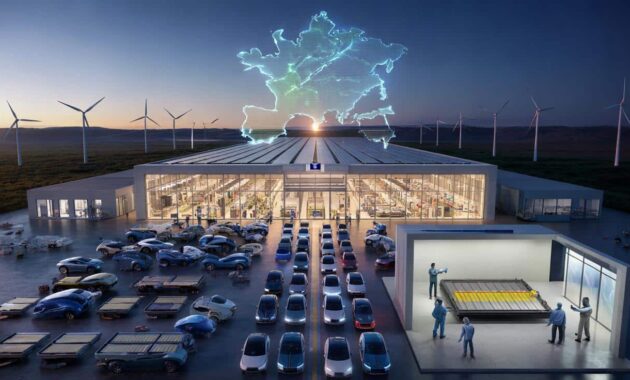
The streets of Paris are buzzing with excitement as France unveils a game-changing breakthrough in energy technology. After decades of relying on nuclear power, the country is now boldly stepping into the future, harnessing the potential of homegrown battery production. This shift could have profound implications, reshuffling the global power dynamics and challenging the dominance of traditional energy sources.
France’s ambitious plan to become a leader in battery manufacturing is not just a matter of environmental consciousness or economic strategy – it’s a strategic move that could redefine the balance of power on the international stage. As the world transitions towards renewable energy and electric mobility, the nation’s success in this field could position it as a crucial player in the global energy landscape.
The driving force behind this transformation is the Automotive Cells Company (ACC), a joint venture between energy giants TotalEnergies and Stellantis. This innovative partnership is setting out to build a network of battery factories across Europe, with France as the epicenter. The implications of this undertaking stretch far beyond the automotive industry, extending into geopolitics and the very fabric of international relations.

Challenging China’s Battery Dominance
For years, China has held a virtual monopoly on the global battery market, dominating the production and supply chains. This stranglehold has given the Asian superpower significant leverage, both economically and geopolitically. However, France’s battery gamble poses a direct challenge to this status quo, potentially disrupting the delicate balance of power.
The success of ACC’s battery factories could reduce Europe’s reliance on Chinese imports, diminishing Beijing’s influence in the region. This shift could have far-reaching consequences, as countries seek to diversify their energy sources and secure their supply chains. The implications extend beyond the economic realm, potentially affecting diplomatic relations and global strategic positioning.
As China watches this French energy revolution unfold, it is likely to respond with a heightened sense of urgency. The stakes are high, and the outcome of this battery race could reshape the global energy landscape for decades to come.

Tapping into Innovative Battery Technologies
France’s battery gamble is not just about building manufacturing capacity – it’s also about harnessing cutting-edge technologies that could give the country a competitive edge. One such technology is the sodium-ion battery, a promising alternative to the ubiquitous lithium-ion counterparts.
Sodium-ion batteries offer several advantages, including potential cost savings, improved safety, and reduced dependence on rare-earth materials. These characteristics could make them a game-changer in the electric vehicle (EV) market, where affordability and sustainability are increasingly crucial factors.
The development of sodium-ion batteries is not without its challenges, but France’s commitment to innovation and its access to a pool of talented researchers could give it a significant advantage. As the world watches this battery technology unfold, the country’s success or failure could have far-reaching implications for the future of energy storage and mobility.

Implications for the Automotive Industry
The French energy breakthrough is not just a matter of geopolitics and technological advancements – it also has major implications for the automotive industry. As electric vehicles continue to gain momentum, the availability and quality of battery supplies will become increasingly critical for carmakers.
France’s battery factories could provide a reliable and cost-effective source of batteries for European automakers, reducing their reliance on imports and potentially giving them a competitive edge in the global EV market. This, in turn, could spur further investment and innovation in the automotive sector, driving the transition towards sustainable transportation.
However, the success of this battery gamble is not a foregone conclusion. Carmakers will need to closely monitor the development of ACC’s facilities and the performance of the batteries produced. Navigating the complex web of supply chains, technological advancements, and consumer preferences will be crucial for both the automakers and the French government.

Risks and Uncertainties
While the French energy breakthrough holds immense promise, it is not without its risks and uncertainties. Building a robust and reliable battery production ecosystem is a mammoth undertaking, and France will need to overcome a range of challenges to achieve its goals.
One of the key hurdles will be securing the necessary raw materials and ensuring a stable supply chain. The global competition for critical minerals and resources could intensify as more countries seek to establish their own battery manufacturing capabilities. France will need to forge strategic partnerships and invest in research to ensure a consistent and sustainable supply of these materials.
Additionally, the technological race to develop advanced battery chemistries and manufacturing processes is fierce. France’s reliance on innovative technologies, such as sodium-ion batteries, carries inherent risks. If these technologies fail to meet expectations or face unexpected roadblocks, the country’s ambitious plans could be derailed.

Reshaping the Global Energy Landscape
The implications of France’s battery gamble extend far beyond the borders of the European nation. This energy breakthrough has the potential to reshape the global energy landscape, with far-reaching consequences for geopolitics, trade, and the environment.
As France establishes itself as a major player in the battery industry, it could become a hub for energy-intensive industries seeking to reduce their carbon footprint. This, in turn, could attract investment and talent, further strengthening the country’s position as a leader in sustainable energy solutions.
Moreover, the success of France’s battery factories could inspire other nations to follow suit, creating a ripple effect that challenges the dominance of traditional energy sources. This could accelerate the global transition towards renewable energy and electric mobility, ultimately contributing to a more sustainable and equitable future.

FAQs
What is the Automotive Cells Company (ACC)?
The Automotive Cells Company (ACC) is a joint venture between TotalEnergies and Stellantis, formed to build a network of battery factories across Europe, with France as the primary location.
How is France’s battery gamble challenging China’s dominance?
France’s investment in battery manufacturing has the potential to reduce Europe’s reliance on Chinese imports, diminishing Beijing’s influence in the region and reshuffling the global energy landscape.
What is the significance of sodium-ion battery technology?
Sodium-ion batteries offer advantages over traditional lithium-ion batteries, including potential cost savings, improved safety, and reduced dependence on rare-earth materials, making them a promising alternative for the electric vehicle market.

How could France’s battery factories impact the automotive industry?
The availability of reliable and cost-effective battery supplies from France’s factories could provide a competitive edge for European automakers, driving further investment and innovation in the transition towards sustainable transportation.
What are the main risks and uncertainties associated with France’s battery gamble?
Securing a stable supply of raw materials, overcoming technological challenges, and ensuring the success of innovative battery chemistries like sodium-ion are some of the key risks and uncertainties France will need to navigate.
How could France’s battery breakthrough reshape the global energy landscape?
The success of France’s battery factories could inspire other nations to follow suit, accelerating the global transition towards renewable energy and electric mobility, and potentially challenging the dominance of traditional energy sources.

What are the potential geopolitical implications of France’s battery gamble?
France’s battery gamble could reduce Europe’s reliance on Chinese imports, diminishing Beijing’s influence in the region and affecting diplomatic relations and global strategic positioning.
How could France’s battery breakthrough impact the environment?
By establishing itself as a hub for energy-intensive industries seeking to reduce their carbon footprint, France’s battery factories could contribute to a more sustainable and equitable future.