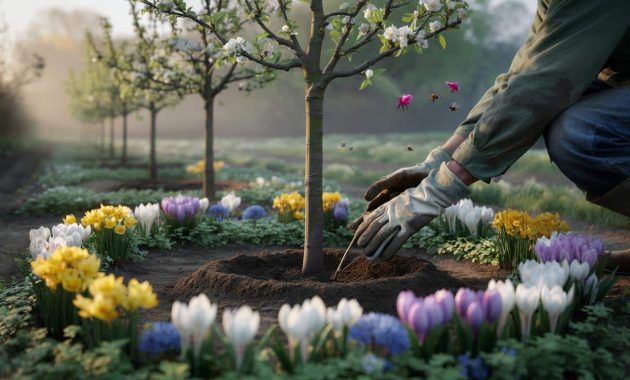
The first time I walked through an old spring orchard at dawn, I understood why seasoned gardeners obsess over winter planting. The air was still cold enough to see your breath, but the trees were already humming with life. Buds swollen like tiny promises, bees testing the first brave blossoms, blackbirds arguing from the top branches. None of this had happened by accident. Months earlier, when everything looked dead, someone had been out here quietly digging, pruning, tucking bulbs and saplings into hard, cold soil.
They were betting on spring.
And they knew exactly which plantings never to skip.
The quiet roots of a spectacular spring
Every experienced orchard keeper has the same winter ritual. They walk their rows in heavy boots, pockets full of labels, hands already stained with damp soil. While neighbors are still packing away holiday lights, they’re slipping bare-root trees into the ground and sowing the little things most people forget.
From the outside, it looks almost stubborn. Nothing is green yet. Branches are skeletal silhouettes against a grey sky. But under the surface, the next season is already being written.
One retired grower I met in Normandy showed me his “secret” spring corner behind the main orchard. It didn’t look like much in January: just stakes, mulch circles, and careful tags flapping in the wind. He pointed to what seemed like empty soil and said, “Apricot here, quince there, narcissus in a ring, clover between.”
When I came back in late April, the same patch had exploded. Young fruit trees leafing out, daffodils like golden lanterns around the trunks, bees rolling in the white clover at their feet. The older apple trees nearby were buzzing louder than a main road at rush hour. The only thing he’d changed was what he’d planted during the bleakest days.
There’s a simple logic to this. Winter and very early spring plantings give roots a head start while the trees are still dormant. The soil is cool and moist, so new roots grow deep instead of circling in a pot or baking near the surface.
Planting flowering companions around the orchard pulls in pollinators earlier, which translates into more fruit set when blossoms finally open. Those “extra” plants also protect the soil, feed the underground life, and subtly stabilize the orchard’s microclimate. *What looks like a quiet plot in February is really a backstage crew setting up for a noisy May.*
The plantings the old hands never skip
Ask any orchard veteran which plantings they never miss for a big spring, and they’ll usually start with one thing: **bare-root fruit trees**. Those odd-looking sticks wrapped in paper at the nursery are pure gold. They go into the ground while the tree is sleeping, roots spread wide into good, loosened soil.
➡️ In 2008, China built subway stations in the middle of nowhere. In we finally see how naïve we were
➡️ You keep getting up at night to pee? Specialists say this warning sign should never be ignored
➡️ I realized cleaning wasn’t the problem, my system was
➡️ A new study highlights a worrying link between air pollution and dementia risk
➡️ People who snack constantly often confuse boredom with hunger
➡️ Hairdresser reveals hard truth about short hair for women over 50 that many won’t want to hear
The process is almost meditative. Dig a wide hole, prune damaged roots, soak them briefly, then plant so the graft union sits just above soil level. Heel in the soil with your boot, water once, mulch lightly. That’s it. The tree wakes up in its final home, not trapped in a pot.
Then come the pollinator magnets. Seasoned gardeners tuck in bands of early bulbs and tough perennials around the orchard: snowdrops, crocuses, narcissus, muscari, then lungwort, perennial phacelia, comfrey in strategic spots.
One small family orchard I visited had a simple rule. “Every new tree gets three friends,” the owner told me. One nitrogen fixer at the base (like clover), one insect plant (like yarrow or borage), and one bulb ring for early color. On paper it sounded like overkill. In reality, the place felt alive weeks before any supermarket apple looked local.
There’s a practical explanation behind these rituals. Bulbs and early-flowering plants act like a neon sign for waking pollinators. Bees and hoverflies find food earlier, hang around, and remember the area. When pear or cherry blossoms pop, the workforce is already on site.
Ground covers like clover or vetch feed the soil and limit bare earth, which means fewer weeds and steadier moisture around the roots. Those **companion plantings** also create a kind of living armor against erosion, heavy rain, and late cold snaps. Even the most romantic-looking orchard has this quiet strategy under its flowers. Let’s be honest: nobody really does this every single day. But the ones who do it once, properly, reap the benefits for years.
How to copy the pros without losing your mind
You don’t need a big estate to plant like an old pro. Start with a short planting window: late winter to very early spring, as soon as the soil is workable but before trees fully leaf out. Pick one or two bare-root trees suited to your climate, not ten. Plant them generously spaced, giving each a wide basin of loosened soil and a thick donut of mulch, leaving a small ring bare around the trunk.
Then, around each young tree, draw an invisible circle about an arm’s length away. That’s your mini-orchard guild. Plant your bulbs and a handful of resilient flowers right on that line.
Most beginners stumble in the same spots, and it’s rarely from lack of enthusiasm. They plant too deep, burying the graft. They skip watering “because it just rained.” They forget that new roots need air as much as moisture.
Another classic trap: filling the orchard floor with hungry, showy flowers that compete with young trees instead of supporting them. It’s tempting to go wild with roses and tall ornamentals, then wonder why the fruit seems smaller and the soil cracks by July. We’ve all been there, that moment when the dream in your head doesn’t match the patchy reality in front of you.
Experienced growers repeat the same calm advice, year after year:
“Plant for the roots, plant for the insects, and the fruit will follow.”
- One or two bare-root trees well planted beat five cramped in plastic tubs.
- Low, nectar-rich flowers bring more fruit than big, flashy blooms with no pollen.
- Living ground covers are cheaper and smarter than endless bags of bark.
- Winter and early spring are for structure; summer is just the show.
- Small, consistent gestures outgrow big, exhausting projects every time.
The kind of spring orchard you can grow into
A flourishing spring orchard isn’t really about having more trees. It’s about having the right few, rooted in a web of plants that quietly work together. Bare-root fruit trees settling in while the world still feels asleep. Rings of bulbs ringing in the season. Fragrant, insect-packed plants stitching the rows together like a living carpet.
You don’t need perfect timing, or a textbook layout. You need the courage to plant when the sky is still grey and the soil is a little cold, trusting that those invisible roots will write a different story by April.
Maybe this year is just one new tree and a circle of crocuses. Maybe it’s finally underplanting those lonely apples with clover and narcissus. The old hands all started with a first hole in stubborn ground, on a day when staying inside would have been easier.
The question isn’t how big your orchard is. It’s which plantings you’ll choose to never skip again, so that one morning in spring, you step outside and feel that sudden, quiet shock: this time, it worked.
| Key point | Detail | Value for the reader |
|---|---|---|
| Bare-root planting | Plant dormant trees in late winter for strong root establishment | Healthier trees, faster start, better harvest potential |
| Pollinator belts | Use bulbs and nectar plants around trees | More bees on site when blossoms open, improved fruit set |
| Living ground covers | Clover, vetch and low flowers between rows | Richer soil, fewer weeds, a cooler, more resilient orchard floor |
FAQ:
- What should I plant first if I’m totally new to orchards?
Start with one or two hardy, disease-resistant fruit trees on bare root stock and a simple ring of early bulbs (like narcissus or crocus) around them. Learn those trees well before expanding.- Can I still plant if my soil is heavy clay?
Yes, but loosen a wide area, mix in organic matter, and avoid planting into a “clay bowl” that holds water. Slightly raised planting areas help young roots breathe.- Do I really need flowers in an orchard?
You could skip them, but you’ll likely see fewer pollinators and less balance. Flowering companions support bees, beneficial insects, and overall tree health with very little extra work.- How close should I plant ground covers to my trees?
Keep a small bare circle right at the trunk, mulch beyond that, then start ground covers at the outer edge of the canopy. That way the tree isn’t smothered but still benefits from living neighbors.- Is early planting risky because of late frosts?
Dormant bare-root trees handle cold well if planted correctly. Late frosts hurt blossoms more than roots, so focus on timing your flowering varieties and using diversity rather than delaying all planting.