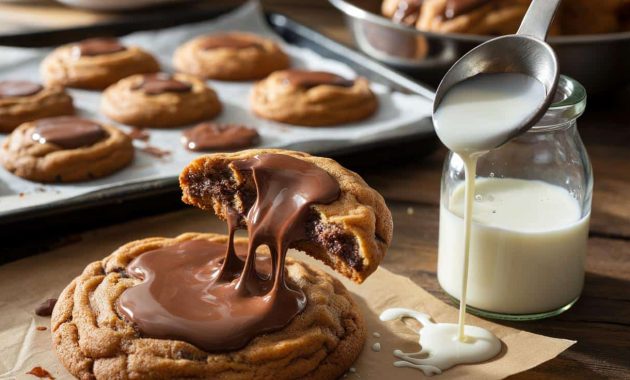
The aroma of freshly baked cookies wafts through the air, enticing your senses. As you pull the tray from the oven, the sight of those golden-brown beauties with their melted chocolate chips is enough to make your mouth water. But what if there was a simple trick to make these cookies even more irresistibly chewy?
It’s a common conundrum for home bakers: achieving that perfect balance of crisp edges and soft, chewy centers. While there are many factors that contribute to the texture of a cookie, one unexpected ingredient may hold the key to unlocking that coveted chewiness.
The Secret Ingredient for Chewy Chocolate Chip Cookies
Believe it or not, the secret to extra-chewy chocolate chip cookies could be hiding in your pantry all along: cornstarch. That’s right, the unassuming cornstarch that you likely use for thickening sauces or gravies can also work wonders in your cookie dough.

The science behind this cookie-improving ingredient is quite simple. Cornstarch is a starch that, when combined with liquid and heat, helps to create a more tender and chewy texture. In the case of chocolate chip cookies, the cornstarch interacts with the other wet ingredients, such as eggs and butter, to inhibit gluten formation and prevent the cookies from becoming too tough or caky.
By adding just a tablespoon or two of cornstarch to your favorite chocolate chip cookie recipe, you can achieve that perfectly soft, chewy center that bakes up with a slight crisp around the edges. It’s a game-changing discovery that will have your friends and family raving about your cookie-baking prowess.
The Science Behind Chewy Cookies
To fully understand the role of cornstarch in creating chewy cookies, it’s helpful to dive a bit deeper into the science of cookie baking. The key factors that contribute to texture are the ratio of wet to dry ingredients, the type of sugar used, and the baking time and temperature.

When it comes to the wet-to-dry ratio, a higher proportion of wet ingredients, such as butter, eggs, and milk, can lead to a chewier cookie. The cornstarch helps to balance this out by absorbing some of the excess moisture, resulting in a more tender and chewy crumb.
The type of sugar used also plays a significant role. Brown sugar, with its higher molasses content, tends to produce a chewier cookie than granulated white sugar. The cornstarch can help to mimic the effects of brown sugar, leading to a similar soft and chewy texture.
Finally, the baking time and temperature are critical. Cookies baked at a lower temperature for a longer duration will typically be chewier, as the slower cooking process allows the starches to fully gelatinize and the sugars to caramelize. The cornstarch can help to retain this chewiness even when baking at higher temperatures or for shorter durations.

Perfecting the Chewy Chocolate Chip Cookie
With the addition of cornstarch, you can take your chocolate chip cookie recipe to the next level. But there are a few other tips and tricks to ensure your cookies come out perfectly chewy every time.
First, be sure to chill your dough for at least 24 hours before baking. This allows the flour to fully hydrate, which can result in a chewier texture. You can also try using a combination of brown and white sugar, as the molasses in the brown sugar will contribute to that desirable chewiness.
When it comes to baking, resist the urge to overbake. Aim for cookies that are just barely set around the edges, with a slightly gooey center. This will ensure the perfect balance of crisp and chewy. And don’t forget to let the cookies cool on the baking sheet for a few minutes before transferring them to a wire rack – this helps them set up without drying out.

The Versatility of Chewy Cookies
Once you’ve mastered the art of chewy chocolate chip cookies, the possibilities are endless. The cornstarch technique can be applied to a wide variety of cookie recipes, from peanut butter to oatmeal raisin, and even beyond the classic chocolate chip.
Experimenting with different mix-ins, such as nuts, dried fruit, or even chunks of your favorite candy bars, can also add an extra layer of texture and flavor to your chewy cookies. And don’t be afraid to get creative with the shape and size – from classic rounds to fun, bite-sized bites, the chewy cookie possibilities are truly endless.
Whether you’re baking for a special occasion or just satisfying a sweet tooth, the addition of cornstarch can help you achieve the perfect chewy cookie every time. So the next time you’re in the mood for a soft, irresistible treat, don’t forget this simple yet game-changing ingredient.

Expert Insights on Chewy Cookies
“Cornstarch is the secret weapon in creating chewy cookies because it helps to inhibit gluten development, resulting in a more tender and soft texture,” says Sarah Kieffer, author of The Vanilla Bean Baking Book. “Just a small amount can make a big difference in the overall chewiness of the cookie.”
“When it comes to achieving the perfect chewy cookie, the key is to strike the right balance between the wet and dry ingredients,” explains Tessa Arias, creator of the popular baking blog Handle the Heat. “Cornstarch helps to absorb excess moisture, allowing the other ingredients to shine and create that coveted chewy bite.”
“Chilling the dough is an essential step in producing chewy cookies, as it allows the flour to fully hydrate and the flavors to develop,” says Stella Parks, author of BraveTart: Iconic American Desserts. “Coupled with the addition of cornstarch, this technique can take your cookies to the next level of chewiness.”

Baking Tips for Chewy Perfection
As with any baking endeavor, there are a few additional tips and tricks to ensure your chewy chocolate chip cookies turn out flawless every time:
- Use room-temperature ingredients. This allows for better incorporation and a more uniform texture.
- Cream the butter and sugars thoroughly to incorporate air and create a lighter, chewier crumb.
- Resist the urge to overbake. Cookies should be lightly golden around the edges, with a slightly underbaked center.
- Let the cookies cool on the baking sheet for a few minutes before transferring to a wire rack. This helps them set up without drying out.
- Experiment with different mix-ins, such as nuts, dried fruit, or chocolate chunks, to add even more texture and flavor.
FAQs: Achieving Chewy Cookie Perfection
How much cornstarch should I add to my cookie dough?
A general rule of thumb is to add 1-2 tablespoons of cornstarch per cup of all-purpose flour in your recipe. Start with the lower end and adjust to your desired level of chewiness.
Can I use cornstarch in other cookie recipes besides chocolate chip?
Absolutely! The cornstarch technique can be applied to a wide variety of cookie recipes, from peanut butter to oatmeal raisin and beyond. It’s a versatile ingredient that can help achieve a chewy texture in many different types of cookies.

Do I need to chill the dough if I’m using cornstarch?
Yes, chilling the dough is still an important step even when using cornstarch. The resting period allows the flour to fully hydrate, resulting in a more developed flavor and chewier texture.
How do I know when my cookies are done baking?
The key is to look for cookies that are lightly golden around the edges, with a slightly underbaked center. They should be just set, but still have a bit of a soft, chewy interior.
Can I use cornstarch in gluten-free cookie recipes?
Yes, cornstarch can be a helpful ingredient in gluten-free cookie recipes as well. It can help to mimic the chewiness and texture that gluten provides in traditional cookie doughs.

How long will chewy cookies stay fresh?
Properly stored, chewy cookies can stay fresh for up to 5 days. Keep them in an airtight container at room temperature, and they should maintain their soft, chewy texture.
Can I freeze chewy cookie dough?
Absolutely! Chewy cookie dough freezes beautifully. Simply scoop the dough onto a baking sheet, freeze until firm, then transfer to an airtight container or bag. The dough will keep for up to 3 months in the freezer.
Do I need to adjust baking time for chilled or frozen dough?
Yes, you may need to adjust the baking time slightly for chilled or frozen dough. Bake chilled dough for an extra 1-2 minutes, and frozen dough for 2-3 minutes longer, to ensure the centers bake through.