Behind the scenes, a quieter, smarter hedge revolution is underway.
Across the UK and beyond, gardeners are quietly turning their backs on thirsty, fussy thuja hedges and building living boundaries that actually earn their place. The shift is driven by drought, energy bills, shrinking free time – and a growing taste for gardens that look alive all year, not just like a flat green fence.
Why the once-fashionable thuja hedge is losing its crown
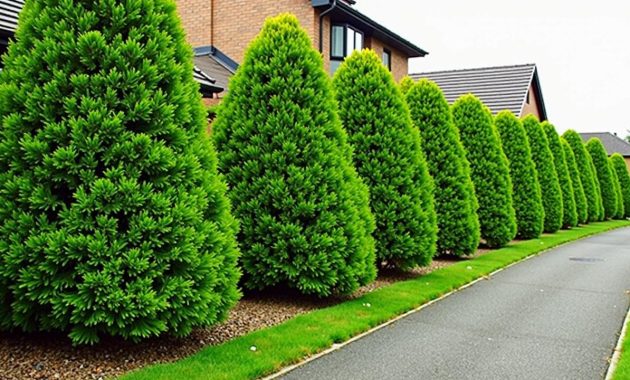
Thuja, often sold as a quick, evergreen privacy fix, has dominated post-war housing estates and suburban front gardens for decades. Many homeowners inherited a ready-made wall of conifers when they picked up their keys, and kept trimming out of habit.
Climate shifts and water stress are now exposing just how fragile that choice can be. Hotter, drier summers encourage fungal diseases and insect attacks that brown out whole sections of hedge in a single season.
Once one thuja in a row starts to fail, the damage often spreads, leaving ugly gaps that are costly and time-consuming to fix.
There is a soil problem too. Thuja needles acidify the ground beneath, limiting what can grow nearby and turning the base of the hedge into a lifeless strip. Replanting in the same spot after removal can be tricky without serious soil work.
The maintenance burden is another growing deal-breaker. Keeping a two‑metre‑high, military-straight conifer hedge in line can mean several trims a year, ladders, power tools, noise and a mountain of green waste.
A dense conifer hedge often delivers all the hassle of a garden feature, with barely any payoff in seasonal interest or biodiversity.
Winter can be planting season, not dead season
The quiet months from January onwards might look empty, but they are prime time to make the switch. While many people wait for spring, professional gardeners often plant hedging in winter, especially bare‑root plants.
Cool, moist soil gives roots time to establish without the stress of heat or drought. Plants are not spending energy on flowers or fresh foliage, so they can focus on anchoring themselves underground.
➡️ A simple behavior many people overlook can influence long-term well-being
➡️ EU pushes for stealth multirole light aircraft by next decade
➡️ Ozempic could upend how we relate to alcohol
➡️ Hairstyles after 50: this cut, hugely popular in the 60s, is back in style in 2026
➡️ Cucumber with aloe vera: why this simple combination is so often recommended for skin
➡️ US Army Gets New AI-Driven Counter-Drone Tech for Border Protection
➡️ For €15, he buys a second-hand PC and discovers a machine capable of far more than he imagined
Planting hedges in winter lets the sky do most of the watering, setting them up for a low‑irrigation first summer.
The key is to avoid frozen ground and work on days when the soil is workable and not waterlogged. Once planted and mulched, new hedges can simply sit and knit into the soil while the rest of the garden sleeps.
Evergreen colour that actually changes: laurustinus and photinia
Laurustinus: quiet flowers when everything else is bare
If privacy in winter is non‑negotiable, you do not have to stick with conifers. Laurustinus (Viburnum tinus), sometimes called laurustinus viburnum, offers dense evergreen foliage and a surprisingly lively show when days are shortest.
From mid‑winter, it pushes out clusters of white to pale pink blossom that stand out against dark leaves. Later, metallic blue berries follow, pulling in birds when food is scarce.
Laurustinus works well in mixed hedges or as a looser, slightly informal boundary. It tolerates pruning but does not need endless clipping to look respectable. For small gardens, it can be kept at around 1.5–2 metres without a battle.
Photinia: red flushes that wake up the whole street
Photinia, particularly the popular ‘Red Robin’, has gone from trend plant to modern classic. It is still underused as part of a mixed hedge, where its coloured growth can really shine.
The new leaves burst out in bright red, sometimes almost crimson, from late winter into spring. Against more sober greens, that flush looks like someone switched on the hedge with a remote control.
Photinia brings moving colour to a boundary, changing gear from deep green to fiery red and back again in a single season.
It tolerates trimming, but harsh, frequent cuts can reduce the number of red shoots. Many gardeners now let photinia grow in softer shapes, with one light prune a year to keep height and width under control.
For dense screening that lasts: hornbeam and privet
Hornbeam: a “leaf curtain” that stays up all winter
Hornbeam (Carpinus betulus) is a native tree that behaves beautifully as a hedge. Its trick is “marcescent” foliage: the leaves turn bronze in autumn but hang on through winter instead of dropping cleanly.
That means visual screening all year, even though hornbeam is technically deciduous. In low sunlight, the dry leaves glow golden, bringing warmth to bare winter gardens.
Once established, a hornbeam hedge copes well with cold, wind and periods of drought. It suits rural plots, new-build developments and even busy roadsides, where it acts as a visual and partial noise buffer.
Privet: the old-fashioned workhorse ready for a comeback
Privet suffered from a fussy, “vicarage garden” image for years, but its resilience is suddenly attractive again. It can cope with urban pollution, chalky soils and windy corners where more fashionable plants sulk.
In tough spots where other shrubs keep failing, privet often hangs on and quietly thickens into a reliable, bird-friendly wall.
Depending on variety and winter severity, privet may be semi-evergreen, shedding some leaves in colder snaps. Even then, the tangle of twiggy growth still provides a visual screen and nesting sites.
Four plants that beat thuja on almost every front
Used together, laurustinus, photinia, hornbeam and privet can form a hedge that looks varied but still reads as a single boundary. Each species brings a different strength.
| Plant | Main strength | Best position |
|---|---|---|
| Laurustinus | Winter flowers and berries, evergreen privacy | Sunny or part-shade, sheltered |
| Photinia | Red new growth, strong visual impact | Full sun to light shade |
| Hornbeam | Year-round screening with bronzed winter leaves | Exposed or rural sites, heavier soils |
| Privet | Rugged, adaptable, fast to fill | Urban gardens, difficult corners |
Mixing these four breaks the “green wall” effect of thuja. Birds gain berries, flowers and safe nesting spots. The garden gains movement, seasonal shifts and more resilience to pests and diseases.
How to plant a future-proof hedge in winter
Success with a new hedge often comes down to what happens before the first plant goes in the ground. Rushing this stage usually means years of extra watering and frustration.
- Mark the line of the hedge with string so spacing stays even.
- Dig a trench or individual holes at least 40 cm deep and wide.
- Break up the base of the hole with a fork so roots can push down easily.
- If using bare-root plants, give roots a brief bath in a muddy, clay-based mix to coat them.
- Backfill with the original soil, firming gently to remove air pockets.
- Water once, even in winter, then mulch with leaves, wood chips or shredded pruning waste.
Spacing depends on how fast and how dense you want the hedge to be. Many gardeners choose one plant every 60–80 cm, tightening to 50 cm for very quick coverage with smaller plants.
From chore to asset: changing how we think about garden boundaries
Replacing thuja is not only about looks or trends. Mixed hedges share stress between species. If a new pest targets one plant, the whole boundary does not collapse at once. That reduces the risk of having to rip out several metres of dead wood in a single year.
There is also the energy and noise angle. A mixed hedge kept slightly looser typically needs one main trim a year, sometimes two in vigorous spots. Hand shears or a lightweight cordless trimmer often do the job, replacing petrol machines and the Saturday-morning roar many neighbours dread.
A varied hedge can cut watering, reduce tool use, support wildlife and still deliver the privacy people want from a garden border.
Practical examples and small risks to consider
Picture a 10‑metre back-garden boundary in a new housing estate. Instead of a single-species thuja wall, it alternates groups of three: three laurustinus, three hornbeam, three photinia, three privet. Within two to three years, the plants knit together into a continuous, textured screen with flowers in winter, red flashes in spring and deep green structure in summer.
There are trade-offs. Mixed hedges can look a little uneven in the first years, as different plants grow at different speeds. Some homeowners used to razor-straight conifers may find the softer look takes time to adjust to. A few species, such as privet, can be invasive in certain regions if allowed to seed into wild areas, so regular trimming and responsible disposal of clippings matter.
On the other hand, the benefits stack up fast: fewer hosepipe sessions, lighter pruning schedules, richer habitats for small birds and insects, and a boundary that actually changes with the light and the weather. For many households, that trade looks increasingly attractive as summers warm and free time shrinks.