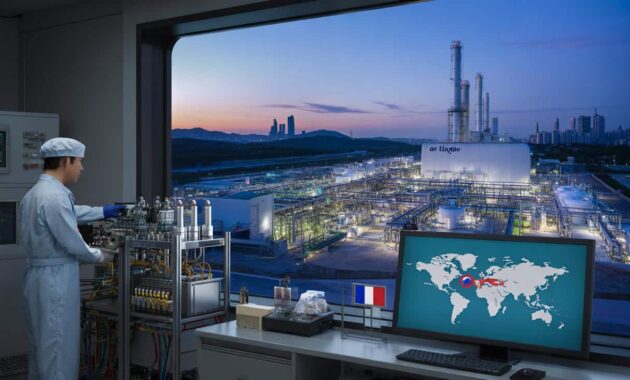
In a bold move that signals France’s strategic ambitions in the dynamic South Korean market, Air Liquide, the French industrial gases giant, has just announced a staggering €2.85 billion acquisition. This strategic investment solidifies Air Liquide’s foothold in the production of ultra-pure gases, a critical component driving the future of high-tech industries like semiconductors, electronics, and renewable energy.
This acquisition marks a significant milestone in France’s efforts to cement its position in the rapidly evolving global technology landscape, where South Korea has emerged as a formidable player. By tightening its grip on the ultra-pure gas supply chain in this burgeoning market, Air Liquide is positioning itself to capitalize on the surging demand for these specialized materials, which serve as the silent backbone of cutting-edge technologies.
Securing a Strategic Foothold in South Korea’s Tech Ecosystem
Air Liquide’s latest move underscores the importance of South Korea in the global technology race. As a powerhouse in the semiconductor, electronics, and renewable energy industries, the country has become a critical player in shaping the future of high-tech innovation. By establishing a stronger presence in this market, the French industrial giant is poised to benefit from the country’s robust growth and technological advancements.

The acquisition of a majority stake in South Korea’s Ignite Thermochemistry, a leading producer of ultra-pure gases, represents a strategic play by Air Liquide to secure a competitive edge in this essential commodity. These specialized gases, which must meet the highest purity standards, are crucial for the manufacture of cutting-edge semiconductors, displays, and other advanced electronics.
With this bold move, Air Liquide is positioning itself as a key player in the Asian electronics triangle, which includes China, Taiwan, and South Korea – the epicenter of global semiconductor and electronics production. By locking in a significant presence in this dynamic market, the French company is setting the stage for long-term growth and influence in a sector that is poised to shape the future of technology.
The Rise of Ultra-Pure Gases: The Silent Backbone of High-Tech
The increasing demand for ultra-pure gases is a testament to the rapid advancements in high-tech industries. As the complexity and precision of electronic devices and renewable energy technologies continue to evolve, the need for these specialized materials has become paramount. These ultra-pure gases, such as nitrogen, oxygen, and argon, must meet stringent purity standards to ensure the flawless performance and reliability of the end products.

The semiconductor industry, in particular, is a primary driver of the growing ultra-pure gas market. The production of state-of-the-art microchips requires an unparalleled level of cleanliness and precision, with even the slightest impurity potentially leading to costly defects or failures. By securing a stronghold in this niche market, Air Liquide is positioning itself to capitalize on the surging demand for these critical materials.
Beyond semiconductors, the ultra-pure gas market also serves the needs of other high-tech sectors, including display manufacturing, renewable energy, and advanced materials development. As these industries continue to push the boundaries of technological innovation, the demand for ultra-pure gases will only intensify, making Air Liquide’s strategic investment in South Korea a calculated move to secure a leading position in this lucrative and rapidly evolving market.
The Geopolitical and Economic Implications of Air Liquide’s South Korean Venture
Air Liquide’s €2.85 billion acquisition in South Korea reflects the broader geopolitical and economic dynamics at play. As the global technology landscape becomes increasingly competitive, countries are vying for strategic dominance in key industries. By cementing its presence in South Korea, a technological powerhouse, Air Liquide is not only securing a foothold in a critical market but also aligning with France’s broader economic and diplomatic objectives.

From an economic perspective, this investment represents a significant vote of confidence in South Korea’s industrial capabilities and growth potential. It signals France’s belief in the country’s continued technological leadership and its willingness to partner with Korean companies to drive innovation forward. This partnership could pave the way for further collaborations and investments, strengthening the economic ties between the two nations.
Geopolitically, Air Liquide’s move in South Korea can be seen as part of France’s broader strategy to enhance its global influence and secure access to key technology hubs. By establishing a stronger presence in this dynamic market, France is positioning itself as a player in the high-stakes game of technological supremacy, where the control of critical supply chains can confer significant strategic advantages.
Unpacking the Importance of “Ultra-Pure”
The term “ultra-pure” may seem innocuous, but it belies the immense complexity and technical expertise required to produce these specialized gases. The purity levels demanded by high-tech industries are truly remarkable, with even the slightest trace of impurities potentially causing catastrophic failures in cutting-edge technologies.

To achieve the necessary level of purity, manufacturers like Air Liquide employ sophisticated purification processes, advanced filtration systems, and stringent quality control measures. The production of ultra-pure gases requires meticulous attention to detail, from the selection of raw materials to the final packaging and distribution stages.
This relentless pursuit of purity is a testament to the ever-increasing demands of the modern technology landscape. As devices become smaller, more powerful, and more energy-efficient, the materials that enable their creation must meet unprecedented standards of quality and consistency. Air Liquide’s strategic move in South Korea signals its commitment to staying at the forefront of this critical industry, positioning itself as a vital partner in the global technology ecosystem.
The Future Implications of Air Liquide’s South Korean Foothold
Air Liquide’s bold move in South Korea is not just a tactical business decision; it is a strategic play that could have far-reaching implications for the future of high-tech industries. By securing a dominant position in the production of ultra-pure gases, the French company is poised to shape the trajectory of technological innovation, not just in South Korea, but potentially across the entire Asian market.

This acquisition could also serve as a springboard for further expansion and collaboration. As Air Liquide’s presence in the South Korean market deepens, it may open the door to new partnerships, joint ventures, and technology transfer agreements, further strengthening the ties between France and this technological powerhouse.
Moreover, Air Liquide’s move could have broader geopolitical ramifications, as it positions France as a key player in the global technology race. By establishing a strong foothold in South Korea, the company is enhancing France’s strategic influence and potentially paving the way for greater cooperation and collaboration between the two nations in the years to come.
The Experts Weigh In: Insights on Air Liquide’s South Korean Venture
“This acquisition by Air Liquide is a clear signal that the company is doubling down on its commitment to the South Korean market and the broader Asian electronics ecosystem. By securing a majority stake in a leading ultra-pure gas producer, Air Liquide is positioning itself as a critical supplier to the region’s high-tech industries, which are only expected to grow in the coming years.” – Dr. Jae-Hyun Lee, Professor of Industrial Economics, Seoul National University

“The importance of ultra-pure gases in the semiconductor and electronics industries cannot be overstated. As device complexity and performance demands continue to increase, the need for these specialized materials will only intensify. Air Liquide’s strategic move in South Korea is a clear acknowledgment of this trend and a calculated bet on the future growth of these critical industries.” – Sarah Choi, Senior Analyst, Asia Pacific Electronics Research, Cloverton Consulting
“This acquisition is not just about securing a foothold in the South Korean market; it’s about tapping into the broader geopolitical and economic dynamics at play. By establishing a strong presence in this technological hub, Air Liquide is aligning with France’s broader strategic objectives of enhancing its global influence and strengthening its ties with key Asian partners.” – Jean-Baptiste Durand, Senior Fellow, French Institute of International Relations (IFRI)
As the world continues to witness the rapid evolution of high-tech industries, the importance of strategic investments in critical supply chains like ultra-pure gases cannot be overstated. Air Liquide’s bold move in South Korea is a testament to the company’s foresight and its determination to capitalize on the growing demand for these specialized materials. This acquisition not only strengthens Air Liquide’s position in the global technology landscape but also reflects France’s broader ambitions to cement its place as a key player in the future of innovation.

FAQs: Air Liquide’s South Korean Acquisition and the Ultra-Pure Gas Market
What are ultra-pure gases, and why are they so important?
Ultra-pure gases, such as nitrogen, oxygen, and argon, are specialized materials that must meet extremely high purity standards to be used in the production of cutting-edge technologies like semiconductors, displays, and renewable energy products. These gases play a crucial role in ensuring the flawless performance and reliability of these high-tech devices and systems.
How does Air Liquide’s acquisition in South Korea fit into the company’s broader strategy?
Air Liquide’s €2.85 billion acquisition of a majority stake in Ignite Thermochemistry in South Korea is a strategic move to secure a dominant position in the production of ultra-pure gases. This investment aligns with the company’s goal of capitalizing on the growing demand for these specialized materials, particularly in the rapidly evolving Asian technology ecosystem.
What are the potential economic and geopolitical implications of this acquisition?
The acquisition signals France’s ambition to strengthen its economic and technological ties with South Korea, a global leader in the semiconductor, electronics, and renewable energy industries. It could pave the way for further collaborations and investments, while also enhancing France’s strategic influence in the global technology landscape.

How does this investment position Air Liquide for future growth?
By securing a dominant position in the production of ultra-pure gases in South Korea, Air Liquide is positioning itself as a critical supplier to the country’s high-tech industries, which are expected to continue growing in the coming years. This strategic move could open the door to new partnerships, joint ventures, and technology transfer agreements, further strengthening the company’s long-term prospects.
What are the key challenges and risks associated with the ultra-pure gas market?
The ultra-pure gas market is highly specialized and technologically complex, requiring meticulous production processes and stringent quality control measures. Maintaining the required purity levels and meeting the evolving demands of high-tech industries can be a significant challenge, requiring continuous innovation and investment in research and development.
How does this acquisition fit into the broader geopolitical landscape?
Air Liquide’s move in South Korea is part of France’s broader strategy to enhance its global influence and secure access to key technology hubs. By establishing a stronger presence in this dynamic market, France is positioning itself as a player in the high-stakes game of technological supremacy, where control over critical supply chains can confer significant strategic advantages.
What are the potential implications for the semiconductor and electronics industries in South Korea and beyond?
Air Liquide’s acquisition could have far-reaching implications for the semiconductor and electronics industries in South Korea and potentially across the entire Asian market. By securing a dominant position in the production of ultra-pure gases, the company is poised to shape the trajectory of technological innovation and potentially influence the supply and pricing of these critical materials.
How does this investment align with France’s broader economic and diplomatic objectives?
The acquisition reflects France’s efforts to strengthen its economic and technological ties with South Korea, a key strategic partner. By cementing its presence in this dynamic market, France is positioning itself to benefit from South Korea’s continued growth and technological leadership, while also enhancing its global influence and diplomatic standing.