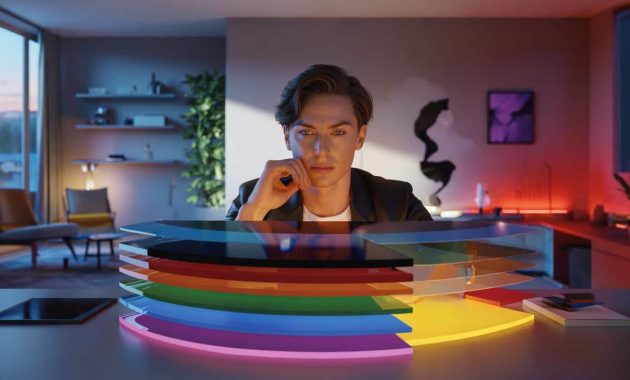
The question slipped out in the middle of a boring Zoom meeting: “Hey, random, what’s everyone’s favorite color?”
At first, people laughed. Then the chat exploded. “Green forever.” “Deep navy.” “Black, obviously.” One colleague even wrote “Sunset orange, don’t judge me.”
Watching the screen fill up with colors felt strangely intimate.
People weren’t just picking a shade. They were revealing something about how they see the world, and maybe, how they secretly see themselves.
That’s the thing about color.
You think you’re just drawn to blue, red, or yellow.
But that quiet preference might be your personality shouting in code.
What your favorite color quietly reveals about you
Ask a group of adults their favorite color and you’ll see something fascinating: almost nobody hesitates.
The word just pops out. “Blue.” “Red.” “Purple.” It’s like a reflex they’ve had since childhood.
Psychologists call this a “stable preference”.
Your favorite color tends to stick around for years, sometimes decades, subtly coloring your identity.
You might change jobs, cities, friends.
Yet that loyal shade on your clothes, your phone case, your living room cushions somehow stays.
That’s not random decoration.
That’s you, leaving a trail.
Take blue, the global superstar of favorite colors.
Surveys often show it winning by a landslide, from the US to Japan.
People who love blue often describe it as “calm,” “trustworthy,” “safe.”
Picture someone whose wardrobe is 80% blue.
Their laptop cover, mug, and even their sneakers.
When you talk to them, they tend to be steady, reliable, sometimes shy about conflict.
Then there’s red.
The color of sports cars, lipstick, warning signs.
Red-lovers often talk about energy, passion, intensity.
They may be more competitive, more open to risk, more likely to speak before everyone else in a meeting.
Not better or worse. Just wired for a different emotional volume.
Color psychology doesn’t work like astrology, and real researchers would be the first to roll their eyes at simplistic “If you like green, you’re X” charts.
Colors don’t control you.
➡️ Heating: the 19 °C rule is over, here’s the temperature experts now recommend
➡️ This bakery chain sells the unhealthiest bread, warns UFC-Que Choisir
➡️ Nivea cream under fire experts say your skin may be paying the hidden price
➡️ “I became a process improvement assistant, and the pay rose with experience”
➡️ No more hair dye: the new trend that naturally covers grey hair and makes you look younger
They do something subtler.
They influence how you feel, how you present yourself, and how others read your presence.
A preference for yellow might lean toward optimism and creativity.
Black might reflect a need for control, protection, or quiet elegance.
Context matters. Culture matters.
Still, patterns keep showing up in labs and real-life experiments.
We associate red with dominance, blue with trust, green with calm and growth.
Your favorite shade forms a soft echo of these meanings in your everyday choices.
How to use your color personality instead of fighting it
Start by doing something strangely simple: audit your life in color.
Walk through your home, open your wardrobe, glance at your phone background.
Which shade keeps coming back?
Not the one you say in conversations, the cool “official favorite.”
The one that actually shows up on your walls, your shoes, your notebooks.
Once you’ve spotted it, ask yourself two questions.
“What does this color give me emotionally?”
And, “Where am I starving for the opposite feeling?”
That’s where color becomes a tool, not just an aesthetic choice.
If you’re a red person, your spaces might be packed with energy.
Bold decor, statement pieces, loud accents.
That can be great for ambition and drive.
Yet it can also crank your nervous system up to maximum volume.
Maybe your bedroom stays restless, your mind racing at night.
Swapping some red details there for soft blues or muted greens doesn’t betray who you are.
It balances you out.
On the flip side, hardcore blue lovers sometimes build a life so safe and calm that nothing really moves.
A few red, orange, or bright yellow touches in work or creative zones can nudge you toward action rather than endless planning.
Let’s be honest: nobody really does this every single day.
But even one intentional change can shift your internal weather a notch.
Sometimes, your favorite color is who you are.
Sometimes, the color you avoid is who you’re becoming.
- Blue – Often linked to calm, loyalty, and reflection. Good for focus spaces, reading corners, and work environments that need stability.
- Red – Associated with passion, urgency, and confidence. Useful in small doses where you need courage or quick decisions.
- Green – Connected with balance, nature, and recovery. Perfect near windows, plants, or any spot where you decompress after long days.
- Purple – Often tied to imagination and individuality. Great for creative work, art corners, or personal rituals.
- Black – Linked with control, mystery, and elegance. Powerful for defining boundaries, wardrobes, and minimalist setups when used with intention.
Looking at your life through a color-tinted lens
Once you start noticing color, your world won’t quite look the same.
You’ll see the blue in corporate logos trying to win your trust.
The red “Buy now” buttons pushing urgency.
The green packaging quietly whispering “natural” and “safe,” even when the product… isn’t.
You’ll also catch yourself.
Reaching for the same color hoodie when you feel low.
Choosing a certain nail polish when you need confidence.
You might realize that your favorite color at 10 was wild orange, and now you live inside a beige box. *Somewhere along the road, that louder version of you got toned down.*
There’s no right answer.
Just one honest question:
Does the color that surrounds you today still match the person you are—or the one you’re slowly becoming?
| Key point | Detail | Value for the reader |
|---|---|---|
| Favorite colors reflect emotional needs | Preferences for shades like blue, red, or green often align with needs for calm, energy, or balance | Helps you understand why you keep choosing the same color and what it’s giving you |
| Color can be used as a daily tool | Adjusting colors in clothes, decor, or workspaces can boost focus, rest, or confidence | Gives you a simple, concrete way to influence your mood without changing your whole life |
| Noticing color increases self-awareness | Observing your own patterns exposes gaps between who you are and how you present yourself | Encourages gentle self-reflection and more aligned choices in your environment |
FAQ:
- Does my favorite color really say something about my personality?Not in a strict, scientific “test result” way, but it often reflects emotional tendencies—like a pull toward safety, stimulation, or control. Think of it as a clue, not a diagnosis.
- Can my favorite color change over time?Yes. Big life phases—breakups, new jobs, burnout, parenthood—can shift what you’re drawn to. A move from bright red to soft green, for example, might mirror a new need for calm.
- What if I like black—does that mean something negative?Not automatically. Black can signal a desire for protection, clarity, elegance, or minimalism. It can become heavy if it’s your only emotional “armor,” but in itself it’s not bad.
- Is color psychology scientifically proven?Some effects are well-documented (like red increasing perceived dominance or urgency), but many viral charts oversimplify. Real color psychology depends on context, culture, and personal history.
- How can I experiment with my color personality safely?Start small: a phone background, notebook, pillowcase, or nail color. Notice how that shade makes you feel across a few days before repainting walls or buying a whole new wardrobe.