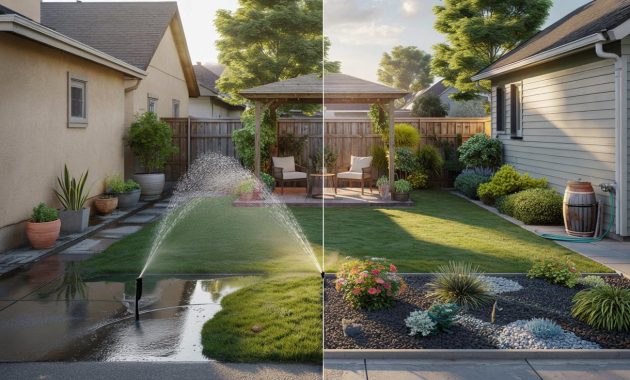
At 6:30 a.m., the sprinklers start their little ballet on the suburban cul-de-sac. Water arcs into the cool air, glittering in the sunrise, soaking fences, sidewalks, and a very unimpressed patch of brown lawn. By noon, the sun has erased every trace of that morning “effort,” and the owners wonder why their water bill climbs while their yard still looks tired. Next door, same street, same weather, different story: a soft green lawn, pots overflowing, a shaded seating area that feels like a small vacation. Same climate, same hose. Different strategy.
The quiet truth some yards whisper is unsettling.
Your garden doesn’t lack water, it lacks a game plan
Most people think they have a “dry garden problem” when what they really have is a “random watering problem.” They sprinkle when they remember, crank the hose until the soil looks wet, then cross their fingers. The result is often the same patchy lawn, the same crispy hydrangeas, the same container plants giving up mid-July.
What your garden is really missing is a pattern. A logic. A way to use each drop of water where it actually matters.
A landscaping company in Arizona recently compared two neighboring houses. Both owners admitted they watered “a lot” during heatwaves. House A watered every day for 10–15 minutes. House B watered deeply twice a week, mulched, grouped plants by water needs, and used drip lines in the flower beds. After three months, House A had bald patches and stressed shrubs. House B had a dense lawn and surprisingly lush borders… all while using 30% less water on the meter.
Same climate. Totally different outcome. That gap is strategy.
Plants don’t care how often you stand in the yard with a hose. They care about roots, soil structure, and how long moisture sticks around in their zone. Shallow, frequent watering breeds shallow, lazy roots that panic in heat. Deep, occasional watering trains roots to chase moisture downwards where the sun can’t steal it.
Once you start viewing water as a tool to shape root behavior, not as a magic “green switch,” your entire garden design starts to shift.
The 7 strategy tips 8 out of 10 homeowners ignore
The first tip sounds boring, which is probably why most people skip it: test how long it takes to properly soak your soil. Don’t guess. Take a small trowel, water one zone as usual, and then dig a narrow slice to check depth. You want moisture reaching at least 15–20 cm (6–8 inches) down for lawns, deeper for shrubs.
If you stop watering when the surface looks dark, you’re training your plants to live in the top 3 cm of soil. That’s like raising kids who only know the fridge, not the pantry.
➡️ “Suede Blonde” is the hair color everyone’s clamoring for this winter (it brightens the complexion)
➡️ Why we crave routine even when we say we hate it
➡️ Food: what are the unsuspected benefits of harissa?
The second forgotten move: choose one or two watering windows and stick to them. Early morning is gold. Late evening is your plan B. Sprinkling at 3 p.m. under full sun is basically sponsoring evaporation. Still, plenty of homeowners hit “manual start” as they get home from work because that’s when they see the garden and feel guilty.
Let’s be honest: nobody really does this every single day. So lean on simple timers, cheap drip kits, or a basic weekly reminder on your phone. The strategy isn’t fancy, it’s consistent.
The third tip is the one that quietly separates “meh” yards from premium outdoor spaces: zoning by thirst. Group plants that like the same amount of water, and stop mixing water-hungry blooms with drought-tolerant grasses in the same beds. That forces you to overwater some and stress others.
“I stopped treating my yard as one big green carpet,” says Claire, a homeowner who renovated her small city garden on a tight budget. “Once I split it into a ‘lavish watering zone’ and a ‘barely needs attention’ zone, my water bill dropped and everything started looking more intentional.”
- Zone 1: lawn and shallow-rooted flowers that need more regular moisture.
- Zone 2: shrubs and perennials with medium water needs.
- Zone 3: tough, drought-tolerant plants, gravel, and seating areas.
From ordinary yard to premium space: design with water, not against it
Tip four is incredibly simple: cover the soil. Bare soil is like an empty wallet on a park bench. Sun and wind steal your moisture faster than you think. A 5–8 cm layer of mulch around plants and in beds keeps water in the root zone longer, levels out temperature swings, and makes the whole yard look curated.
Use shredded bark, compost, gravel, or a mix, depending on your style. The visual unity alone can suddenly make a budget garden look like a magazine spread.
Tip five tackles the invisible part of strategy: improving the soil instead of only chasing more irrigation. Compacted, poor soil sheds water like a raincoat. Loosen it once or twice a year, add compost, let worms and microbes do their slow work. Over time, the soil becomes a sponge, not a slab.
Many homeowners skip this because there’s no instant “wow,” just a messy weekend and a sore back. Yet this is the kind of unsexy work that lets you water less and see more growth every season.
Tip six is where layout meets lifestyle: integrate shade and windbreaks in your design. A small pergola, a strategically placed tree, or even a tall planter screen can reduce evaporation dramatically in a specific zone. Suddenly that corner becomes suitable for containers, a reading chair, maybe a dining table.
*Water strategy isn’t only hoses and sprinklers; it’s architecture and microclimate.* A bit of shade keeps pots from frying and turns what used to be “the dead corner by the fence” into the most inviting part of the yard.
The quiet luxury move: use your budget twice
The seventh tip is what pushes a garden into “premium” territory without doubling the budget: every element should do at least two jobs. A gravel path that also acts as a drainage channel so the lawn doesn’t flood. A raised bed that doubles as a bench along the edge. A rain barrel that feeds a drip system.
When each choice in your yard saves water, organizes space, and adds beauty at the same time, the whole place starts feeling more intentional and expensive than it really was.
We’ve all been there, that moment when you stand in the middle of a wonky yard thinking, “Do I need thousands of dollars and a landscape architect to fix this?” You don’t. You need to stop throwing random purchases at the problem and start linking them. Buy fewer plants, but place them in smart zones. Spend on mulch instead of a third decorative pot. Redirect one downspout into a discreet rain chain and barrel rather than adding another sprinkler head.
Your yard starts to tell a story when each change nudges the next one in the same direction.
This is where strategy quietly turns into lifestyle. Early-morning watering becomes an excuse to step outside before the messages and meetings start. A mulched, shaded corner becomes a place where kids drag blankets, where a cheap string of lights suddenly feels like **intentional ambiance**. The water discipline you put in place doesn’t just protect plants; it changes how you use the space on hot evenings and cool mornings.
A premium outdoor space isn’t about luxury furniture or rare plants. It’s about a yard that works with your climate, your schedule, and your budget so well that it feels effortless… long before it actually is.
Where you go from here
Stand in your garden at the time you usually water and look, really look. Where is the sun hitting hardest? Where does water puddle and where does it vanish instantly? Which plants look quietly unhappy, not dead, just tired of improvisation? That small scan gives you your first map of “strategic leaks” in your yard.
You don’t need to fix everything this weekend. Pick one zone and go all in: mulch it, test how deep you’re watering, maybe add one drip line or a cheap timer. Live with that change for a few weeks and watch what happens. When something works, repeat it in the next zone. Slowly, the guilt-driven, last-minute watering turns into a simple routine that fits around your life.
The day you realize you’re using less water, spending the same money, and your yard looks more like an outdoor room than a patch of obligation, you’ll understand the quiet power of strategy. Not more water. Not more stuff. Just a different way of thinking about what your garden is really asking for.
| Key point | Detail | Value for the reader |
|---|---|---|
| Water deeply, less often | Train roots to grow down by soaking soil 15–20 cm instead of daily sprinkles | Stronger plants that survive heat with less frequent watering |
| Group plants by water needs | Create zones for thirsty, medium, and low-water plants | Reduce waste, avoid overwatering, and simplify your routine |
| Use mulch and microclimates | Cover soil and add shade/wind protection in key areas | Stretch each liter of water further and make the yard feel more high-end |
FAQ:
- Question 1How many times a week should I water my lawn?
- Answer 1For most climates, 2–3 deep waterings per week are better than daily light sprinkles. Adjust based on heat and rainfall, but focus on soaking roots, not just darkening the surface.
- Question 2Is mulch really worth the cost?
- Answer 2Yes, because it works for you every single day. Mulch cuts evaporation, stabilizes soil temperature, and reduces weeds, which means less watering and less maintenance over time.
- Question 3Can I create zones without an expensive irrigation system?
- Answer 3Absolutely. You can group plants with similar needs in the same beds and use simple tools like soaker hoses, basic timers, and labeled hoses for each area.
- Question 4What’s the biggest watering mistake most homeowners make?
- Answer 4Watering too often and too shallow. It feels caring in the moment, but it keeps roots at the surface and makes plants more vulnerable to heat and drought.
- Question 5How long will it take to see a difference once I change my strategy?
- Answer 5You’ll often notice improvements within a few weeks, especially in how long soil stays moist and how plants handle hot days. Deeper soil and root changes build up over a season or two.