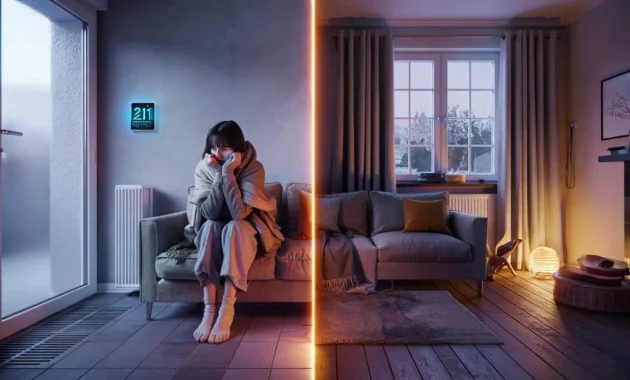
Sarah cranked up the thermostat to 22°C and waited. The radiators gurgled to life, the heating bill climbed steadily, and her smartphone app confirmed the temperature was perfect. Yet she still grabbed a sweater every time she entered the living room. Her feet felt like ice blocks on the hardwood floor, and sitting near the large bay window made her shoulders hunch with cold.
She wasn’t losing her mind. Her home was playing tricks on her body, and thousands of homeowners face the same maddening puzzle every winter.
The thermostat says one thing, but your skin tells a completely different story.

Why Your Body Disagrees With Your Thermostat
When homes feel colder despite proper heating, it’s because your body doesn’t just measure air temperature. You’re a walking heat detector that responds to everything around you – cold surfaces, sneaky drafts, and how warmth actually moves through your space.
“People think heating is just about air temperature, but comfort is way more complex,” says thermal comfort specialist Dr. Rachel Martinez. “Your body is constantly losing heat to colder surfaces, even when the air feels warm.”
Think about sitting next to a large window in winter. Even with the heat blasting, that glass surface is pulling warmth away from your body through radiation. Your skin feels the cold glass, not just the warm air floating around the room.

The same thing happens with exterior walls, especially in older homes. That wall behind your couch might be 10 degrees colder than room temperature, creating a cold zone that no amount of hot air can fix.
The Hidden Culprits Making Your Home Feel Arctic
Several sneaky factors work together to make homes feel colder than they should. Understanding these helps explain why cranking the thermostat doesn’t always solve the problem.
Cold Surface Radiation:

- Single-pane windows act like cold walls
- Poorly insulated exterior walls steal body heat
- Tile and hardwood floors create cold zones around your feet
- High ceilings allow warm air to escape upward
Draft Problems:
- Air leaks around windows and doors
- Gaps near electrical outlets and baseboards
- Chimney flues that act like open air channels
- Attic access points that aren’t properly sealed
| Problem Area | How It Feels | Quick Fix |
|---|---|---|
| Cold windows | Chill near seating areas | Heavy curtains or thermal blinds |
| Hard floors | Cold feet and legs | Area rugs or slippers |
| Exterior walls | Cold back when sitting | Furniture placement or wall hangings |
| High ceilings | Warm head, cold feet | Ceiling fans on reverse |
“I see homes where the thermostat reads 21°C, but the actual comfort level feels more like 18°C,” explains HVAC contractor Mike Thompson. “The air is warm, but everything else is working against you.”
Simple Tricks That Actually Work
You don’t need to renovate your entire house to make it feel warmer. Small changes can dramatically improve how comfortable your space feels.

Layer Your Floors: Put rugs anywhere you spend time standing or walking. Your feet are major heat loss points, and cold floors make your whole body feel chilly.
Block Window Cold: Hang curtains that actually touch the floor and extend past the window frame. This creates a barrier between you and the cold glass surface.
Move Air Around: Use ceiling fans on low speed, rotating clockwise in winter. This pushes warm air down from the ceiling without creating a cooling breeze.

Seal the Obvious Leaks: Check around doors, windows, and outlets for air movement. Even tiny drafts can make a room feel degrees colder.
Humidity also plays a bigger role than most people realize. Dry winter air makes you feel colder at the same temperature. A simple humidifier can make 20°C feel like 22°C.
When Professional Help Makes Sense
Sometimes the problem goes beyond quick fixes. If multiple rooms in your home feel colder despite proper heating, you might be dealing with bigger issues.

Poor insulation is the most common culprit. Walls that aren’t properly insulated act like giant heat sinks, constantly pulling warmth away from your living space. An energy audit can reveal where your home is bleeding heat.
“We use thermal cameras to show homeowners exactly where their heat is escaping,” says energy efficiency consultant Lisa Park. “Sometimes it’s shocking how much cold is radiating through what looks like a normal wall.”
Ductwork problems can also create uneven heating. If some rooms get plenty of warm air while others stay cold, your heating distribution system might need attention.

Windows are another major factor. Single-pane windows in older homes can make entire rooms feel frigid, no matter how much heat you pump in. Even double-pane windows lose effectiveness over time as seals fail.
Your Comfort Zone Is Personal
Remember that thermal comfort varies from person to person. Some people need 23°C to feel comfortable, while others are happy at 19°C. Age, health, and even what you’re wearing all affect how warm you feel.
The key is understanding that homes feel colder for real, measurable reasons. It’s not just in your head when that perfectly heated room still gives you chills.

“Once people understand why their homes feel cold, they can target the real problems instead of just turning up the heat,” adds Dr. Martinez. “It’s more effective and usually cheaper too.”
Your home should feel as warm as the thermostat claims it is. When it doesn’t, now you know why – and what you can do about it.
FAQs
Why does my house feel cold even when the thermostat shows the right temperature?
Your body responds to cold surfaces, drafts, and radiation, not just air temperature. Cold windows, walls, and floors can make you feel chilly even when the air is warm.
What’s the fastest way to make a cold room feel warmer?
Add rugs to hard floors, hang thick curtains over windows, and check for drafts around doors and windows. These simple changes can make a room feel several degrees warmer.
Should I just turn up the thermostat if my home feels cold?
Not necessarily. Addressing the root causes like cold surfaces and air leaks is more effective and energy-efficient than just raising the temperature.
How much difference does humidity make in feeling warm?
Quite a bit. Dry air makes you feel colder, so adding humidity can make the same temperature feel 2-3 degrees warmer.
When should I call a professional about my cold home?
If multiple rooms stay cold despite proper heating, or if your energy bills are unusually high, consider an energy audit to identify insulation or ductwork problems.
Do ceiling fans actually help in winter?
Yes, when set to rotate clockwise on low speed. This pushes warm air down from the ceiling without creating a cooling breeze.