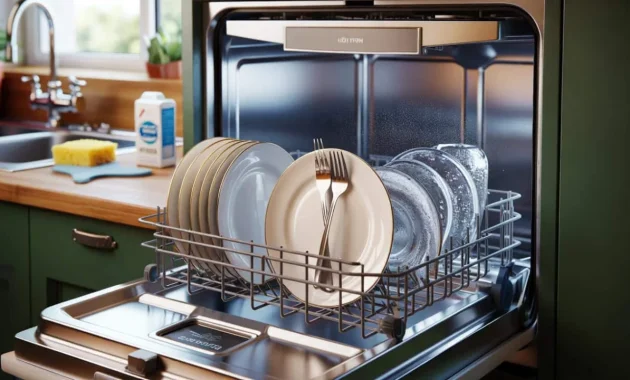
Sarah stood at her kitchen sink, methodically rinsing every single plate, bowl, and utensil before loading them into her brand-new dishwasher. She’d always been taught this was the right way—help the machine do its job better. Twenty minutes later, when she opened the dishwasher door, her heart sank. Despite her careful pre-washing routine, several dishes still had spots, and her wine glasses looked cloudier than before.
It was frustrating. She’d spent extra time cleaning everything twice, yet somehow the results were worse than when her old dishwasher broke down and she’d frantically thrown dirty dishes in without rinsing.
What Sarah didn’t realize is that she’d fallen victim to one of the most widespread kitchen myths of our time. Rinsing dishes before the dishwasher doesn’t just waste time and water—it can actually make your dishes less clean.

How Modern Dishwashers Think
Today’s dishwashers aren’t the simple spray-and-hope machines your grandmother used. They’re sophisticated appliances equipped with sensors that literally detect how dirty your dishes are. These sensors measure the cloudiness of the wash water during the first few minutes of the cycle.
“Modern dishwashers use turbidity sensors to assess soil levels,” explains appliance engineer Michael Chen. “When the water stays too clear because dishes were pre-rinsed, the machine assumes there’s minimal cleaning needed and shortens the cycle.”
This means less hot water, reduced wash time, and minimal detergent activation. Your well-intentioned rinsing actually tricks your dishwasher into thinking it can phone in the performance. The result? Dishes that look clean but still harbor bacteria, food particles, and that mysterious filmy residue that makes glasses look foggy.

The sensors aren’t the only reason rinsing dishes before the dishwasher backfires. Most modern dishwasher detergents contain enzymes specifically designed to break down food particles. These enzymes need something to work on—they’re like microscopic cleanup crews that become less effective when there’s no mess to tackle.
What Actually Happens When You Skip the Rinse
When you load dirty dishes directly into your dishwasher, several beneficial processes kick into gear:
- Sensors detect food particles and extend wash cycles automatically
- Water temperature increases to optimal cleaning levels
- Detergent enzymes activate fully to break down grease and proteins
- Spray arms work harder, creating better water circulation
- Multiple rinse cycles ensure complete removal of food and detergent residue
“The biggest misconception is that dishwashers can’t handle food waste,” says home efficiency expert Lisa Rodriguez. “These machines are designed to dissolve and wash away significant food residue—that’s literally their job.”

The key is understanding what “dirty” means in dishwasher terms. You should scrape off large food chunks and bones, but leaving sauce residue, grease, and smaller food particles actually helps your machine perform better.
| Pre-Rinse Level | Sensor Response | Cleaning Result |
|---|---|---|
| Heavy rinse (sparkling clean) | Short cycle, low heat | Poor cleaning, residue remains |
| Light rinse (some residue) | Medium cycle, moderate heat | Adequate cleaning |
| No rinse (scrape only) | Full cycle, optimal heat | Best cleaning performance |
The Real-World Impact of Over-Rinsing
Beyond just cleanliness issues, rinsing dishes before the dishwasher creates a cascade of problems that affect your wallet, your time, and the environment. The average household that pre-rinses dishes uses an additional 6,000 gallons of water per year—enough to take 200 showers.
“I see people essentially washing dishes twice,” notes water conservation specialist Dr. Amanda Kim. “They’re doing the dishwasher’s job by hand, then running a machine that’s designed to do that exact same job.”

This double-washing approach also leads to:
- Higher water bills from extended sink time
- Increased energy costs from heating extra water
- More wear on dish surfaces from excessive scrubbing
- Wasted detergent that can’t perform its intended function
- Longer overall kitchen cleanup time
Perhaps most frustrating is the cycle many people find themselves in: pre-rinsing leads to poor dishwasher performance, which leads to more pre-rinsing, which leads to even worse results. It’s a self-defeating loop that leaves people convinced their expensive appliance is defective.
What You Should Actually Do Instead
The optimal approach is surprisingly simple: scrape, don’t rinse. Remove bones, large food chunks, and anything that could clog your dishwasher’s filter. Everything else—sauces, grease, dried food, even that stubborn cheese—can go straight into the machine.

For best results, load dishes within a few hours of use when possible. This prevents food from hardening into concrete-like substances that even dishwashers struggle with. If you must wait longer, a quick soak in the sink (without scrubbing) is better than aggressive pre-washing.
“Trust your machine,” advises appliance repair technician Mark Thompson. “These dishwashers cost hundreds or thousands of dollars and contain more computing power than early smartphones. They know how to handle dirty dishes.”
The transformation can be dramatic. People who switch from heavy pre-rinsing to simple scraping often report cleaner dishes, shorter overall cleanup times, and significantly lower water bills. Your dishwasher finally gets to do what it was designed for—and it does that job remarkably well.

FAQs
Should I never rinse dishes before putting them in the dishwasher?
Correct—just scrape off large food particles and load them directly into the dishwasher for optimal cleaning performance.
Won’t food particles clog my dishwasher?
Modern dishwashers have built-in food disposal systems and filters designed to handle food residue safely.
What if my dishes have been sitting out for hours?
A quick soak in plain water can help soften dried food, but avoid scrubbing or using soap before loading.

Why do my dishes still look dirty after following this advice?
Check your dishwasher’s filter, use quality detergent, and ensure you’re not overcrowding the racks.
Does this apply to all dishwasher brands and models?
Yes, virtually all dishwashers made in the last 15 years use sensor technology that performs better with dirty dishes.
How much water am I really wasting by pre-rinsing?
The average household wastes about 6,000 gallons annually through unnecessary pre-rinsing—equivalent to 200 showers.
